


On Tuesday, September 17 at 6:50 p.m. ET, Falcon 9 launched the European Commission’s Galileo L13 mission to orbit from to medium Earth orbit from Space Launch Complex 40 (SLC-40) at Cape Canaveral Space Force Station in Florida.
As reported yesterday weather was an issue and SpaceX got lucky today as the 45th Weather Squadron forecast just a 40 percent chance of favorable weather at liftoff. The booster recovery weather risk was also noted as “moderate” on a scale of low-moderate-high.
“Several factors are in play for the weather this week. Primarily an area of low pressure spinning off the southeast U.S. coastline will gradually move onshore near South Carolina by Tuesday afternoon,” meteorologists wrote. “This circulation pattern, along with several waves of upper-level vorticity will help generate convergent bands of clouds and associated showers rotating through most of Florida into Tuesday.
“Additionally, expect west coast seabreeze convection to make its way across Florida nearing the spaceport Tuesday afternoon further enhancing possibilities for showers and thunderstorms.”
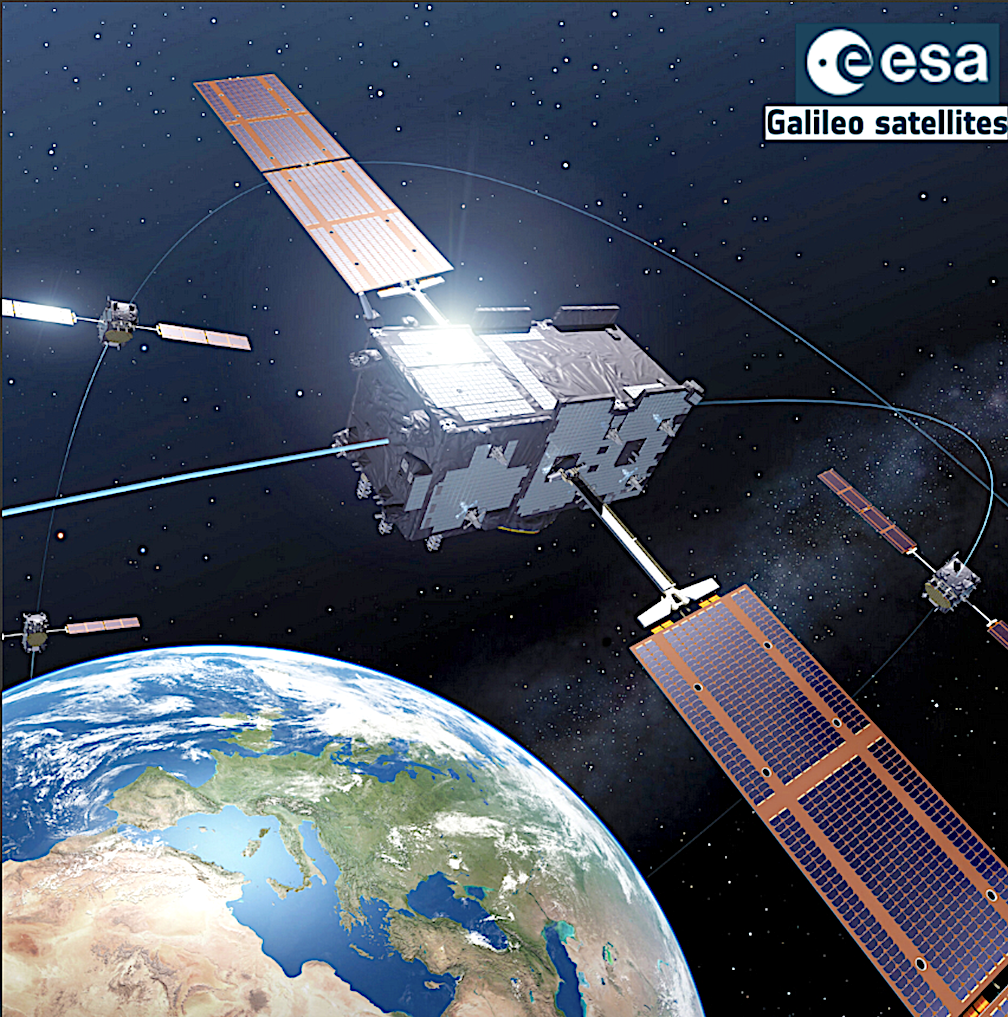
Galileo is Europe’s own global navigation satellite system, providing a highly accurate, guaranteed global positioning service under civilian control. Currently providing Initial Services, Galileo is interoperable with GPS and Glonass, the US and Russian global satellite navigation systems. By offering dual frequencies as standard, Galileo can deliver real-time positioning accuracy down to the metre range.
This is the 22nd launch for this Falcon 9 first stage booster, that previously launched CRS-22, Crew-3, Turksat 5B, Crew-4, CRS-25, Eutelsat, HOTBIRD 13G, O3B mPOWER, PSN SATRIA, Telkomsat Marah Putih 2, and 12 Starlink missions. Following stage separation, the first stage landed on the Just Read the Instructions droneship, stationed in the Atlantic Ocean.
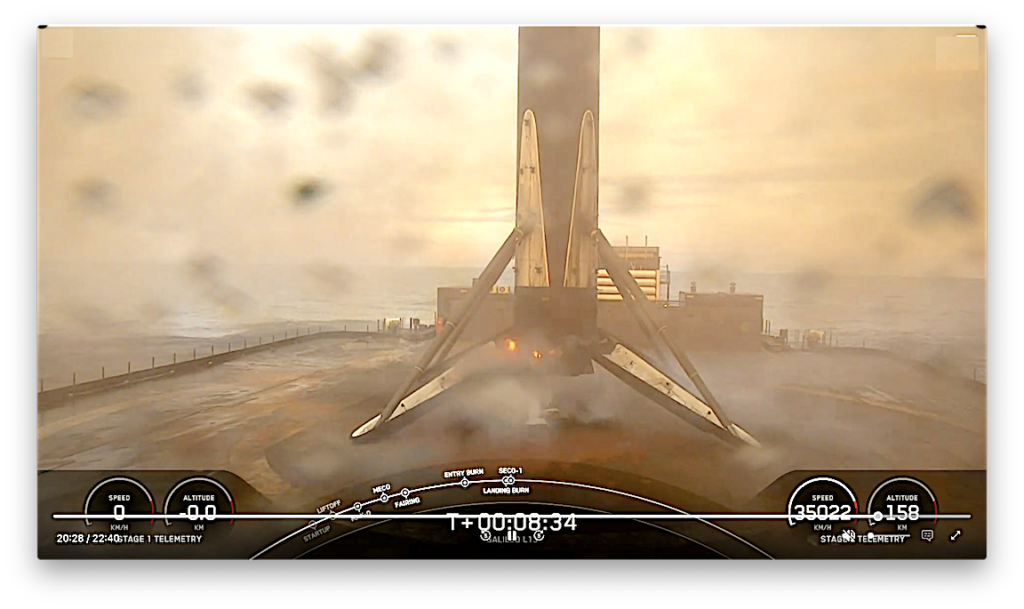
Rapid and reliable reusability is key to making life multiplanetary – every mission is an opportunity to learn and inform future missions. During the Galileo L12 mission earlier this year, the Falcon 9 booster was expended to provide the additional performance needed to deliver the payload to its orbit.
All photos were captured on Tuesday, September 17, by Satnews from SpaceX’s video stream.
Data from that mission informed subtle design and operational changes, including mass reductions and trajectory adjustments, that will allows safe recover and reuse this booster. Falcon 9 is ready to safely
deliver Galileo L13 to orbit and return to the droneship in the Atlantic Ocean.
The booster reentry trajectory will result in higher heating and dynamic pressure on the booster than many of our historical landings. Although the reentry conditions are on the higher end of past missions, they are still acceptable. This landing attempt will test the bounds of recovery, providing valuable data on the design of the vehicle in these elevated entry conditions. This in turn helps innovation on future vehicle designs to make SpaceX vehicles more robust and rapidly reusable while
expanding into more challenging reentry conditions.
SpaceX’s Galileo L13 set for Tuesday launch weather permitting at the Cape
Plans still remain for SpaceX to launch Galileo L13 (FOC FM26 & FM32) to Medium Earth Orbit, on Tuesday, September 17th, at 3:51 PM – 4:24 PM PDT from Space Launch Complex 40, Cape Canaveral, Florida, weather permitting. Forecasts report potential thunderstorms in the afternoon.
“Additionally, expect west coast seabreeze convection to make its way across Florida nearing the
spaceport Tuesday afternoon further enhancing possibilities for showers and thunderstorms.” (see below)

The launch is of two satellites for Europe’s Galileo navigation system. Originally planned for launch on Soyuz-ST and then Ariane 6 but both were unavailable.
Galileo provides Europe with an alternative to the American GPS and Russian GLONASS constellations, but will be interoperable with both systems.
SpaceX ready for Galileo L13 launch on Tuesday
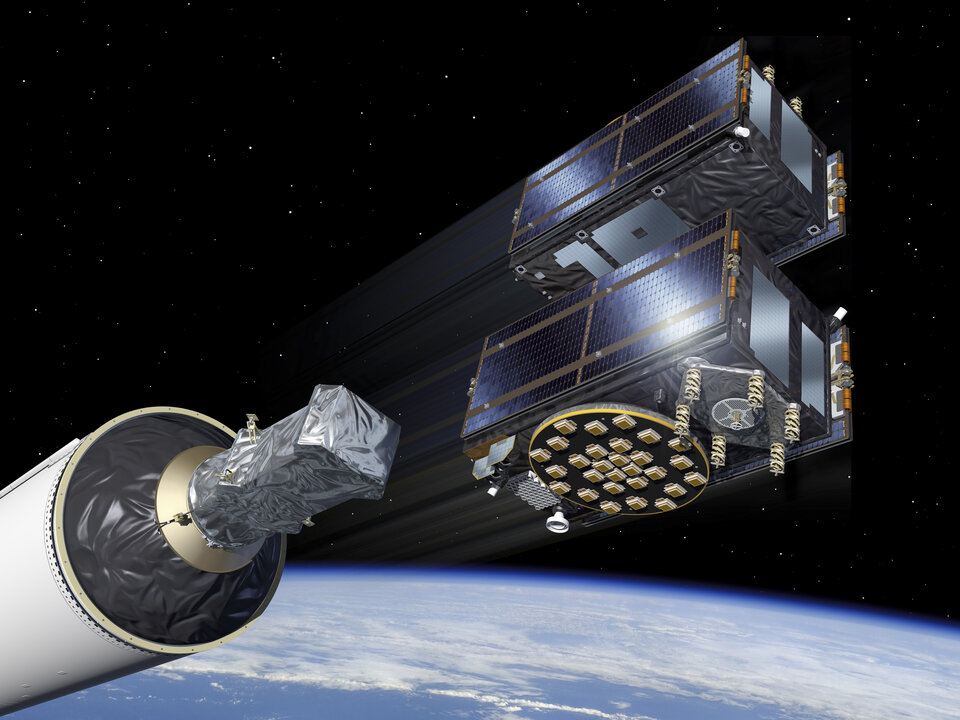
SpaceX is now scheduled to launch Galileo L13 (FOC FM26 & FM32) to Medium Earth Orbit, on Tuesday, September 17th, at 3:51 PM – 4:24 PM PDT from Space Launch Complex 40, Cape Canaveral, Florida.
The launch is of two satellites for Europe’s Galileo navigation system. Originally planned for launch on Soyuz-ST and then Ariane 6 but both were unavailable.
Galileo provides Europe with an alternative to the American GPS and Russian GLONASS constellations, but will be interoperable with both systems.
SpaceX to launch ESA’s Galileo L13, two more satellites for Europe’s alternative to American GPS
SpaceX is scheduled to launch Galileo L13 (FOC FM26 & FM32) to Medium Earth Orbit, on Sunday, September 15th, at 3:57 PM – 4:39 PM PDT from Space Launch Complex 40, Cape Canaveral, Florida.
Three months after their launch from Cape Canaveral, Galileo satellites 29 and 30 have reached their target positions at an altitude of 23 222 km, where they have been fully tested and declared operational.
Galileo is Europe’s own global navigation satellite system, providing a highly accurate, guaranteed global positioning service under civilian control. Currently providing Initial Services, Galileo is interoperable with GPS and Glonass, the US and Russian global satellite navigation systems. By offering dual frequencies as standard, Galileo can deliver real-time positioning accuracy down to the metre range.
Galileo services The current Galileo system consists of 28 satellites in all. All but two of these are positioned in three circular Medium Earth Orbit (MEO) planes at 23 222 km altitude above the Earth, and at an inclination of the orbital planes of 56 degrees to the equator. The remaining pair were placed in incorrect orbits by a Soyuz launcher error, and are currently employed for search and rescue but not as operational members of the constellation.
Initial services became available on 15 December 2016. Then as the constellation is built-up beyond that, new services will be tested and made available.
Galileo navigation signals provide good coverage even at latitudes up to 75 degrees north, which corresponds to Norway’s North Cape – the most northerly tip of Europe – and beyond. The large number of satellites together with the carefully-optimised constellation design, plus the planned availability of three active spare satellites per orbital plane, should ensure that the loss of one satellite should have no discernible effect on the user.
Ground infrastructure Two Galileo Control Centres (GCCs) have been implemented on European ground to provide for the control of the satellites and to perform the navigation mission management. The data provided by a global network of Galileo Sensor Stations (GSSs) are sent to the Galileo Control Centres through a redundant communications network. The GCCs use the data from the Sensor Stations to compute the integrity information and to synchronise the time signal of all satellites with the ground station clocks. The exchange of the data between the Control Centres and the satellites is performed through up-link stations.
As a further feature, Galileo is providing a global Search and Rescue (SAR) function, based on the operational Cospas-Sarsat system. Satellites are therefore equipped with a transponder, which is able to transfer the distress signals from the user transmitters to regional rescue co-ordination centres, which will then initiate the rescue operation.
At the same time, the system will send a response signal to the user, informing him that his situation has been detected and that help is on the way. This latter feature is new and is considered a major upgrade compared to the existing system, which does not provide user feedback.
SpaceX to launch Galileo L13, Europe’s alternative to American GPS
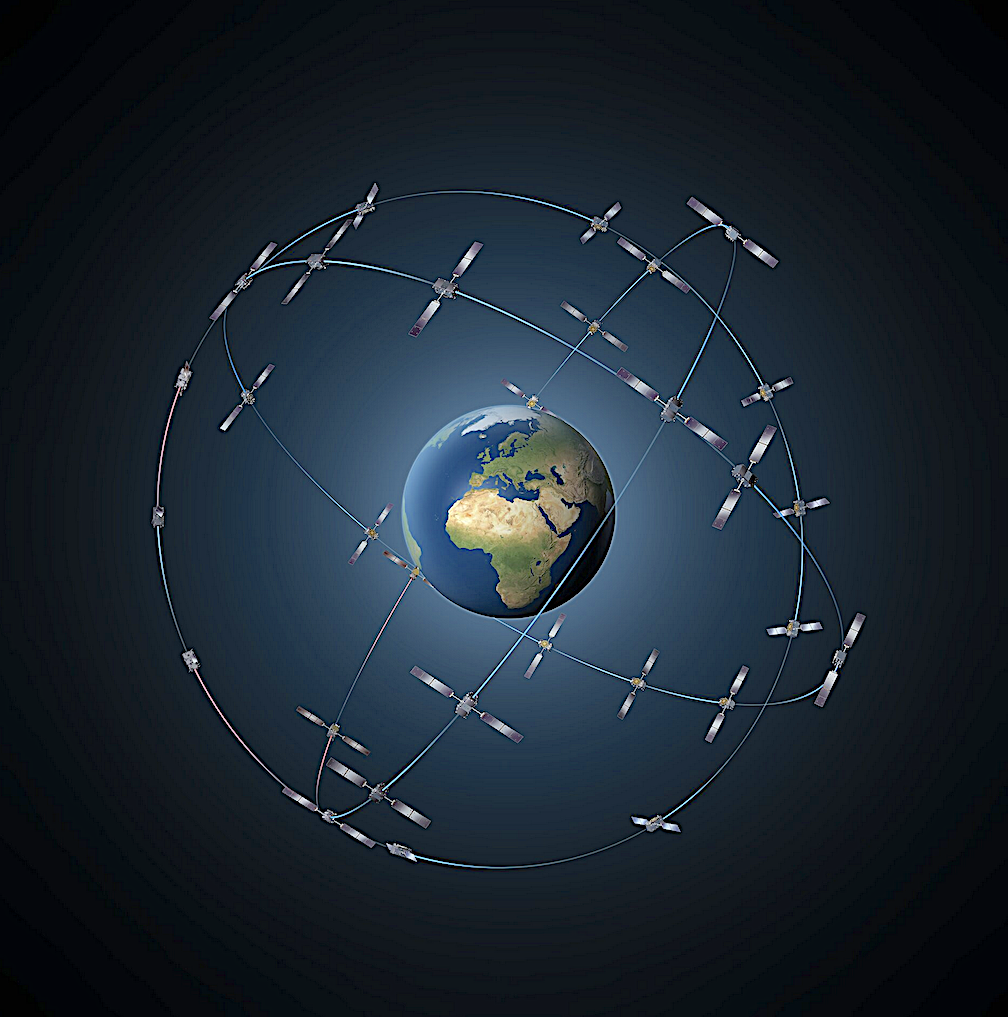
ESA’s Galileo planned constellation
SpaceX is scheduled to launch Galileo L13 (FOC FM26 & FM32) to Medium Earth Orbit, on Sunday, September 15th, at 3:57 PM – 4:39 PM PDT from Space Launch Complex 40, Cape Canaveral, Florida.
The launch is of two satellites for Europe’s Galileo navigation system. Originally planned for launch on Soyuz-ST and then Ariane 6 but both were unavailable.
Galileo provides Europe with an alternative to the American GPS and Russian GLONASS constellations, but will be interoperable with both systems.
New Galileo satellites operational after successful on-orbit testing

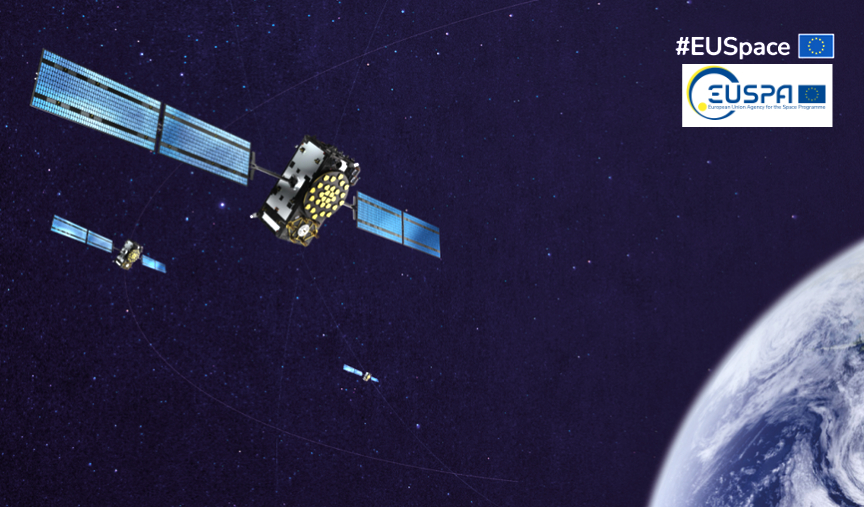
Galileo satellites on-orbit, image courtesy of ESA.
The two new Galileo satellites launched in April have entered service, completing the second of three constellation planes.
With every addition to the constellation, the precision, availability and robustness of the Galileo signal is improved. The next launch is planned in the coming weeks and the remaining six Galileo First Generation satellites will join the constellation in the next years.
Three months after their launch from Cape Canaveral, Galileo satellites 29 and 30 have reached their target positions at an altitude of 23 222 km, where they have been fully tested and declared operational.
Both satellites have been deployed on the same orbital plane, one of the three that make up the Galileo constellation. Now two of the three Galileo orbital planes are fully populated, bringing the constellation one launch away from completion. The next couple of Galileo satellites are planned to launch in the coming weeks from the Kennedy Space Center in Florida onboard a Falcon 9.
The two new satellites are active and providing navigation signals to users. Their addition to the constellation slightly increases the accuracy of the system and further guarantees the availability and robustness of Galileo signals.
To know more about the Galileo constellation status, consult the European GNSS Service Center.
The satellites were launched on April 28 by SpaceX under contract with ESA. A Falcon 9 rocket injected the Galileo satellites into MEO, not far from their final position. During the first hours after launch, the Mission Control Team made sure that the satellites had successfully completed the initialization sequence, that the solar arrays were correctly deployed and able to generate power and that the network of ground stations could track and control them correctly.
Early operations were executed by the Galileo Service Operator, supported by a team of around 30 satellite experts from ESA and satellite manufacturer OHB on site at the Galileo Control Centre in Oberpfaffenhofen, Germany, under the responsibility of EUSPA.
The drift phase then started, with teams on ground guiding manoeuvres to bring the satellites to their final positions, reached on 24 June.
Over the last months, every component on the satellites has been tested to make sure nothing was damaged by the severe launch conditions. Both platform and payload, including antennas and clocks, have been examined.
On August 21st, ESA, OHB and payload manufacturer SSTL assessed the on-orbit test results and concluded that the satellites had not suffered any degradation during launch. ESA, in collaboration with EUSPA, validated the satellites’ performance at system level. In light of these results, the Security Accreditation Board has given the green light for both satellites to begin nominal operations.
This success is a result of the joint efforts of ESA, EUSPA, the European Commission, manufacturer OHB, payload manufacturer SSTL teams at Galileo Control Centers and the Security Accreditation Board.
Galileo is currently the world’s most precise satellite navigation system, serving over four billion smartphone users around the globe since entering Open Service in 2017. All smartphones sold in the European Single Market are now guaranteed Galileo-enabled. In addition, Galileo is making a difference across the fields of rail, maritime, agriculture, financial timing services and rescue operations.
A flagship program of the European Union (EU), Galileo is managed and funded by the European Commission. Since its inception, ESA, as system development prime and design authority, leads the design, development and qualification of the space and ground systems, and procures launch services. ESA is also entrusted with research and development activities for the future of Galileo within the EU programme Horizon Europe.
The EU Agency for the Space Programme (EUSPA) acts as the system prime for the operational system provider, ensuring exploitation and safe and secure delivery of services while overseeing market demands and application needs.
For more info about Galileo, access this direct link…
