

During its first-quarter 2026 earnings call on May 12, 2026, SES (Luxembourg: SESG) confirmed that it will require several additional weeks to complete its internal review of the IRIS² (Infrastructure for Resilience, Interconnectivity and Security by Satellite) project.
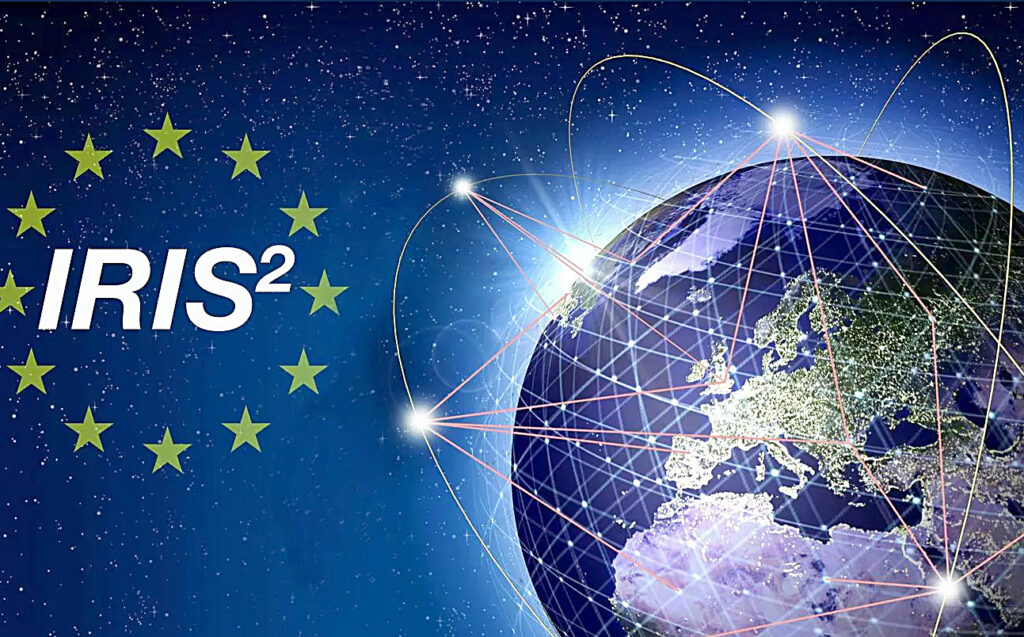
CEO Adel Al-Saleh emphasized that while the SpaceRISE consortium has successfully reached the “Rendez-vous 1” milestone, SES remains disciplined regarding the financial and performance Key Performance Indicators (KPIs) necessary to proceed with the multi-billion euro sovereign constellation.
Strategic Autonomy and the SpaceRISE Consortium
The IRIS² program is the European Union’s flagship initiative to establish a secure, multi-orbit satellite constellation intended to ensure strategic autonomy in government communications. The concession contract for the project was awarded to the SpaceRISE consortium—comprising SES, Eutelsat, and Hispasat—in October 2024. Under the proposed 12-year agreement, the private partners would invest up to €4.4 billion ($5.1 billion), with SES expected to contribute approximately €1.8 billion to the MEO shell.
Al-Saleh’s cautious stance reflects a broader commitment to SES shareholders to avoid “budget burst” scenarios. The current review period is focused on validating that the constellation’s technical performance goals and delivery schedule align with the initial 2024 framework. Despite the extended review, SES reported that its government business grew 50.7% year-on-year in Q1 2026, driven in part by its foundational involvement in the project’s development phase and the expansion of its O3b mPOWER services.
Integration with Next-Generation MEO Infrastructure
The IRIS² project is being developed alongside SES’s own recently announced meoSphere network, a next-generation MEO system targeted for 2030 operations. While IRIS² addresses sovereign security requirements, meoSphere is designed to significantly boost SES’s commercial MEO capacity through software-defined payloads and modular multi-orbit architecture.
To streamline its capital expenditure and avoid “zombie programs,” SES announced it has canceled several unspecified legacy projects that failed to meet target returns. This fiscal discipline supports the company’s reiterated 2026 CapEx outlook of €700 million, which includes initial investments for both meoSphere and the first phase of IRIS².
“Q1 2026 marks a solid start to the year for SES as a combined company with focused execution across our Networks and Media businesses,” said Adel Al-Saleh, CEO of SES. “Our involvement in the IRIS² project reinforces our position in high-priority segments and the strength of our differentiated space-based solutions, but we remain disciplined in our capital allocation to ensure long-term value.”
Operational Milestones and Constellation Manifest
As SES evaluates the IRIS² roadmap, it continues to scale its existing high-throughput infrastructure.
- O3b mPOWER: Satellites 9 and 10 entered commercial service in February 2026, providing a significant boost to network capacity and resilience.
- Launch Schedule: mPOWER satellites 11, 12, and 13 are currently scheduled for launch in the second half of 2026.
- Vertical Integration: Al-Saleh noted that SES is increasing its supply chain ownership to overcome the “sluggishness” of heritage providers, a move that will likely influence how the IRIS² MEO shells are manufactured.
Timeline for Final Decision
The final “go/no-go” decision for SES’s long-term participation in the IRIS² concession is expected to be finalized by mid-2026. This timeline coincides with the European Space Agency’s (ESA) Consolidation Phase for IRIS² Low LEO activities, which is currently open for bids through June 1. If the SpaceRISE consortium validates the current KPIs, the first initial government services for the full IRIS² system are projected to begin by 2030.
