

Bengaluru-based space startup GalaxEye Space achieved a major milestone on Sunday, May 3, with the successful launch of its Mission Drishti satellite. Drishti is touted as the world’s first commercial “OptoSAR” satellite—a platform that integrates both high-resolution multispectral imaging (MSI) and synthetic aperture radar (SAR) on a single spacecraft.
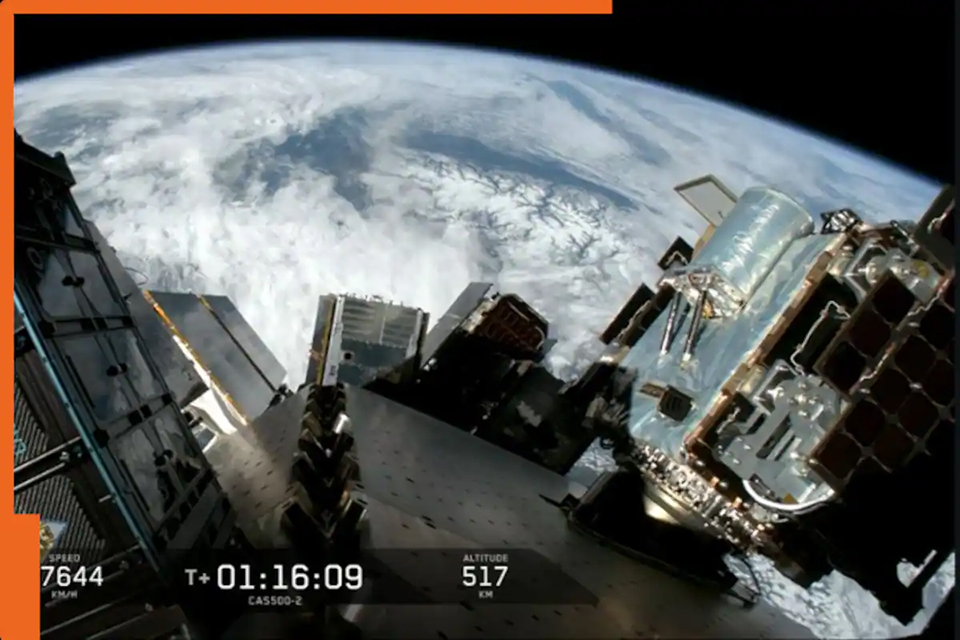
The launch was hailed by Prime Minister Narendra Modi as a testament to the innovation of India’s private space sector. Mission Drishti launched aboard a SpaceX Falcon 9 rocket from Vandenberg Space Force Base in California,
Breakthrough in SyncFused Imaging Technology
The core innovation of Mission Drishti is its proprietary “SyncFused” sensor suite, which addresses the fundamental limitations of traditional Earth observation. While standard optical sensors are blinded by clouds or darkness, and radar imagery can be difficult for non-specialists to interpret, Drishti’s architecture captures both data streams simultaneously from the same perspective. This allows for the fusion of intuitive optical clarity with the all-weather, day-night reliability of SAR, providing “analysis-ready” datasets that are inherently aligned in time and space.
Technical Specifications and Platform Capabilities
Weighing approximately 190 kg, Mission Drishti is currently the largest privately built Earth observation satellite in India.
- Mass: ~190 kg
- Resolution: 1.2 to 3.6 meters (Combined SAR + MSI)
- Bands: X-Band (SAR), Panchromatic, RGB, NIR, Coastal Blue, and Red Edge
- Computing: AI-on-the-edge processing powered by NVIDIA’s Jetson Orin platform
- Antenna: A 3.5-meter deployable radar antenna
- Orbit: Sun-Synchronous LEO at 500 km altitude
Strategic Implications for Indian Defense and Civil Sectors
The mission provides India with a sovereign, all-weather surveillance capability that is critical for national security, disaster response, and maritime monitoring. Lt Gen AK Bhatt (Retd), Director General of the Indian Space Association (ISpA), described the launch as a “pivotal shift” toward persistent intelligence. The satellite’s onboard AI allows for real-time data processing, reducing the time required to convert raw imagery into actionable insights for the Indian Army, Navy, and Air Force, all of whom have reportedly been tracking the program’s development.
Vision for a 10-Satellite Constellation
“Mission Drishti marks our first mission and the culmination of over five years of sustained R&D,” stated Suyash Singh, Founder and CEO of GalaxEye. Following the successful orbital insertion, the startup will begin an eight-week commissioning and calibration phase before initiating commercial data sales. GalaxEye aims to deploy a constellation of 10 OptoSAR satellites by 2030, with a near-term goal of launching the next several units within the next 30 months to achieve higher revisit frequencies for global defense and infrastructure customers.
