

Kongsberg NanoAvionics is preparing to launch three technically distinct satellites—SNAPPY, QUBE II, and Eycore-1—on the upcoming SpaceX CAS500-2 mission. Scheduled for liftoff on Sunday, May 3, from Vandenberg Space Force Base, the mission marks a significant convergence of space-based particle physics, quantum communications, and sovereign European synthetic aperture radar (SAR) capabilities.
Advancing Solar Neutrino and Quantum Research
Aboard the Falcon 9 will be the SNAPPY (Solar Neutrino Astro-Particle PhYsic) 3U CubeSat, the world’s first space-based neutrino detector. Developed by Wichita State University in collaboration with NASA’s Jet Propulsion Laboratory (JPL) and Marshall Space Flight Center, SNAPPY will measure background radiation rates to validate the feasibility of a future larger detector positioned closer to the Sun. Joining it is QUBE II, an 8U CubeSat demoing the first-ever quantum key exchange between a CubeSat and a ground station. This project, coordinated by OHB System AG and the Zentrum für Telematik Würzburg (ZfT), aims to establish the foundation for un-hackable global communications using compact optical terminals.
European SAR Capabilities and Platform Specifications
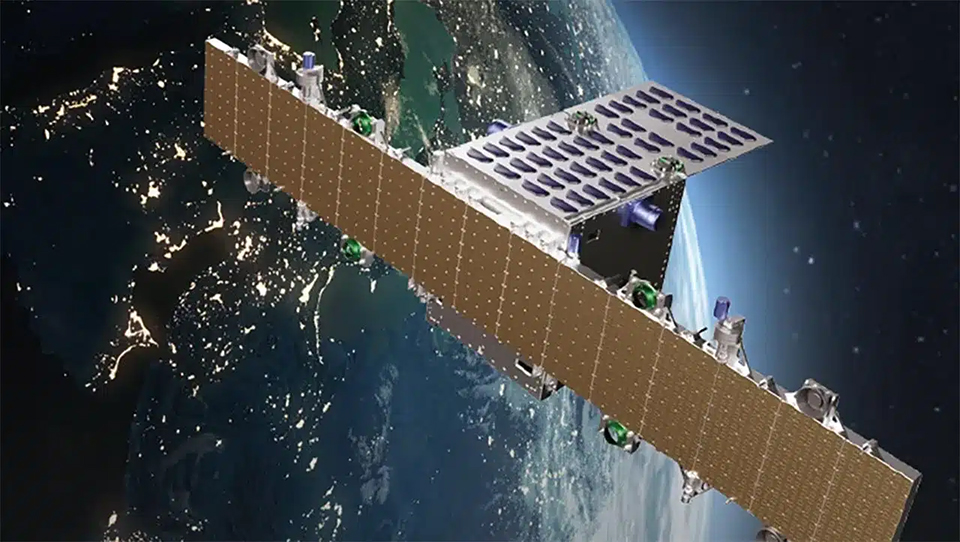
The third payload, Eycore-1, serves as a pilot for an all-European, military-grade SAR solution. It features an X-band radar integrated onto NanoAvionics’ flight-proven MP42 microsatellite bus. This mission is the first SAR application for the MP42 platform, which provides the high peak power and stability required for sub-meter resolution imaging. The deployable active phased-array antenna on Eycore-1 consists of five panels designed to create a large aperture for high-resolution spotlight and stripmap imaging modes, supporting NATO and allied defense requirements.
Strategic Industry Collaboration
“By combining our small satellites with specialized sensors like those from Eycore, we are giving governments a fast, cost-effective path to sovereign capabilities,” stated Atle Wøllo, CEO of Kongsberg NanoAvionics. The partnership with Eycore is designed to de-risk high-performance SAR technology for national security applications. Tomasz Kusowski, Co-founder of Eycore, noted that this demonstrator serves as a springboard for next-generation SAR satellites that will deliver tactical data for rapid disaster response and maritime domain awareness.
Orbit and Deployment
The SpaceX Falcon 9 is targeting a launch window opening at 11:59 p.m. PT on May 2, with deployment of the NanoAvionics-built satellites expected approximately 75 to 82 minutes into flight. Once in its 510-kilometer sun-synchronous orbit (SSO), the Eycore-1 mission will begin its checkout phase to validate the deployable antenna and SAR imaging chain. Simultaneously, the SNAPPY and QUBE II teams will initiate ground station handshakes to begin their respective experimental data collection phases.
