

The United States Space Force successfully established its most resilient orbital architecture to date on April 21, 2026, with the deployment of the final Global Positioning System III satellite.
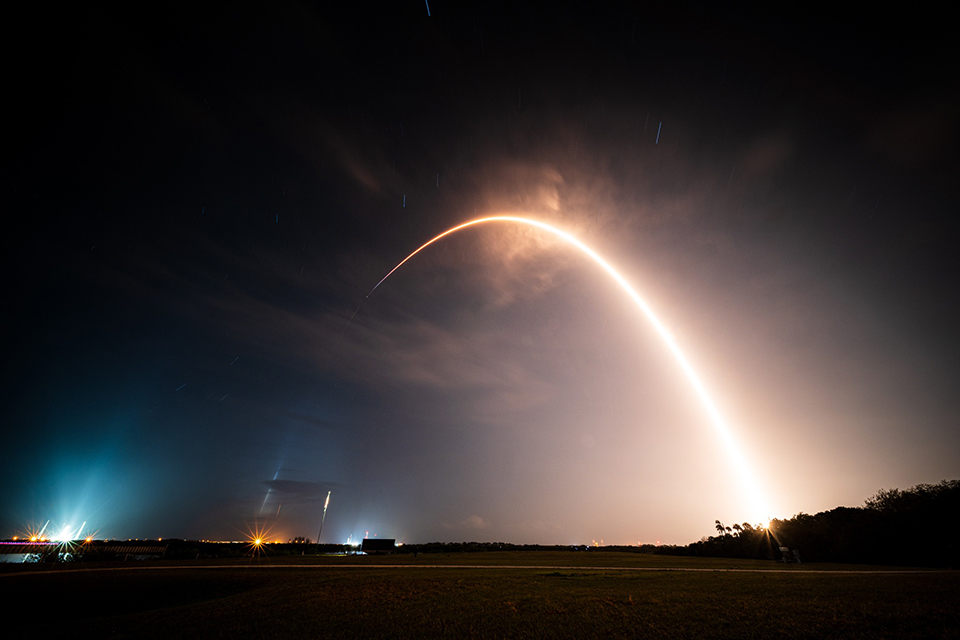
Launched aboard a SpaceX Falcon 9 from Cape Canaveral Space Force Station, the SV-10 mission represents the completion of the initial ten-satellite modernization phase for the world’s primary positioning and timing network. This specific launch highlighted the agility of the National Security Space Launch program, as officials managed a full pivot between launch providers in less than seven weeks to ensure the mission remained on schedule.
Advancing the Constellation through Technical Innovation
The newly deployed satellite serves as a critical bridge to future generations by hosting several pathfinder technologies. Among these innovations is a laser crosslink demonstration designed to evaluate optical communications for faster data tasking and improved ground segment security.
Additionally, the vehicle features the first use of a three-dimensionally printed omni antenna, a manufacturing milestone that reduced production costs by sixty percent while maintaining the rigorous standards required for telemetry and command operations. A new digital rubidium atomic frequency standard also began orbital testing to provide enhanced timing precision for subsequent satellite blocks.
Operational Impact and the Shift to GPS IIIF
With the addition of SV-10, the active constellation now consists of thirty-two satellites offering significantly improved resistance to jamming and three times the accuracy of legacy systems. The Space Force is now transitioning its focus toward the follow-on GPS IIIF series.
Technical Innovations Aboard SV-10
As the “finale” of the Block III series, SV-10 serves as a high-tech pathfinder, hosting several first-of-their-kind developmental payloads intended to bridge the gap toward the future IIIF constellation.
Primary Developmental Payloads
- Optical Crosslink Demonstration: The first optical payload on a GPS satellite. It tests space-to-ground laser communications to improve ground segment resiliency and enable faster tasking updates.
- Digital Rubidium Atomic Frequency Standard (DRAFS): A new space-qualified atomic clock that acts as a redundant master timing reference, enhancing the long-term precision required for future missions.
- Laser Retroreflector Array (LRA): Provided by NASA, this array allows for sub-centimeter orbital measurements via ground-based lasers, refining Earth’s center determination and GPS system performance.
- 3D-Printed Omni Antenna: The first use of advanced additive manufacturing for a GPS antenna, which reduced production time and costs by nearly 60%.
These upcoming satellites are expected to introduce regional military protection capabilities that provide sixty times more anti-jam power than previous iterations, ensuring that allied forces maintain a decisive navigational advantage in increasingly contested electronic environments.
Technical Innovations Aboard SV-10
As the “finale” of the Block III series, SV-10 serves as a high-tech pathfinder, hosting several first-of-their-kind developmental payloads intended to bridge the gap toward the future IIIF constellation.
Comparison of GPS Block Capabilities
| Feature | Legacy GPS | GPS III (Current) | GPS IIIF (Future) |
| Accuracy | Baseline | 3x Better | Enhanced Regional Protection |
| Anti-Jamming | Baseline | 8x Stronger | 60x Stronger |
| Design Life | 12.5 Years | 15 Years | 15+ Years |
| New Signals | L1, L2, L5 | L1C added | Enhanced M-Code |
