

On Sunday, April 26, 2026, policy experts Kristian Stout and Michael Calabrese detailed the strategic importance of the Federal Communications Commission’s (FCC) pending vote to overhaul decades-old satellite power limits.
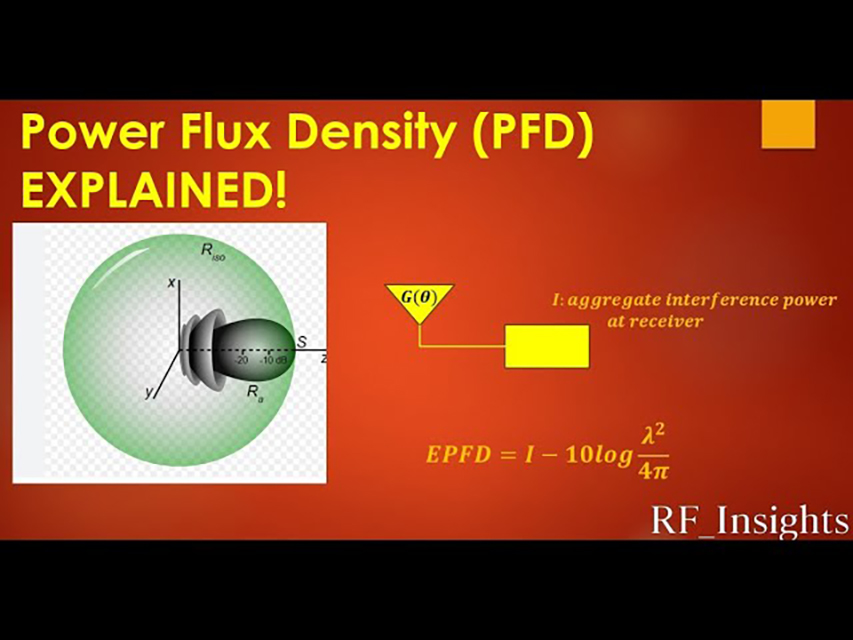
The draft order, scheduled for a vote on April 30, 2026, aims to replace static Equivalent Power Flux Density (EPFD) limits with a performance-based framework, a move estimated to generate $2 billion in economic value and increase satellite broadband capacity by up to 700%.
Moving Beyond 1990s-Era Constraints
The current regulatory regime governing spectrum sharing between non-geostationary orbit (NGSO) and geostationary orbit (GSO) systems was established in the 1990s. These rules relied on static “worst-case” interference assumptions that did not account for modern technological advances like adaptive coding and modulation (ACM), phased array antennas, or sophisticated beam-forming.
According to Stout and Calabrese, the existing EPFD caps have effectively overprotected a small number of legacy geostationary systems at the expense of next-generation Low Earth Orbit (LEO) constellations. By shifting from policing hypothetical interference to evaluating actual measurable effects on GSO links, the FCC is signaling a broader philosophy that regulation should follow real-world performance rather than 30-year-old technical speculation.
Technical Specifications of the Performance-Based Framework
The proposed order introduces specific data-driven protection criteria to ensure that legacy GSO operations remain essentially unchanged while allowing NGSO operators higher power flexibility:
- Short-Term Protection: A maximum absolute increase in unavailability of 0.1% for GSO systems.
- Long-Term Protection: A threshold of 3% time-weighted average throughput degradation for GSO links using ACM.
- Operational Flexibility: NGSO systems will be authorized to use more satellites to serve a given area at higher power levels across wider portions of the visible sky.
Economic and Market Rationale
The shift toward performance-based regulation is designed to lower the cost of space-based broadband by reducing the number of satellites required to serve a specific geographic footprint. Market analysis from the FCC and the LEO Policy Working Group suggests this modernization is essential to bridge the digital divide in rural and remote areas where terrestrial fiber remains cost-prohibitive.
Chairman Brendan Carr recently stated that discarding these “last century” regulations will enable the U.S. space industry to deliver more reliable and competitive internet options. Furthermore, establishing this framework domestically provides a template for the United States to lead international negotiations at the International Telecommunication Union (ITU), where global spectrum sharing standards are finalized.
Future Regulatory Continuity
While the pending vote marks a major milestone, Stout and Calabrese emphasize that the new framework will require rigorous monitoring and good-faith coordination among operators. The FCC has already granted temporary waivers of EPFD limits to leaders like SpaceX and Amazon’s Project Kuiper, but the new order will codify these allowances into a permanent, predictable regulatory environment for all current and future market entrants.
