

The argument for satellite-to-phone connectivity changes when the phone does not need to change. OQ Technology proved that in December 2025.
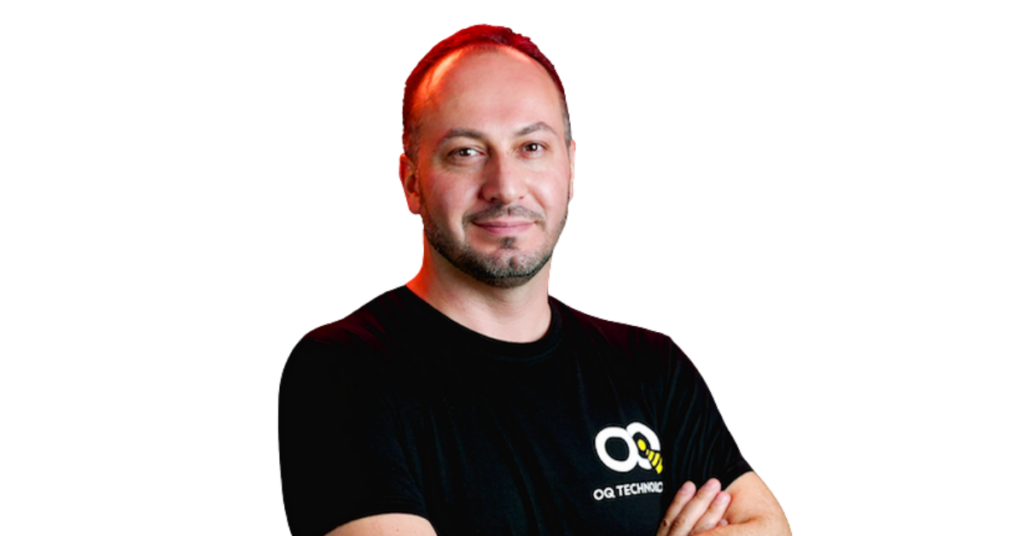
Omar Qaise is the founder and CEO of OQ Technology, a Luxembourg-based satellite operator building a LEO constellation for 5G NB-IoT and direct-to-device connectivity. Qaise founded the company in 2016 after working at ESA, OHB Systems, the German Aerospace Centre, EUMETSAT, and SES. OQ Technology now operates 10 satellites in low Earth orbit and has raised approximately €68 million across three rounds: a €13 million Series A in 2022 co-led by Saudi Aramco’s venture arm and 5G Ventures, a €30 million Series B in 2024 with a €15 million injection from the Luxembourg Space Sector Development fund, and a €25 million European Investment Bank venture debt facility announced in February 2026 under the InvestEU program to build and launch at least 20 additional satellites over the next two years.
The December 2025 milestone matters because it addresses a core adoption barrier. OQ Technology completed an end-to-end 5G NB-IoT link between its LEO constellation and a standard Nordic Semiconductor nRF9151 chipset, a mass-market component already deployed across terrestrial IoT networks, with no hardware modifications. SatNews covered the terrestrial chipset integration in December 2025. A month earlier, OQ Technology achieved Europe’s first direct-to-mobile emergency broadcast from space. In April 2026, SatNews reported on a €1 million ESA contract for the BEAMSAT-5G project, which will adapt terrestrial 5G beamforming techniques for satellite use.
The direct-to-device market in Europe faces a particular structural challenge: 27 national regulators, each with different spectrum allocation rules, set against a global field of competitors that includes Apple, SpaceX, and AST SpaceMobile. The 5G NTN standard, which OQ Technology has built around, is the European bet on using a single international framework to counter that fragmentation.
At SmallSat Europe, Qaise joins a panel titled “The One Standard, 27 Regulators: Leveraging 5G NTN to Counter D2D First-Movers.”
The satellites can reach the phone. The question is whether the regulations can keep up.
