

On Monday, April 27, 2026, Santa Fe-based Solstar Space Company announced that its Deke Space Communicator has successfully completed its initial on-orbit checkout and is operating nominally.
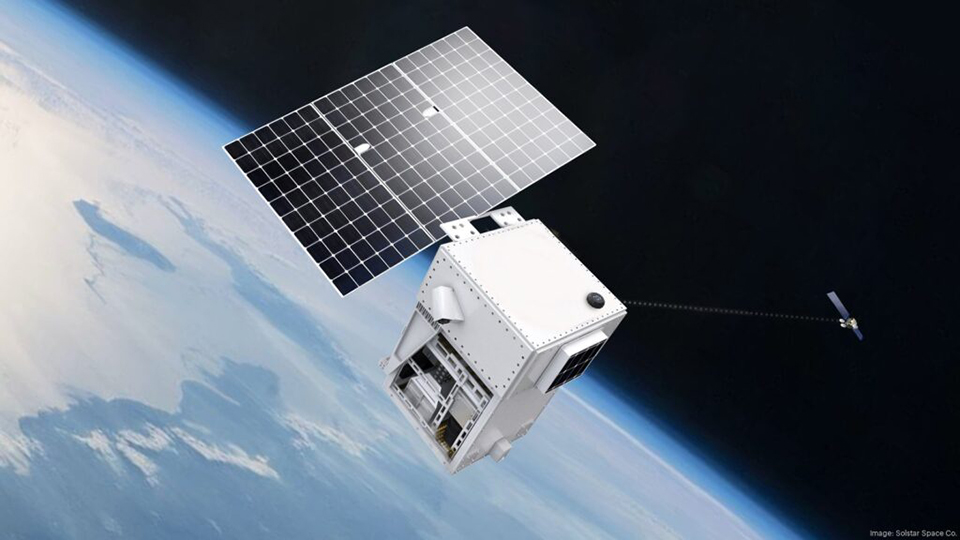
The system was launched on March 30, 2026, as part of the SpaceX Transporter-16 rideshare mission from Vandenberg Space Force Base. Following its orbital insertion, the system was powered on April 15, confirming that it survived the rigors of launch and is functioning as designed.
Achievement of Technology Readiness Level 9
The successful validation of the Deke system’s core communications capabilities in low Earth orbit (LEO) has advanced the technology to Technology Readiness Level 9 (TRL 9). This is the highest level of technical maturity defined by NASA, signifying a flight-proven system through successful mission operations.
During the checkout period, Solstar verified several key operational milestones:
- Successful activation and initialization of the Deke hardware.
- Bi-directional data transmission between the spacecraft and ground operations.
- Onboard Wi-Fi functionality operating nominally within the hosted environment.
Context: Enhancing Spacecraft Interconnectivity
Spacecraft have traditionally relied on scheduled communication windows with specific ground stations, often leaving assets disconnected for up to 90% of their orbit. The Deke Space Communicator is designed to mitigate these blackouts by creating a persistent “communications layer” for space, allowing satellites to connect to existing commercial internet-style networks.
The current mission is conducted in partnership with Momentus Inc., whose Vigoride orbital service vehicle is hosting the Deke payload. The system is also facilitating a commercial rendezvous and proximity operations (RPO) experiment in collaboration with NASA. In this validation test, a NASA CubeSat deployed from Vigoride will utilize the Deke communicator to transfer large data and image files back to the carrier vehicle for downlink.
Executive Perspective: M. Brian Barnett
“Spacecraft today are essentially powerful computers operating in orbit, but most are still largely disconnected from modern networking infrastructure. Deke is now demonstrating in orbit how spacecraft can connect the way devices do on Earth, creating the communications layer for space. Connectivity becomes even more important when spacecraft are operating together in complex missions. Our work with NASA helps demonstrate how technologies like Deke can support entirely new classes of space operations.” — M. Brian Barnett, Founder and CEO, Solstar Space Company.
Technical Specifications and Future Integration
The Deke Space Communicator is a compact, card-deck-sized device engineered for seamless integration into CubeSats, SmallSats, and orbital transfer vehicles. It provides secure, low-latency narrowband connectivity that supports telemetry access, remote operations, and mission-critical alerts. By leveraging existing commercial satellite networks rather than requiring new dedicated infrastructure, the system offers a cost-effective solution for satellite operators.
Solstar is positioning the technology as a primary tool for future in-orbit activities, including satellite servicing, assembly, and commercial space stations. The system’s Wi-Fi capabilities are also being explored for future lunar missions, with Solstar recently securing a NASA SBIR contract to develop next-generation lunar Wi-Fi access points.
