

Hon Hai Technology Group (Foxconn) announced on Sunday, May 3, the successful launch of its second-generation low-Earth orbit (LEO) satellites, PEARL-1A and PEARL-1B. The two spacecraft were launched aboard a SpaceX Falcon 9 rocket from Vandenberg Space Force Base in California.
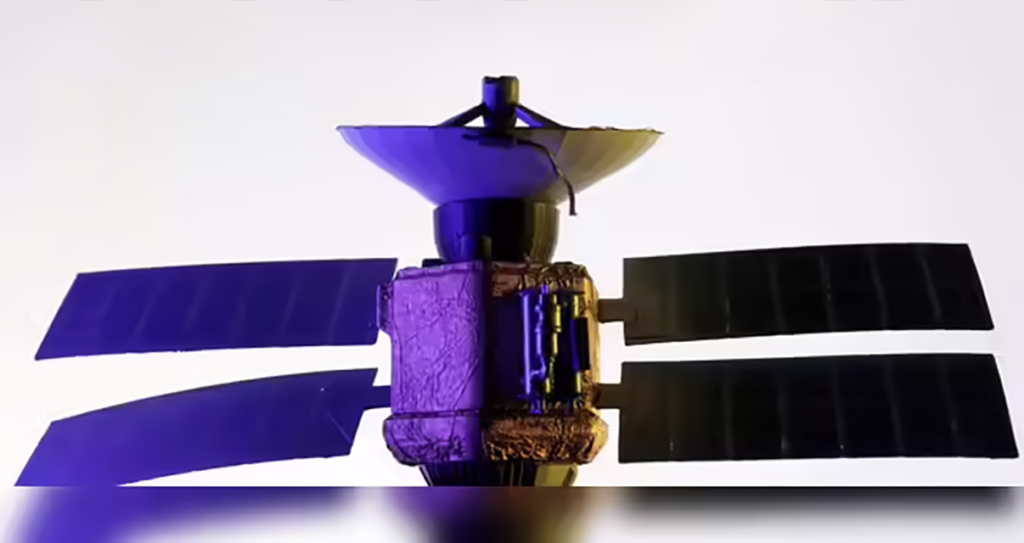
This mission represents Foxconn’s latest advancement in its “3+3” strategic initiative, specifically targeting next-generation communications and space-based hardware validation.
Technical Validation of Intersatellite Links
The primary objective of the PEARL-1A and PEARL-1B mission is to verify advanced payload technologies, with a specific focus on intersatellite communication links (ISLs). These crosslinks allow satellites within a constellation to communicate directly with one another, reducing reliance on ground stations and lowering latency for data transmission. The satellites are also equipped to test “Beyond 5G” (B5G) capabilities, including high-frequency radio propagation experiments designed to support future global broadband and Internet of Things (IoT) connectivity.
Platform Specifications and Mission Life
Building on the lessons learned from the PEARL-1H and PEARL-1C “proof of concept” cubesats launched in late 2023, the second-generation satellites feature enhanced power systems and more robust onboard processing.
- Spacecraft Type: Advanced 6U-class CubeSats.
- Design Life: Scheduled for a five-year operational mission.
- Manufacturer: Developed by Foxconn in collaboration with academic and industrial partners, including National Central University (NCU).
- Orbit: Positioned in a Sun-Synchronous Orbit (SSO) at an approximate altitude of 520 km.
Strategic Context for “3+3” Expansion
The PEARL program is a cornerstone of Foxconn’s transition from a traditional electronics manufacturer to a holistic technology platform provider. The “3+3” strategy prioritizes three emerging industries—electric vehicles, digital health, and robotics—supported by three core technologies: artificial intelligence, semiconductors, and next-generation communications. By owning the satellite hardware and the communications stack, Foxconn aims to offer vertically integrated services for the automotive and industrial sectors, including real-time telemetry for its burgeoning EV platform.
Next Steps for Constellation Commissioning
Following successful orbital insertion, the PEARL-1A and PEARL-1B satellites have established initial contact with Foxconn’s ground receiving stations.
The next phase of the mission involves a multi-month commissioning period to calibrate the communication payloads and begin the intersatellite relay tests. The data gathered from this five-year mission will inform the design of Foxconn’s planned commercial-scale constellation, which the company intends to utilize for global supply chain tracking and environmental monitoring services.
