

• Skip to primary navigation
  • Skip to main content
  • Skip to primary sidebar
  • Skip to secondary sidebar
  • Skip to footer
  • NEWS:
  • SatNews
  • SatMagazine
  • MilSatMagazine
  • SmallSat News
  • |     EVENTS:
  • SmallSat Symposium
  • Satellite Innovation
  • MilSat Symposium
  • SmallSat Europe

SatNews

Satellite Industry Intelligence Since 1983

Subscribe
  • LATEST
  • SatNews Events
  • Magazines
  • Calendar
  • Subscribe
  • Missions & Constellations
    • Exploration & Science Missions
    • In-Orbit Servicing & Orbital Operations
    • LEO Constellations
    • Mission Autonomy & Onboard Systems
    • Mission Deployments & Manifests
    • Navigation & PNT
    • SmallSat
    • Spacecraft & Payload Technology
    View All in Missions & Constellations →
    NASA’s Shift to CLPS 2.0 Signals Structural Transformation of Lunar Logistics MarketNASA’s Shift to CLPS 2.0 Signals Structural Transformation of Lunar Logistics Market
    Teledyne to Showcase Integrated Sensing Ecosystem and New Low-Light Module at SPIE 2026Teledyne to Showcase Integrated Sensing Ecosystem and New Low-Light Module at SPIE 2026
    NASA Shuts Off Instrument on Voyager 1 to Extend Interstellar MissionNASA Shuts Off Instrument on Voyager 1 to Extend Interstellar Mission
    Starlink Outages Disrupt Navy Drone Tests as Pentagon Dependency GrowsStarlink Outages Disrupt Navy Drone Tests as Pentagon Dependency Grows
  • Business
    • Contracts & Commercial Deals
    • Earnings & Financial Reporting
    • Events & Conferences
    • Funding & Venture Capital
    • Market Forecasts
    • Mergers & Acquisitions
    • Personnel Moves & Appointments
    View All in Business & Finance →
    Market Dynamics and Non-Terrestrial Network (NTN) ChipsetsMarket Dynamics and Non-Terrestrial Network (NTN) Chipsets
    SmallSat Europe Speaker Focus: Alexander Greenberg, Loft OrbitalSmallSat Europe Speaker Focus: Alexander Greenberg, Loft Orbital
    SmallSat Europe Speaker Focus: Carsten Drachmann, GomSpaceSmallSat Europe Speaker Focus: Carsten Drachmann, GomSpace
    Meink: Space Force Programs Ready to Execute Once FY27 Budget LandsMeink: Space Force Programs Ready to Execute Once FY27 Budget Lands
  • Defense
    • Counterspace & ASAT
    • Defense Budgets & Procurement
    • ISR & Reconnaissance
    • MILSATCOM
    • Missile Warning & Defense
    • National Security Programs
    • Space Domain Awareness
    View All in Military & Defense →
    USSF Finalizes GPS III Constellation with Successful SV-10 DeploymentUSSF Finalizes GPS III Constellation with Successful SV-10 Deployment
    SDA’s Sandhoo: Tranche 1 Launches Resume in May or JuneSDA’s Sandhoo: Tranche 1 Launches Resume in May or June
    Gen. Stephen Whiting: First USSPACECOM Operational Staff Arrive at Redstone This WeekGen. Stephen Whiting: First USSPACECOM Operational Staff Arrive at Redstone This Week
    Saltzman Rolls Out Space Force Objective Force, Flags CR as Top RiskSaltzman Rolls Out Space Force Objective Force, Flags CR as Top Risk
  • Gov
    • Export Controls & Compliance
    • International Space Agreements
    • National Space Policy
    • Space Law & Treaties
    • Space Sustainability & Debris Policy
    • Space Traffic Management / Debris Removal
    View All in Government & Regulation →
    FCC Grants AST SpaceMobile Authority for 248-Satellite Constellation and Direct-to-Cell ServiceFCC Grants AST SpaceMobile Authority for 248-Satellite Constellation and Direct-to-Cell Service
    SmallSat Europe Speaker Focus: Col. Marcin Mazur, Polish Space AgencySmallSat Europe Speaker Focus: Col. Marcin Mazur, Polish Space Agency
    SmallSat Europe Speaker Focus: Chris Quilty, Quilty SpaceSmallSat Europe Speaker Focus: Chris Quilty, Quilty Space
    NRL to Showcase Sovereign Space Capabilities at 41st Space SymposiumNRL to Showcase Sovereign Space Capabilities at 41st Space Symposium
  • Launch
    • Launch Providers
    • Launch Schedule & Calendars
    • Launch Sites & Infrastructure
    • Rocket Technology & Vehicles
    View All in Launch →
    Blue Origin Achieves First Booster Reuse but Satellite Enters Off-Nominal OrbitBlue Origin Achieves First Booster Reuse but Satellite Enters Off-Nominal Orbit
    Ensign-Bickford Hardware Supports Successful Artemis II Lunar MissionEnsign-Bickford Hardware Supports Successful Artemis II Lunar Mission
    China Accelerates Orbital Internet Deployment with Successful Smart Dragon-3 Sea LaunchChina Accelerates Orbital Internet Deployment with Successful Smart Dragon-3 Sea Launch
    What the SpaceX IPO Changes for Every Satellite OperatorWhat the SpaceX IPO Changes for Every Satellite Operator
  • Software
    • Autonomous Ground Operations
    • Data Processing & AI/ML
    • Digital Twins & Modeling
    • Ground Segment & Teleports
    • Mission Planning & Simulation
    • Space Systems Software Engineering
    • Spectrum & Licensing
    View All in Software Automation & Ground Systems →
    RF-Design Launches FiberLink CompactLine FCLR1811S4 for Ground Segment OptimizationRF-Design Launches FiberLink CompactLine FCLR1811S4 for Ground Segment Optimization
    Sat-Lite Technologies adds  Richard Rader to Spearhead Sales ExpansionSat-Lite Technologies adds Richard Rader to Spearhead Sales Expansion
    Blue Origin Unveils Project Quartz Global Ground Station NetworkBlue Origin Unveils Project Quartz Global Ground Station Network
    Cloudcomputing Targets 1.5M Identities in Spain and Finalizes Innovate IT AcquisitionCloudcomputing Targets 1.5M Identities in Spain and Finalizes Innovate IT Acquisition
  • Services & Apps
    • Climate & Environmental Monitoring
    • Disaster Response & Security Mapping
    • Earth Observation & Imaging
    • Maritime & Aviation Satcom
    • Satellite Communications
    View All in Services & Applications →
    IEC Telecom Unveils Voucher-Based Connectivity Solution at Singapore Maritime Week 2026IEC Telecom Unveils Voucher-Based Connectivity Solution at Singapore Maritime Week 2026
    GomSpace and STETMAN Establish UASAT Joint Venture for Ukrainian Sovereign CommunicationsGomSpace and STETMAN Establish UASAT Joint Venture for Ukrainian Sovereign Communications
    ISS National Lab Launches 2026 Orbital Edge Accelerator to Scale Space-Based R&DISS National Lab Launches 2026 Orbital Edge Accelerator to Scale Space-Based R&D
    Kymeta Chief Scientist Discusses Metamaterial Antenna Evolution and Orbital SustainabilityKymeta Chief Scientist Discusses Metamaterial Antenna Evolution and Orbital Sustainability

NASA Shuts Off Instrument on Voyager 1 to Extend Interstellar Mission

April 19, 2026

On Friday, April 17, 2026, engineers at NASA’s Jet Propulsion Laboratory (JPL) sent commands to deactivate one of the few remaining science instruments aboard Voyager 1. The decision to shut down the Low-energy Charged Particles (LECP) experiment was made to conserve the spacecraft’s dwindling power reserves, ensuring that the most distant human-made object can continue its historic journey through interstellar space for as long as possible.
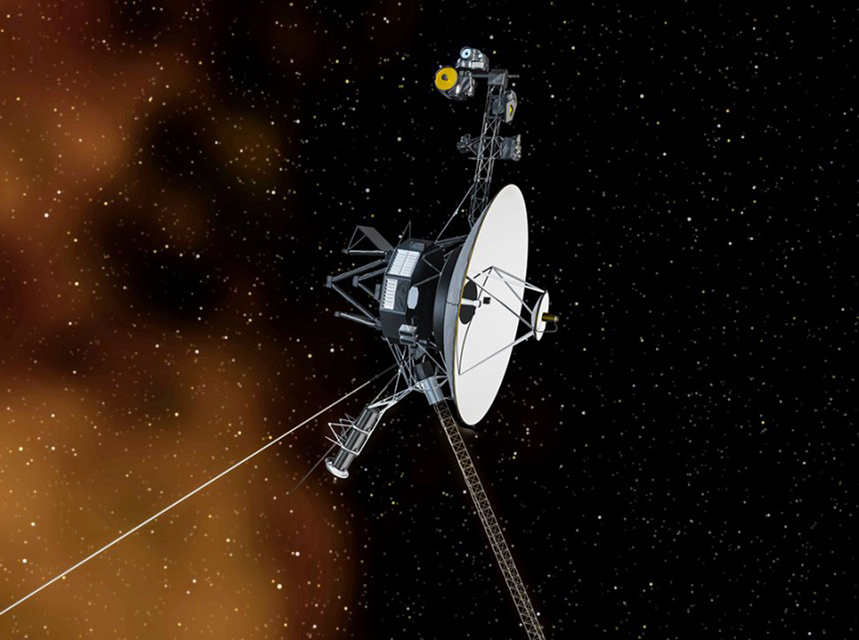
Voyager 1 is currently more than 15.7 billion miles (25.3 billion km) from Earth. At this extreme distance, it takes approximately 23.5 hours for a radio signal traveling at the speed of light to reach the probe, meaning mission controllers must wait nearly two full days to confirm the success of any command.

Managing a Decades-Old Nuclear Power Source

Voyager 1 relies on a radioisotope thermoelectric generator (RTG), which converts the heat from decaying plutonium-238 into electricity. Because the plutonium decays over time, the spacecraft’s power output decreases by about 4 watts every year. After nearly 49 years in the harsh environment of space, these power margins have become razor-thin.

The decision to power down the LECP was prompted by an unexpected drop in power levels during a routine roll maneuver in late February 2026. This dip brought Voyager 1 dangerously close to triggering its automatic “undervoltage” fault protection—a self-preservation mode that would have shut down critical systems and required a risky, multi-day recovery process. To stay ahead of this threshold, engineers chose to manually retire the LECP, which had been operating almost continuously since the probe’s launch in 1977.

Preserving Interstellar Science

The LECP was a vital tool for mapping the frontier beyond our solar system, measuring ions, electrons, and cosmic rays to detect the invisible pressure fronts of interstellar space. While its shutdown is a loss for science, the move preserves power for the two remaining active instruments:

  • The Magnetometer (MAG): Measures the magnetic fields of the interstellar medium.
  • The Plasma Wave Subsystem (PWS): “Listens” for density changes in the interstellar plasma.
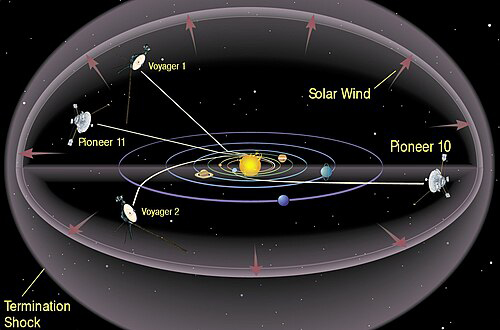
By prioritizing these two sensors, NASA ensures the mission continues to report on the fundamental physics of the universe from a location no other spacecraft has reached. Interestingly, a small motor used to rotate the LECP sensor will remain powered on; at just 0.5 watts, it is left running to prevent it from seizing, leaving a slim possibility of restarting the instrument if power levels are stabilized in the future.

The “Big Bang” Strategy for the 2030s

The shutdown of the LECP provides Voyager 1 with roughly one year of “breathing room.” During this time, the team is finalizing a high-stakes power management plan internally known as the Big Bang. This strategy involves swapping a group of older, power-hungry components for lower-power alternatives all at once to keep the spacecraft’s vital electronics warm enough to function.

NASA plans to test the Big Bang procedure on Voyager 2 in May and June 2026, as the twin probe is closer to Earth and has slightly more power to spare. If successful, the same fix will be applied to Voyager 1 no sooner than July 2026. The ultimate goal is to keep at least one science instrument operational on both spacecraft well into the 2030s.

One Light-Day Away

Even as its power fades, Voyager 1 continues to set records. On November 15, 2026, the spacecraft is projected to reach a symbolic distance of exactly one light-day from Earth—approximately 16.1 billion miles (25.9 billion km). At that point, a message sent from NASA’s Deep Space Network will take a full 24 hours to reach the probe, and another 24 hours for the response to return. This mission remains a testament to the ingenuity of the engineers who keep a 1970s-era machine functioning in the deep silence of interstellar space.

Filed Under: Missions & Constellations

Primary Sidebar

Coverage

  • Missions & Constellations
  • Business & Finance
  • Military & Defense
  • Launch
  • Software Automation & Ground Systems
  • Government & Regulation
  • Services & Applications

Most Read Stories

  • SpaceX Loses Contact With Starlink Satellite
  • Rocket Lab Emerging as Potential Bus Provider for 2,800-Satellite Equatys Constellation
  • SpaceX Accelerates Record-Breaking IPO Following Trillion-Dollar xAI Merger
  • Planet Labs Imposes Indefinite Blackout on Iran Satellite Imagery at U.S. Request
  • Amazon in Reported Talks to Acquire Globalstar in $9 Billion Move to Challenge Starlink

Secondary Sidebar

Footer


Satnews is a leading provider of satellite news, events, publications, research and other satellite industry information in both commercial and military enterprises worldwide.

Stories By Category

  • Business & Finance
  • Government & Regulation
  • Launch
  • Military & Defense
  • Missions & Constellations
  • Services & Applications
  • Software Automation & Ground Systems
  • Spectrum & Licensing
  • Startups & NewSpace Business

About Us

  • Leadership & Editorial Team
  • SatNews History
  • Free Satnews Subscription
  • SatNews Events
  • Magazines

Navigation

  • Latest Stories
  • Magazines
  • Events
  • Contact
  • Cookie & Privacy Policy for Satnews

We use cookies to ensure that we give you the best experience on our website. If you continue to use this site we will assume that you are happy with it.
x
Sign up Now (For Free)
Access daily or weekly satellite news updates covering all aspects of the commercial and military satellite industry.
Invalid email address
Notify Me Regarding ( At least one ):
We value your privacy and will not sell or share your email or other information with any other company. You may also unsubscribe at anytime.

Click Here to see our full privacy policy.
Thanks for subscribing!