

On Monday, April 13, 2026, Ensign-Bickford Aerospace & Defense (EBAD) confirmed that its critical separation and initiation hardware performed successfully during NASA’s historic Artemis II mission.
The mission, which concluded with a splashdown on April 10, 2026, was the first crewed flight beyond low Earth orbit (LEO) in more than 50 years.
During the 10-day flight, the four-person crew traveled approximately 1.4 million miles, validating the Space Launch System (SLS) rocket and the Orion spacecraft. EBAD’s hardware, manufactured at the company’s facilities in Simsbury, Connecticut, and Moorpark, California, was instrumental in every major staging and separation event throughout the mission profile.
Crucial Staging and Separation Components
EBAD supplied a suite of precision energetics and mechanical systems designed to ensure the structural integrity and timely separation of vehicle stages. For the SLS rocket, the company provided:
- Flight Termination Systems: Critical safety hardware for the vehicle’s ascent.
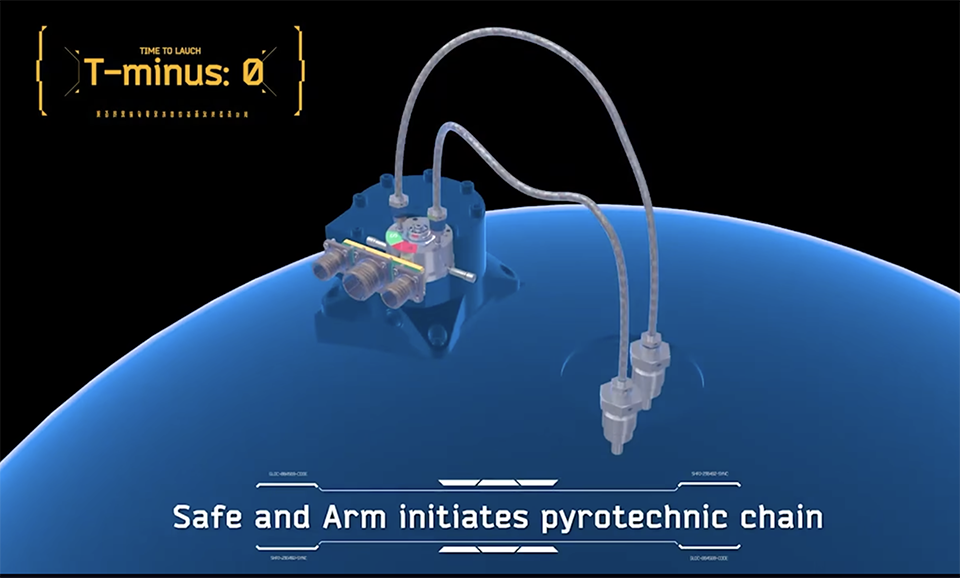
- Initiation Systems: Precision triggers for propulsion and staging.
- Stage Separation Hardware: Ensuring the clean release of boosters and core stages.
For the Orion spacecraft, EBAD hardware managed the separation of the Launch Abort System (LAS), the Crew Module, and the Service Module. Each event occurred according to the precise mission timeline, maintaining the safety of the crew and the stability of the vehicle.
Rigorous Environmental Qualification
The successful performance of these components follows years of internal development and qualification at EBAD’s test centers. The hardware was subjected to extreme thermal cycles, severe shock, and high-frequency vibration testing to simulate the rigors of lunar transit and reentry.
“From right here in Connecticut and our California plant, our employees contributed to one of the most significant human spaceflight missions in decades,” said Jennifer Lewis, President of EBAD. “Artemis II represents progress, persistence, and partnership. We are proud to stand alongside NASA and our industry partners in enabling the next chapter of exploration.”
Legacy of Artemis Program Support
EBAD’s involvement in the Artemis program dates back to 2008, including a significant role in the uncrewed Artemis I mission in 2022. The company’s Simsbury facility previously hosted NASA and prime contractor representatives to recognize the local workforce for their contributions to the Deep Space Exploration Systems.
“Every customer’s mission is critical, but there is something special about building and providing hardware for the first astronaut mission in over 50 years,” added Lisa Brown, Market Segment Director for Space & Launch Vehicles. “Regardless of our extensive product heritage, our team spends a significant amount of time inspecting, testing, and verifying the hardware because it must work the first time.“
Path to Artemis III and Lunar Landings
The successful validation of EBAD’s hardware during Artemis II clears a primary technical hurdle for the upcoming Artemis III mission, currently targeted for 2027. This mission will mark the return of humans to the lunar surface. EBAD continues to work with NASA and prime contractors to supply the separation systems required for the Human Landing System (HLS) and the long-term establishment of the Lunar Gateway station.
