

SpaceX successfully launched its second CAS500 (Compact Advanced Satellite 500) mission on Sunday, May 3, carrying three milestone satellites built by Kongsberg NanoAvionics.
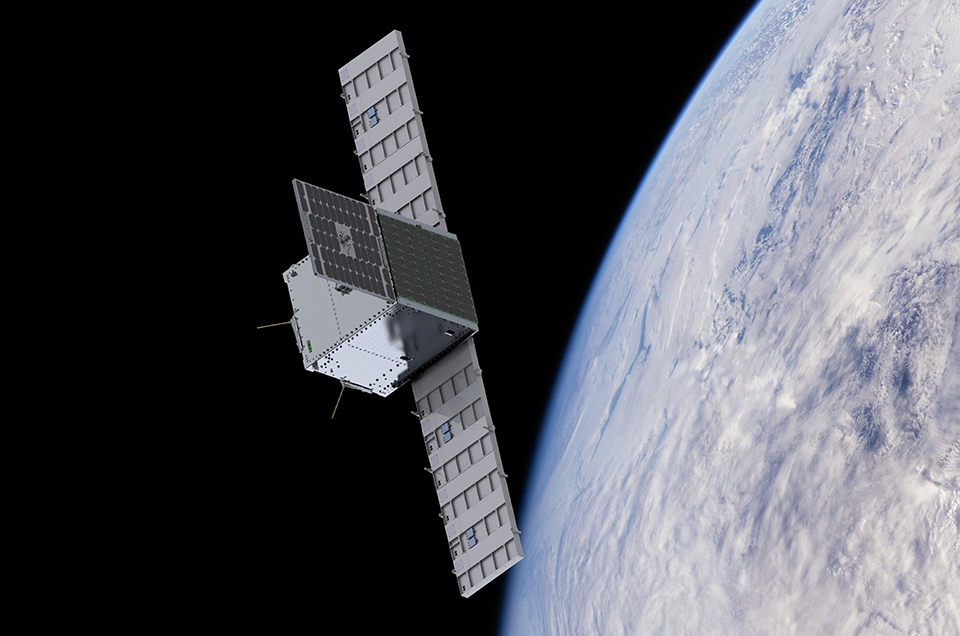
The mission, which lifted off from Vandenberg Space Force Base, deployed the world’s first space-based neutrino detector (SNAPPY), a record-setting quantum key distribution (QKD) demonstrator (QUBE II), and a sovereign European synthetic aperture radar (SAR) pilot (Eycore-1). This launch brings the total number of NanoAvionics-built satellites in orbit to over 60, with eight successful deployments recorded in 2026 alone.
Advancing Solar Neutrino and Quantum Science
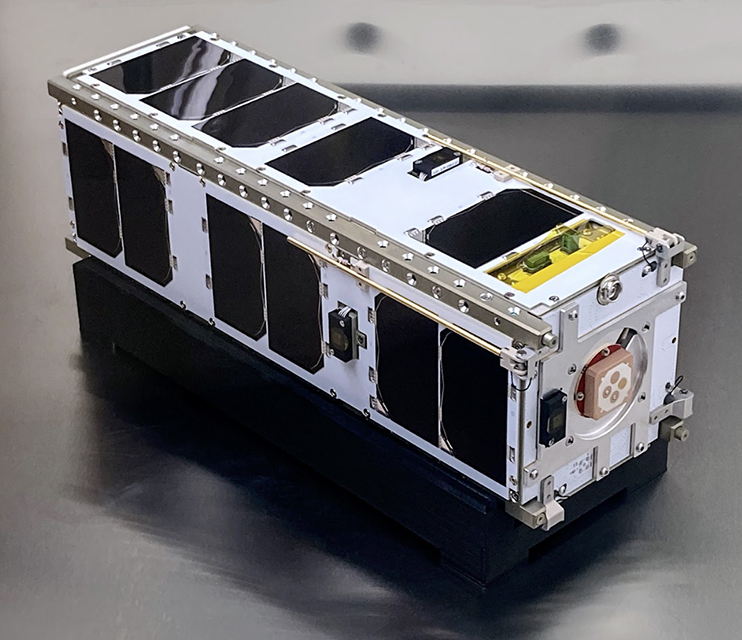
The SNAPPY (Solar Neutrino Astro-Particle PhYsics) 3U CubeSat represents a historical first for particle physics, aiming to validate the feasibility of neutrino detection outside of Earth’s subterranean facilities. Funded by the NASA Innovative Advanced Concepts (NIAC) program and led by Wichita State University, the detector will measure background radiation to determine if a larger instrument can eventually operate closer to the Sun. Simultaneously, the QUBE II 8U CubeSat—a joint initiative of the German BMFTR—will demonstrate the first quantum key exchange between a CubeSat and a ground station, utilizing a compact optical terminal to lay the groundwork for un-hackable global communications.
MP42 Platform Debut for Military-Grade SAR
The mission also marked the platform debut of NanoAvionics’ 200 kg-class MP42 microsatellite bus for synthetic aperture radar applications. Eycore-1, developed by Poland-based Eycore, carries an X-band radar payload designed for sub-meter, all-weather, day-and-night imagery.
This pilot mission is intended to validate a sovereign, all-European SAR solution for NATO and allied defense applications. By integrating compact radar hardware with flight-proven microsatellite platforms, the partnership aims to lower the barrier for nations seeking dedicated strategic reconnaissance capabilities.
Versatility in High-Stakes Mission Integration
“CAS500-2 was a very exciting launch as it carried three highly innovative and important satellite missions for cutting-edge science, unhackable communications, and strategic reconnaissance,” stated Atle Wøllo, CEO of Kongsberg NanoAvionics. He emphasized that the Eycore-1 mission, in particular, highlights the company’s ability to support national security with cost-effective, mission-ready platforms. The integration of SAR technology adds a new capability to NanoAvionics’ portfolio, which already includes optical, thermal, and signals intelligence (SIGINT) support.
Operational Timeline and Constellation Scaling
Following the successful separation from the Falcon 9 upper stage, all three satellites established initial communication with ground stations. The SNAPPY team expects first radio contact over Iceland, with the electronics suite projected to remain operational for up to three years in its seven-year orbital lifespan. For Eycore and NanoAvionics, the Eycore-1 mission serves as a precursor to a planned constellation of next-generation SAR satellites, designed to provide persistent surveillance for European defense stakeholders through the end of the decade.
