

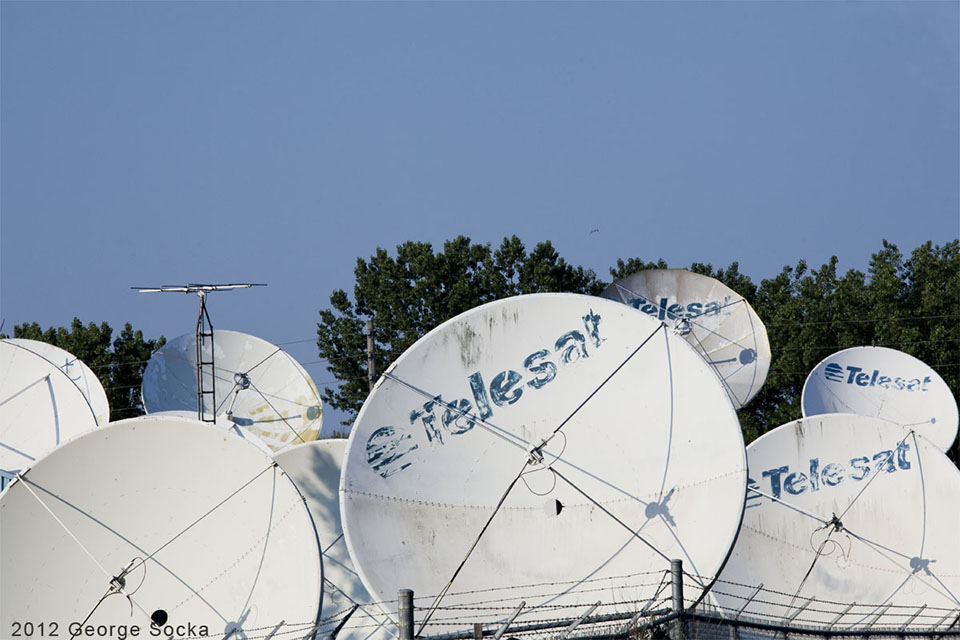
Telesat (NASDAQ/TSX: TSAT) released its first-quarter 2026 financial results on Tuesday, May 5, revealing a 25% year-over-year decline in revenue for its legacy Geostationary (GEO) business. The downturn reflects a broader market shift away from traditional broadcast services and toward the high-speed, low-latency connectivity provided by Low Earth Orbit (LEO) constellations.
Despite the drop in legacy revenue, Telesat leadership emphasized that the company is effectively navigating a “bridge period” as it pivots toward the commercial launch of its flagship Lightspeed network in 2028.
Financial Performance and Debt Restructuring
For the quarter ending March 31, 2026, Telesat reported consolidated revenue of $132 million (CAD), down from $176 million in Q1 2025. The net loss for the period was $48 million, primarily attributed to non-cash losses related to the revaluation of U.S. dollar-denominated debt. However, the company successfully completed a significant refinancing effort for its Telesat Canada subsidiary, extending the “debt wall” and securing $1.2 billion in new credit facilities. This liquidity is earmarked to sustain GEO operations while the company fulfills its equity requirements for the multi-billion dollar Lightspeed project.
Lightspeed Development and MDA Space Partnership
Telesat Lightspeed remains on schedule for a service entry in mid-2028. Key milestones achieved during Q1 2026 include:
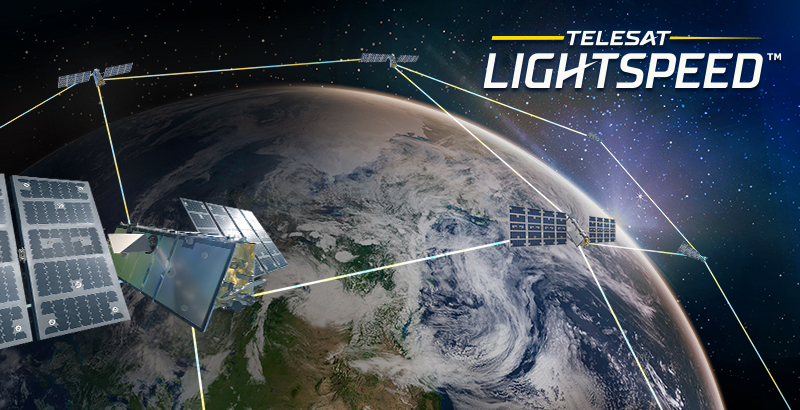
- Critical Design Review (CDR): Telesat and prime contractor MDA Space completed the CDR for the satellite bus and payload, freezing the design for mass production.
- Ground Segment Expansion: Construction has commenced on three primary global gateway sites, with the first international station in Norway entering the hardware integration phase.
- Supply Chain Scaling: MDA Space has activated its high-volume manufacturing line in Quebec, capable of producing two satellites per week to support the initial 198-satellite constellation.
Rationale: Pivoting to Defense and Government Markets
The decline in traditional video broadcast revenue—once the cornerstone of the GEO business—is being offset by a strategic pivot toward “sovereign” and defense-oriented connectivity. Telesat has recently integrated military Ka-band capabilities into the Lightspeed design to support NATO requirements. Furthermore, the company is a primary partner in Canada’s ESCAPE (Enhanced Satellite Communication Assistance and Program Extension) project, a $2.1 billion federal initiative to secure independent, sovereign communications for the Canadian Armed Forces.
“We are building a network specifically designed for the enterprise and government sectors, not the mass consumer market,” stated Dan Goldberg, President and CEO of Telesat. “Our GEO business provides the stable cash flow to support our transition, but Lightspeed is the engine of our future growth.”
The Road to 2028 Commercial Service
Telesat’s backlog remains healthy at $1.5 billion, with significant prepayments from the Government of Canada and various maritime customers providing a stable capital foundation. The company expects the revenue decline in GEO to stabilize by late 2026 as legacy contracts reach their new floors. Looking forward, the focus for the remainder of the year will be the finalization of the constellation’s user terminal prototypes and the securing of additional “landing rights” in key international markets to ensure a global footprint at launch.
