

Interlune announced on Monday, May 4, that it has been awarded a $6.9 million Small Business Innovation Research (SBIR) Phase III contract from NASA’s Space Technology Mission Directorate. The 18-month project focuses on developing a payload suite designed to extract and measure volatile gases, specifically helium-3 and hydrogen, from lunar regolith.
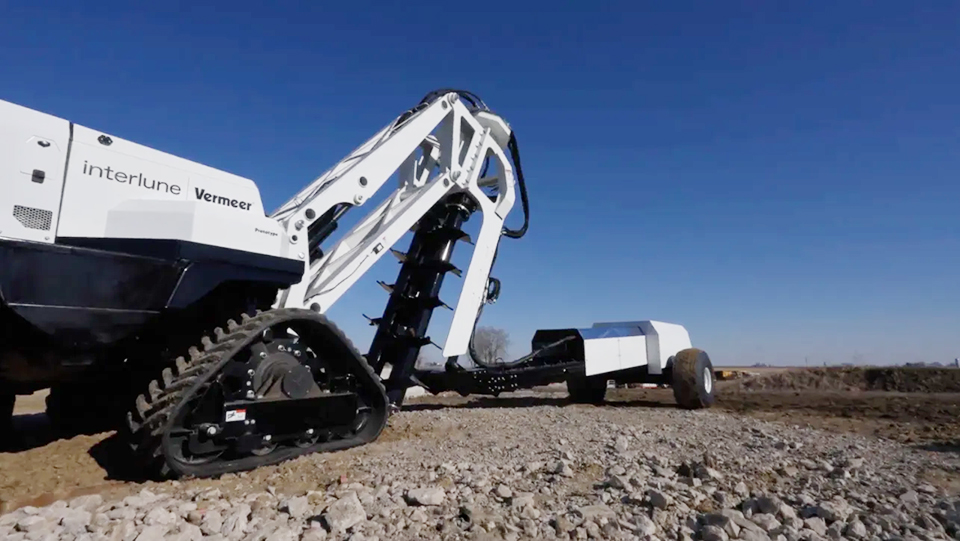
This agreement represents a critical step in Interlune’s roadmap to establish a commercial lunar economy by harvesting resources for both Earth-based industrial applications and in-space infrastructure.
Technical Architecture and Extraction Specifications
The Interlune payload, slated for a 2028 lunar mission, will utilize mechanical and thermal processes to harvest solar wind-implanted gases. The hardware suite includes:
- Excavation & Sorting: A robotic arm and scoop integrated with a particle-sorting device to process moon soil by size.
- Thermal Processing: Specialized heating elements designed to release trapped volatiles from the regolith.
- Sensing & Measurement: A multispectral camera for estimating helium-3 concentrations and a mass spectrometer, based on NASA’s MSOLO (Mass Spectrometer Observing Lunar Operations) design, to quantify gas concentrations. The system is engineered to be 10x more energy-efficient than traditional extraction models, a necessity for operating within the power constraints of commercial robotic landers.
Strategic Rationale for Helium-3 Harvesting
The primary commercial driver for the mission is the high value of helium-3, a stable isotope rare on Earth but abundant on the lunar surface. Interlune has already secured nearly $500 million in binding purchase orders for the isotope, with demand stemming from the quantum computing, medical imaging, and national security sectors.
Revenue generated from these terrestrial sales is intended to fund the development of secondary lunar infrastructure, including hydrogen extraction for rocket propellant and site preparation for NASA’s Artemis Base Camp.
Bridging Commercial Innovation and National Interests
“NASA’s continued investment in space technology enables technology development projects like this one to ensure America’s leadership in building the lunar economy,” said Rob Meyerson, co-founder and CEO of Interlune. The company, which includes Apollo 17 geologist Harrison Schmitt as Executive Chairman, is leveraging prior prototype testing conducted on parabolic aircraft flights. This mission, named Prospect Moon, will provide the first-ever on-site measurements of volatile gases released through the direct heating of regolith on the lunar surface.
Roadmap to Lunar Commercialization
Following the completion of the Phase III engineering development units, Interlune will integrate the payload onto a commercial lander through NASA’s Commercial Lunar Payload Services (CLPS) program. While the 2028 mission focuses on scientific validation and technical demonstration, the company plans to scale to industrial-level operations by the early 2030s.
This transition will involve the deployment of larger autonomous harvesters and a dedicated cargo return system to facilitate regular shipments of helium-3 back to Earth.
