

The passing of Ted Turner on May 6, 2026, marks the end of an era for both global journalism and the satellite communications industry. While primarily remembered as a flamboyant media mogul and philanthropist, Turner’s true genius lay in his early realization that orbital infrastructure could fundamentally dismantle the traditional geographic monopolies of terrestrial broadcasting.
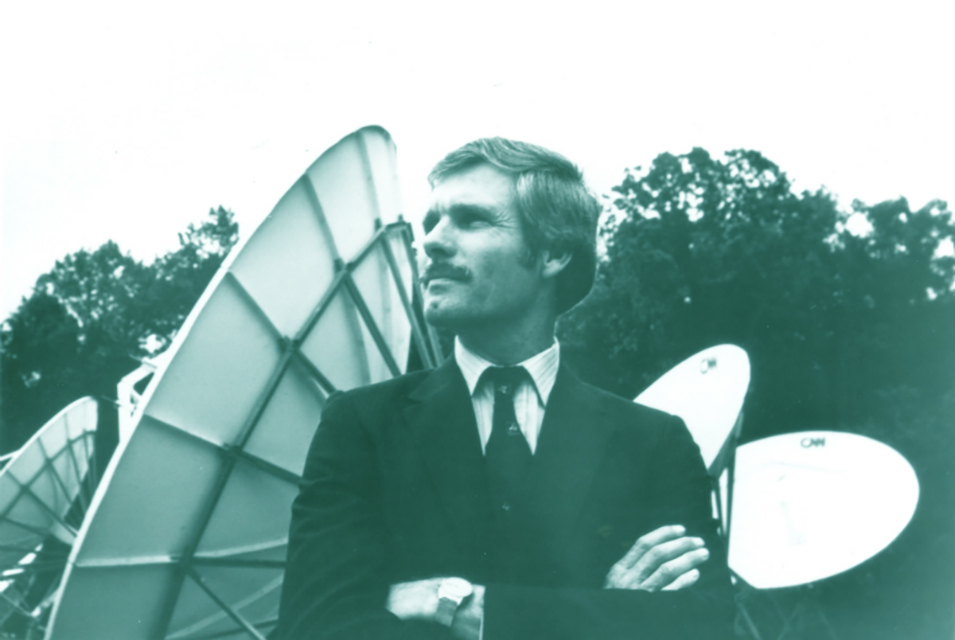
By leveraging the “high ground” of space, Turner transformed a struggling UHF station in Atlanta into a global powerhouse, effectively inventing the modern concept of the 24-hour global news cycle.
The Superstation and the Orbital Revolution
In the mid-1970s, television was a localized affair, tethered to the range of ground-based towers and coaxial cables. Turner disrupted this model in 1976 by uplinking his local station, WTCG (later WTBS), to the Satcom-1 satellite. This maneuver created the first “Superstation,” allowing cable systems across North America to pull down his signal and broadcast it to millions of homes simultaneously. This was the first proof of concept for the Direct-to-Home (DTH) revolution, proving that satellite technology was not just a tool for government or military communication, but a viable engine for commercial mass media.
CNN and the Architecture of Persistent Presence
Turner’s most significant contribution to the space sector was the founding of CNN in 1980. To maintain a 24-hour news stream, Turner required a massive, permanent commitment to satellite transponder capacity—a move that provided the burgeoning satellite industry with the stable, long-term revenue it needed to mature. CNN’s reliance on satellite news gathering (SNG) trucks and portable flyaway terminals changed the physics of journalism, enabling live, real-time reporting from active war zones and remote disasters. This persistent orbital presence fundamentally altered public perception, shrinking the world and forcing governments to respond to events as they unfolded on a global screen.
From Geostationary Giants to the NewSpace Era
The infrastructure Turner helped build relied on the “Golden Age” of geostationary (GEO) satellites—massive, bus-sized machines parked 36,000 kilometers above the equator. As the industry now transitions toward the Low Earth Orbit (LEO) mega-constellations of the 2020s, Turner’s influence remains visible in the architecture of global connectivity. The high-throughput satellites (HTS) and software-defined networks currently used by modern media outlets are the direct descendants of the primitive transponders Turner used to beam baseball games and news headlines across the continent.
A Final Signal for the Captain of the Airwaves
Industry leaders across the space and media sectors have noted that Turner’s passing coincides with a moment of significant consolidation in the satellite market, as firms like SES and Intelsat merge to face the challenges of a multi-orbit future. Turner’s legacy serves as a reminder that hardware is only as valuable as the content it carries and the connectivity it enables. As the final signals of his era fade into the background of a digital, cloud-based world, Ted Turner’s name remains synonymous with the moment space technology finally became a household utility.
