

SpaceX has signaled a decisive strategic shift away from its Falcon 9 workhorse toward the full-scale deployment of Starship, a vehicle designed to fundamentally reset the economics of the launch industry. As of May 7, 2026, the company is ramping up production of the “Starship Block II” configuration, which offers significantly higher thrust and payload capacity than the original prototypes.
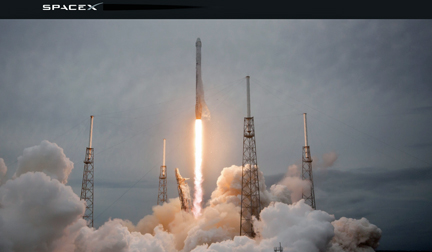
This move is intended to address the growing “heavy-lift gap” in the global market, providing the massive lift capacity required for both the second-generation Starlink constellation and the Department of Defense’s increasingly large orbital assets.
Surpassing the Performance of the Falcon Heritage
While the Falcon 9 remains the most reliable and frequently launched rocket in history—projected to conduct over 150 missions in 2026 alone—SpaceX leadership has acknowledged that the vehicle has reached its physical performance ceiling. Starship is designed to be fully and rapidly reusable, a leap beyond the Falcon 9’s partial reusability. With a payload capacity exceeding 100 metric tons to Low Earth Orbit (LEO) in a fully reusable mode, Starship offers more than five times the lift of a Falcon 9 while aiming for a significantly lower cost per kilogram. This capability is viewed as essential for the heavy infrastructure projects of the late 2020s, including the build-out of lunar bases and orbital data centers.
Strategic Rationale and Competitive Positioning
The push for a more powerful fleet comes as competitors like Blue Origin and United Launch Alliance (ULA) begin to scale their own heavy-lift offerings. With Blue Origin’s New Glenn expected to enter high-cadence service later this year, SpaceX is moving to maintain its monopolistic pricing power by offering a “super-heavy” class of service that currently has no direct rival. By transitioning high-mass payloads to Starship, SpaceX can free up its Falcon 9 fleet for the smaller, “tactically responsive” launches increasingly demanded by the U.S. Space Force, while using Starship to dominate the high-volume commercial and civil exploration markets.
Operational Milestones and Launch Projections
SpaceX’s Starbase facility in Texas is currently operating at a record pace, with a “launch-on-demand” target for Starship expected by the third quarter of 2026. The company is currently validating the in-space propellant transfer technology required for the Artemis III lunar landing mission, a technical hurdle that is also a prerequisite for deep-space missions to Mars. For 2026, SpaceX has set an ambitious goal of 12 Starship orbital flight tests, aiming to demonstrate the rapid refurbishment cycles that are the hallmark of a truly “aircraft-like” space transportation system.
The Starship-Centric Economy
As the Falcon 9 begins its gradual sunset toward the end of the decade, the global space economy is expected to reorganize around the Starship architecture. The ability to launch 100+ tons at a time will likely trigger a design shift in satellite manufacturing, as engineers move away from highly complex, miniaturized components toward larger, more robust, and lower-cost structures. This transition is not merely about building a larger rocket; it is about creating the foundational logistics layer for a multi-planetary economy, enabling the mass transport of people and cargo that was previously considered financially impossible.
