

On May 7, 2026, the U.S. Air Force selected L3Harris Technologies (NYSE: LHX) to develop key features of the secure digital infrastructure serving as the backbone for the Advanced Battle Management System (ABMS).
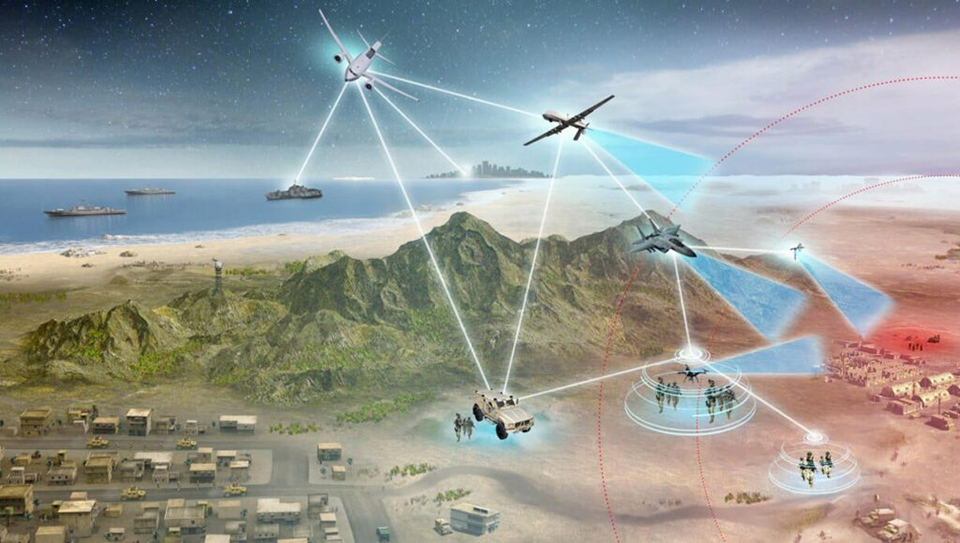
The effort is designed to integrate networking capabilities across the command-and-control (C2) enterprise, enabling real-time data fusion from sensors to shooters in contested environments.
Foundation for Joint All-Domain Command and Control
The ABMS program is a critical element of the Department of War’s Combined Joint All-Domain Command and Control (CJADC2) strategy. L3Harris is tasked with designing the “digital backbone” that allows disparate sensor data—including inputs from space-based surveillance and terrestrial reconnaissance—to be processed and distributed to military operators.
By applying modern data processing and mesh networking technologies, the infrastructure aims to reduce latency and improve the usability of information for warfighters. This modular approach moves away from platform-specific communication hubs toward an open-architecture network that can adapt to rapid technological shifts and emerging orbital threats.
Strategic Continuity in Military Space Architectures
The new award builds on L3Harris’ recent milestones in modernizing space domain awareness (SDA) and defense communications. In April 2026, the company secured a $150 million contract for the MOSSAIC program, focused on the sustainment and modernization of critical Space Force ground systems.
L3Harris has also maintained a strong presence in offensive space capabilities, having delivered the first production unit of the Meadowlands counter-space system in December 2025. The integration of ABMS digital infrastructure ensures that the data gathered by these disparate space systems can be seamlessly shared across the Air Force’s broader battlefield management network.
Rationale: Responding to Hypersonic and Peer Threats
The shift toward an integrated digital infrastructure is driven by the need to counter high-speed threats, such as hypersonic glide vehicles, which require sub-second data processing to intercept. By connecting multi-domain sensors—including the Space Development Agency’s (SDA) Transport and Tracking layers—L3Harris’ network architecture provides the resilient pathways needed to maintain situational awareness even when traditional communication links are degraded or jammed.
“This new digital infrastructure will provide the warfighter with more secure, timely and usable information, allowing them to connect sensors and shooters across domains – in complex operational environments,” said Kathy Crandall, President of Mission Networks, Space & Mission Systems at L3Harris. “We will build off L3Harris’ rich legacy of developing and operating large-scale communications networks to meet the demands of modern military operations.”
Implementation and Operational Milestones
Work on the ABMS digital infrastructure is expected to proceed immediately at L3Harris facilities in Melbourne, Florida, and other strategic mission centers. The project will run in parallel with the company’s ongoing contributions to the Tactical Operations Center-Light (TOC-L) program, which provides mobile, survivable C2 nodes for dispersed operations. Final integration and initial operational testing of the new data-sharing backbone are slated for completion by mid-2027.
