


Fleet Space Technologies successfully completed a trial using its proprietary Ambient Noise Tomography (ANT) technology to faster and non-invasively find critical lithium deposits.
This was commissioned by Australia’s newest lithium miner, Core Lithium, at its Finniss Project in Australia’s Northern Territory. This is in line with its mission to provide the globe with high-grade lithium suitable to power electric vehicles and renewable energy storage.
In a statement to the ASX (August 1, 2022), Core Lithium described the results of the trial as “an outstanding success”, noting an excellent correlation with the pegmatite body interpreted from drilling to depths in excess of 500m and stating that a number of previously unknown targets have emerged — a major boost for exploration.
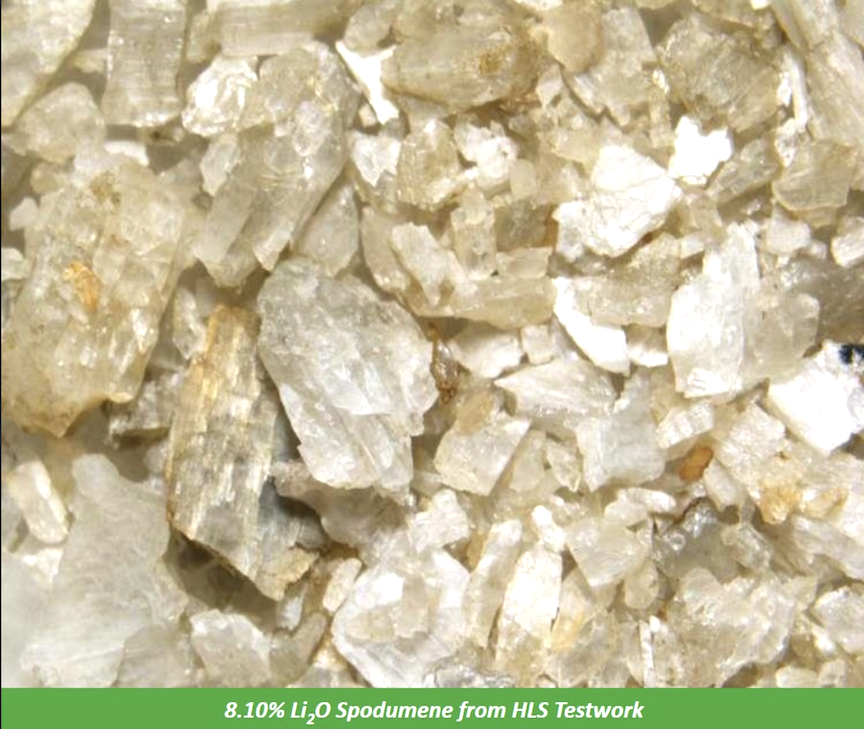
Core Lithium’s Finniss Project will be Australia’s newest lithium producer on the ASX Australian Securities Exchange, with first production targeted for Q4 2022. As one of Australia’s most capital efficient lithium projects, it has been awarded Major Project Status by the Australian Federal Government.
Matt Pearson, Co-Founder, Fleet Space Technologies said, “We created ExoSphere to provide a sustainable, faster and more economically viable alternative to current exploration practices. This work is vital to enabling the dramatic increase in critical mineral discoveries required to support the global transition to clean-air mobility and more sustainable industrial practices. In Core Lithium we are working with one of the most advanced mineral explorers in the world. We are proud that Fleet’s ExoSphere Earth scanning technology has produced outstanding results in this landmark field trial, proving the role it will play in accelerating mineral finds as we collectively answer the global challenge to find more than $13 trillion (USD) in critical metals to meet soaring global demand. We are proud to work with the most progressive explorers in the world realizing the transformative potential of this technology.”
Andy Bennett, Exploration Manager Core Lithium added, “Core Lithium’s Finniss Project is providing world-class drilling results, affirming its status among Australia’s most important strategic mineral projects. Our mission to discover the high grade lithium required to support the world’s rapid transition to electric vehicles (EVs) has been enhanced by the results generated through ExoSphere. The success of this trial shows the potential of the technology to deliver our next generation of exploration targets and we are excited by the prospect of doing further work with Exosphere.“
Fleet’s ExoSphere technology has been created to answer the urgent global requirement to locate a more sustainable, economically viable and faster route to finding critical mineral deposits. Since introducing ExoSphere technology to the market in Q1 2022, Fleet has been engaged by the major exploration companies.
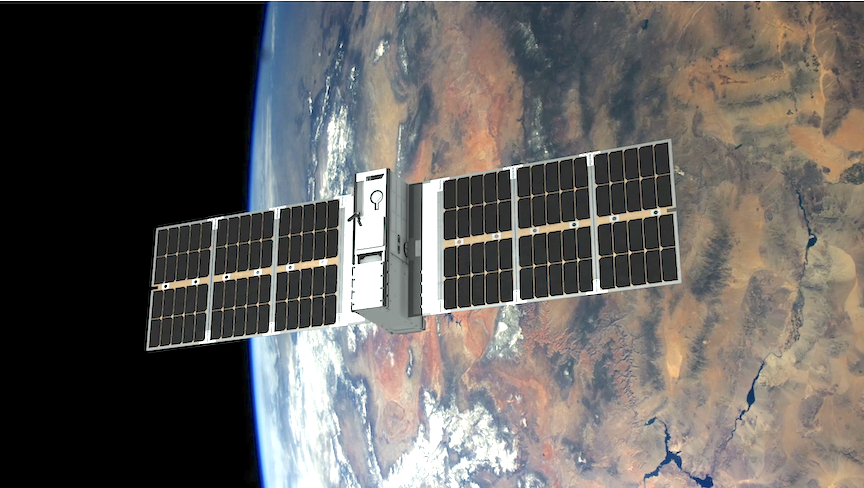
In completing these successful field trials, ExoSphere has proven its viability to support the discovery of the more than $13trillion in additional energy transition minerals. This figure is stated by the International Monetary Fund (IMF) as required to meet global net zero targets to enable the transition of vehicles to clean-air powertrains.
ExoSphere is Fleet’s pioneering exploration technology. It delivers detailed subsurface 3D mapping using an array of Geodes. These devices are so portable and lightweight they can be transported and placed by hand. The geodes use edge computing to analyze ambient seismic noise which is sent by Fleet’s network of small satellites for processing. The data is rapidly processed in the cloud to deliver a 3D visualization of the area to support critical exploration decisions. This makes searching for key energy transition minerals faster, more sustainable, less expensive and more accurate.
For Fleet, the successful global market introduction of ExoSphere has underpinned significant business expansion, as they have hired more than 80 people in their HQ in Adelaide, South Australia and global growth through its first U.S. regional office in Houston, Texas. Fleet completed an oversubscribed Series B fundraising round in 2021, confirming institutional and VC endorsement for its technical and commercial approach and standing as a leader in Australia’s rapidly growing space economy.
The Australian federal government has set a dedicated space strategy that aims to triple the space sector’s contribution to GDP to over $12 billion per annum and create up to an additional 20,000 jobs by 2030. In 2021, Fleet announced that it will build the first Hyper Factory of its kind in the Southern Hemisphere at the Australian Space Park, in Adelaide, South Australia. This landmark development will co-locate four space manufacturing companies in a purpose built facility with a focus on collaboration in the heart of Australia’s ‘Space State’.
From this state-of-the art facility, Fleet will design, engineer and manufacture the next generation of small satellites. The production of these will utilize the latest additive manufacturing (3D printing) technologies to deliver world-changing developments like ExoSphere at great scale, speed and economic viability.
Matt Pearson, Co-Founder, Fleet Space Technologies stated, “By harnessing the power of Fleet’s ExoSphere technology, we are able to scan the Earth in greater depth and detail than ever before. This cleaner, faster and more flexible approach to exploration answers the urgent global requirement to find more than $13 trillion in critical Earth transition minerals. ExoSphere is supporting the world’s transition to more sustainable practices by speeding up vital mineral discoveries more than one hundred-fold. We are proud to enable this critical step in mining to provide better access to the resources we need to make a better future for humanity.”
The proposal between Fleet Space and Core Lithium outlined the subscription options for ExoSphere by Fleet. ExoSphere is a pioneering exploration technology that delivers detailed subsurface 3D velocity mapping using an array of Geodes, Fleet’s satellite-connected seismic sensors. The subscription included the rental of the Geodes (satellite-enabled Geophones), planning support, deployment support, and the real-time processing and delivery of any 3D shear velocity models.
ExoSphere is a first-of-its-kind system that combines Geodes, Fleet’s satellite connected geophones with edge computing, and a constellation of Low Earth Orbit (LEO) nanosatellites to discover critical resources by up to 15X times faster than traditional methods.
It also drastically reduces the requirement for environmentally damaging elements of existing surveyance practices such as the use of explosives, vibration machines and drilling. In this sense it is a passive, non-destructive technique to assess site viability for mineral and material deposits.
Deposits of copper, nickel, cobalt and lithium for example, which is used to create zero emissions car batteries can now be discovered through a grid of satellite-enabled Geodes, which can be easily installed by small, local teams.
These are hand-transportable sensors which reduces the logistics requirements and carbon output for remote exploration projects. It also allows explorers to adapt their approach quickly without the need to dismantle and move heavy equipment.
Each wireless, battery-operated Geode contains a processing unit, satellite transmitter and a seismic sensor. The Geodes use the principles of seismology to map the properties of the Earth’s subsurface from reflected seismic waves by recording ambient noise — a process known as Ambient Noise Tomography (ANT).
Once sufficient ANT data is gathered, Geodes partially process the raw information on site, reducing the data requirement for transmission — a practice known as ‘edge processing’ that significantly increases the speed of connectivity between Internet of Things (IoT) devices and allows more information to be sent while drawing significantly less power.
This streamlined volume of data is securely pushed to Fleet Space’s existing network of low-power small satellites. The smallsat then automatically sends the information to ground stations, reducing the time required to process data. This in turn allows explorers to make informed decisions on areas of interest much faster than traditional methods. There is now no need to wait for devices to be collected, shipped, and unpacked to collect the data.
The data from each Geode is rapidly processed and aimed to deliver a full 3D visualization of the subsurface down to 2 km depth. A clear, rich image of what resources are below ground can be generated in as little as four — ordinarily, ANT takes months to return a conclusive result.
Using a bespoke Fleet-developed system, these visualizations are accessible to view and export anywhere on Earth in real-time. The speed of this imaging now means that thousands of square kilometers of area can be imaged in a fraction of the time of traditional methods.
