


• Skip to primary navigation
  • Skip to main content
  • Skip to primary sidebar
  • Skip to secondary sidebar
  • Skip to footer
  • NEWS:
  • SatNews
  • SatMagazine
  • MilSatMagazine
  • SmallSat News
  • |     EVENTS:
  • SmallSat Symposium
  • Satellite Innovation
  • MilSat Symposium
  • SmallSat Europe

SatNews

Satellite Industry Intelligence Since 1983

Subscribe
  • LATEST
  • SatNews Events
  • Magazines
  • Calendar
  • Subscribe
  • Missions & Constellations
    • Exploration & Science Missions
    • In-Orbit Servicing & Orbital Operations
    • LEO Constellations
    • Mission Autonomy & Onboard Systems
    • Mission Deployments & Manifests
    • Navigation & PNT
    • SmallSat
    • Spacecraft & Payload Technology
    View All in Missions & Constellations →
    NASA and ISISPACE Deploy GRITSS CubeSat to Advance Orbital Reference Frame PrecisionNASA and ISISPACE Deploy GRITSS CubeSat to Advance Orbital Reference Frame Precision
    Momentus Vigoride 7 Completes Orbital Altitude Adjustments as Hosted Payload Testing ProgressesMomentus Vigoride 7 Completes Orbital Altitude Adjustments as Hosted Payload Testing Progresses
    Astro Digital Selects Everspin 64Mb STT-MRAM for Raven Bus Geosynchronous Satellite ProgramAstro Digital Selects Everspin 64Mb STT-MRAM for Raven Bus Geosynchronous Satellite Program
    Launch Manifests Are Becoming Spectrum PolicyLaunch Manifests Are Becoming Spectrum Policy
  • Business
    • Contracts & Commercial Deals
    • Earnings & Financial Reporting
    • Events & Conferences
    • Funding & Venture Capital
    • Market Forecasts
    • Mergers & Acquisitions
    • Personnel Moves & Appointments
    View All in Business & Finance →
    Silicon Valley Space Week Speaker Focus: Col. Timothy Trimailo, Space Systems CommandSilicon Valley Space Week Speaker Focus: Col. Timothy Trimailo, Space Systems Command
    AccelerComm Powers Eclipse Space 5G Physical Layer Architecture for Sovereign Satellite ConstellationsAccelerComm Powers Eclipse Space 5G Physical Layer Architecture for Sovereign Satellite Constellations
    Farnborough International Airshow Pivot Driven by Soaring Global Defense SpendingFarnborough International Airshow Pivot Driven by Soaring Global Defense Spending
    Global Konet and Hanseo University Partner to Develop Integrated 100 km BVLOS Satellite Communication Infrastructure for DronesGlobal Konet and Hanseo University Partner to Develop Integrated 100 km BVLOS Satellite Communication Infrastructure for Drones
  • Defense
    • Counterspace & ASAT
    • Defense Budgets & Procurement
    • ISR & Reconnaissance
    • MILSATCOM
    • Missile Warning & Defense
    • National Security Programs
    • Space Domain Awareness
    View All in Military & Defense →
    Air Force Life Cycle Management Center Takes Full Ownership of Military GPS Receiver ProgramsAir Force Life Cycle Management Center Takes Full Ownership of Military GPS Receiver Programs
    Space Force Awards $287 Million Software Contract to Sphinx Defense for Strategic SATCOM Ground SegmentSpace Force Awards $287 Million Software Contract to Sphinx Defense for Strategic SATCOM Ground Segment
    L3Harris Signs Multi-Year Framework Agreement to Quadruple THAAD Propulsion ProductionL3Harris Signs Multi-Year Framework Agreement to Quadruple THAAD Propulsion Production
    GAO Report Warns Space Force Must Improve Personnel Metrics to Support Fleet ExpansionGAO Report Warns Space Force Must Improve Personnel Metrics to Support Fleet Expansion
  • Gov
    • Export Controls & Compliance
    • International Space Agreements
    • National Space Policy
    • Space Law & Treaties
    • Space Sustainability & Debris Policy
    • Space Traffic Management / Debris Removal
    View All in Government & Regulation →
    NASA Converts Test Expert Ray Williams to Civil Servant in Strategic Workforce ShiftNASA Converts Test Expert Ray Williams to Civil Servant in Strategic Workforce Shift
    FCC Approves Upper C-Band Order, Allocating $5.6 Billion to SES and $504 Million to EutelsatFCC Approves Upper C-Band Order, Allocating $5.6 Billion to SES and $504 Million to Eutelsat
    GSMA Endorses Abuja Declaration to Advance Satellite Spectrum Reform and Launch ATLAS UmojaGSMA Endorses Abuja Declaration to Advance Satellite Spectrum Reform and Launch ATLAS Umoja
    UK Space Agency Unveils £62 Million Domestic Space Fund and Strategic Partnership with Space FloridaUK Space Agency Unveils £62 Million Domestic Space Fund and Strategic Partnership with Space Florida
  • Launch
    • Launch Providers
    • Launch Schedule & Calendars
    • Launch Sites & Infrastructure
    • Rocket Technology & Vehicles
    View All in Launch →
    SpaceX Targets First Starship Upper Stage Tower Catch for Flight 14SpaceX Targets First Starship Upper Stage Tower Catch for Flight 14
    Viasat Deploys Reflector and Boom Assembly on ViaSat-3 F3 Ahead of In-Orbit TestingViasat Deploys Reflector and Boom Assembly on ViaSat-3 F3 Ahead of In-Orbit Testing
    L3Harris Delivers Four RS-25 Core Stage Engines to NASA for Crewed Artemis III Lunar MissionL3Harris Delivers Four RS-25 Core Stage Engines to NASA for Crewed Artemis III Lunar Mission
    Commercial Launch Providers Advance Next-Generation Heavy and Medium-Lift Vehicle Milestones Ahead of 2026 DebutsCommercial Launch Providers Advance Next-Generation Heavy and Medium-Lift Vehicle Milestones Ahead of 2026 Debuts
  • Software
    • Autonomous Ground Operations
    • Data Processing & AI/ML
    • Digital Twins & Modeling
    • Ground Segment & Teleports
    • Mission Planning & Simulation
    • Space Systems Software Engineering
    • Spectrum & Licensing
    View All in Software Automation & Ground Systems →
    Astrolight Advances End-to-End Lasercom Network to Address Orbital Bandwidth and Spectrum BottlenecksAstrolight Advances End-to-End Lasercom Network to Address Orbital Bandwidth and Spectrum Bottlenecks
    Intellian Unveils CM100 GMDSS Terminal Built for Iridium Certus 100 Safety NetworkIntellian Unveils CM100 GMDSS Terminal Built for Iridium Certus 100 Safety Network
    NASA Joins Federal Genesis Mission Initiative to Process 150 Petabytes of Space Data via AI ArchitecturesNASA Joins Federal Genesis Mission Initiative to Process 150 Petabytes of Space Data via AI Architectures
    IHI Corporation and Kuva Space Partner to Evaluate Japanese Sovereign Hyperspectral ConstellationIHI Corporation and Kuva Space Partner to Evaluate Japanese Sovereign Hyperspectral Constellation
  • Services & Apps
    • Climate & Environmental Monitoring
    • Disaster Response & Security Mapping
    • Earth Observation & Imaging
    • Maritime & Aviation Satcom
    • Satellite Communications
    View All in Services & Applications →
    Resecurity Joins Space ISAC to Expand Cyber Threat Intelligence Across Space AssetsResecurity Joins Space ISAC to Expand Cyber Threat Intelligence Across Space Assets
    Telespazio Deploys S/X-Band Antenna in the Azores to Expand Global Ground Station NetworkTelespazio Deploys S/X-Band Antenna in the Azores to Expand Global Ground Station Network
    Amazon Files FCC Application for 5,105-Satellite Constellation to Enable Direct-to-Device Mobile ServicesAmazon Files FCC Application for 5,105-Satellite Constellation to Enable Direct-to-Device Mobile Services
    FCC Proposes Opening Unlicensed Bluetooth and Wi-Fi Bands for Space-Based CommunicationsFCC Proposes Opening Unlicensed Bluetooth and Wi-Fi Bands for Space-Based Communications

Rocket Lab’s Upcoming Launch Of BlackSky Constellation Smallsats To Also Attempt 1st Stage Electron Rocket Ocean Recovery

October 19, 2021

Rocket Lab USA, Inc. will attempt a controlled, ocean splashdown and recovery of the first stage of an Electron rocket during the company’s next launch in November.

The mission will be Rocket Lab’s third ocean recovery of an Electron stage; however, it will be the first time a helicopter will be stationed in the recovery zone around 200 nautical miles offshore to track and visually observe a descending stage in preparation for future aerial capture attempts. The helicopter will not attempt a mid-air capture for this mission but will test communications and tracking to refine the concept of operations (CONOPS) for future Electron aerial capture.
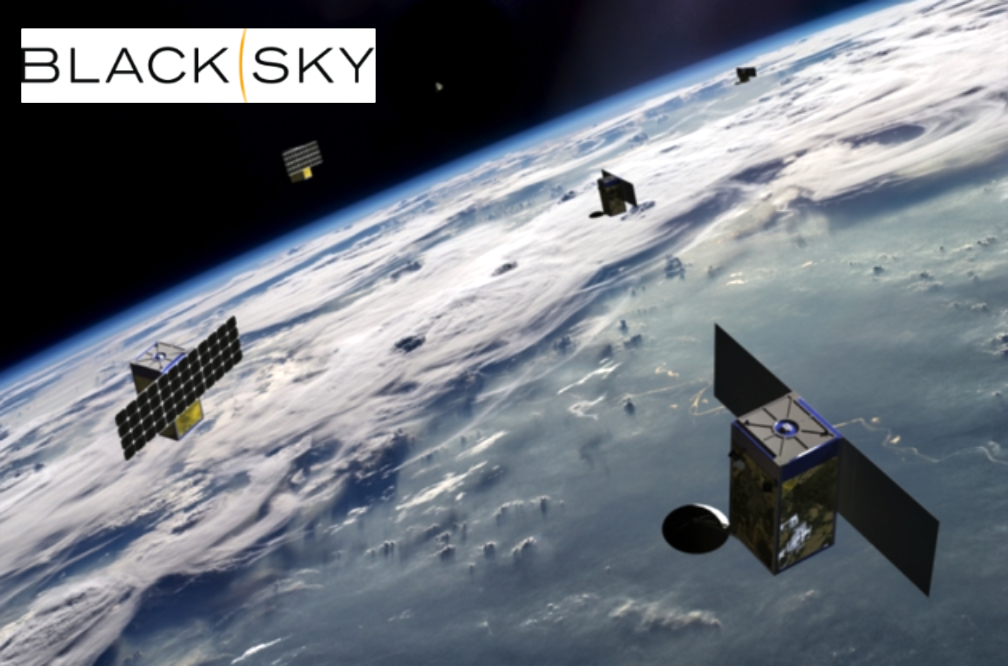
The ‘Love At First Insight’ mission is scheduled to lift-off from Launch Complex 1 in New Zealand during a 14-day launch window that opens on November 11, 2021, UTC. The mission’s primary objective is to deploy two Earth Observation (EO) satellites for global monitoring company BlackSky, with the secondary objective to splash down and recover Electron’s first stage to further validate Rocket Lab’s recovery operations and hardware.

Rocket Lab will be tracking the stage’s descent from space and as it approaches 19,000 ft (5.7 km) from the ocean surface, a helicopter will be dispatched to conduct reconnaissance of the returning booster. The ‘Love At First Insight’ mission will also include new recovery hardware developments to Electron including an advanced parachute to be deployed from the first stage at a higher-altitude, allowing for a slower drift back to Earth to test communications and tracking for future aerial recovery.

Electron also features improvements to the first stage heat shield which protects the rocket’s nine Rutherford engines while they endure up to 2200 °C heat and incredible pressure on the descent back to Earth. A team of Rocket Lab engineers and technicians will again be stationed at sea with their purpose-built Ocean Recovery and Capture Apparatus (ORCA) to retrieve the stage from the ocean and return it to Rocket Lab’s production complex in New Zealand for analysis and inspection.
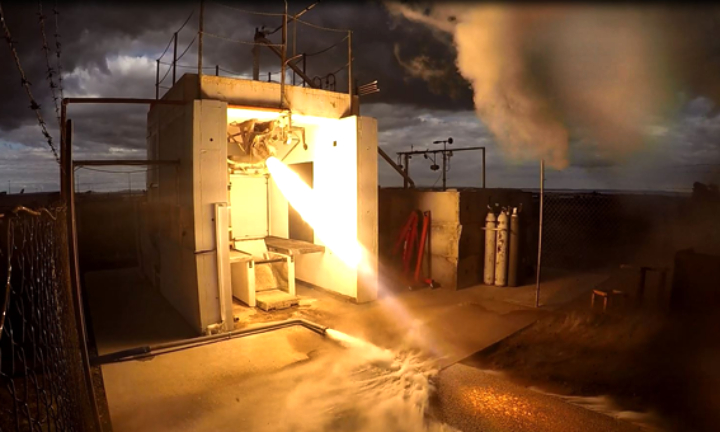
The rocket engine, named Rutherford after the famous New Zealand scientist Ernest Rutherford, is a Lox/Kerosene regenerative cooled pump fed engine that is intended to be the future workhorse for Rocket Lab orbital launcher program. Rutherford test firing photo is courtesy of the company.

“As one of only two companies to recover an orbital-class booster from space, we’ve proven it’s possible to make Electron the world’s first orbital-class reusable small launch vehicle,” said Peter Beck, Rocket Lab founder and CEO. “We’ve perfected Electron’s controlled descent, demonstrated flawless parachute deployment, and successfully plucked stages from the ocean. Now we’re gearing up for the next stage – preparing to use a helicopter to catch a rocket as it descends to Earth from space. It’s ambitious, but with each recovery mission we’ve iterated and refined the hardware and processes to make the impossible ordinary. I’m excited to take what we learn from this launch and put it into practice with aerial capture missions in future.”

The ‘Love At First Insight’ mission follows two previous ocean splashdown recovery missions; the ‘Return to Sender’ mission in November 2020, and the ‘Running Out of Toes’ mission in May 2021. A live stream of the launch and real-time updates of recovery operations for ‘Love At First Insight’ will be available on Rocket Lab’s social media channels and website.

Approximately two and a half minutes after lift-off, the nine Rutherford engines on Electron’s first stage will shut down and Electron’s first and second stages will separate. Electron’s second stage will continue with the customer’s payload to space, where the Kick Stage will separate and deploy the satellites. Following stage separation, Electron’s first stage will begin its descent. A cold-gas reaction control system will position the stage on an ideal angle to re-enter the atmosphere.

While descending, Electron’s first stage is expected to experience intense heat and pressure while traveling up to eight times the speed of sound before significantly decelerating to enable a drogue parachute to be deployed. At approximately seven and a half minutes into the mission, Electron’s drogue parachute will be deployed at around 43,000 ft (13 km) altitude. This drogue parachute both increases the booster’s drag and stabilizes its descent as it approaches the ocean.

Earlier and higher than on previous flights, the large main parachute will be deployed less than a minute after the drogue, at an altitude of 19,000 ft (5.7 km) to further slow the stage and enable a controlled splashdown. A key objective of this mission is to increase the drift-time of Electron’s first stage to test communications and tracking for future aerial recovery efforts.

Upon receiving the all-clear from the recovery team stationed at sea, a nearby helicopter will be deployed to sight the returning stage and observe its descent to record data that will help refine Electron aerial capture CONOPS. Once in the ocean, Rocket Lab engineers will attempt to retrieve the stage onboard their vessel with their purpose-built Ocean Recovery and Capture Apparatus (ORCA), a specialised cradle and winch system manufactured to Electron specifications and dimensions, before transporting the stage back to Rocket Lab’s production complex for analysis and inspection.

The ‘Love At First Insight’ mission is the latest in a multi-launch agreement signed earlier this year for BlackSky between Rocket Lab and Spaceflight Inc., which is providing integration and mission management services for BlackSky. This mission will deploy the eighth and ninth satellites of BlackSky’s planned constellation as part of that rapid-launch agreement, with another four Gen-2 smallsats across the two additional Electron dedicated missions to follow.


Filed Under: Earth Observation & Imaging, Rocket Technology & Vehicles Tagged With: Featured

Primary Sidebar

Coverage

  • Missions & Constellations
  • Business & Finance
  • Military & Defense
  • Launch
  • Software Automation & Ground Systems
  • Government & Regulation
  • Services & Applications

Most Read Stories

  • AST SpaceMobile Finalizes Assembly of Next-Generation BlueBirds for August SpaceX Launch
  • SpaceX Controlled-Deorbit Report Discloses Decommissioning of 260 Starlink Satellites Over Six Months
  • SpaceX Files FCC Application for 100,000 Third-Generation Starlink Satellites
  • EchoStar’s Dish DBS Initiates Prepackaged Chapter 11 Restructuring to Resolve Impending Senior Note Maturities
  • BNP Paribas Outlines Steep Regulatory Obstacles in SpaceX Mobile Integration Strategy

Secondary Sidebar

Footer


Satnews is a leading provider of satellite news, events, publications, research and other satellite industry information in both commercial and military enterprises worldwide.

Stories By Category

  • Business & Finance
  • Government & Regulation
  • Launch
  • Military & Defense
  • Missions & Constellations
  • Services & Applications
  • Software Automation & Ground Systems
  • Spectrum & Licensing
  • Startups & NewSpace Business

About Us

  • Leadership & Editorial Team
  • SatNews History
  • Free Satnews Subscription
  • SatNews Events
  • Magazines

Navigation

  • Latest Stories
  • Magazines
  • Events
  • Contact
  • Cookie & Privacy Policy for Satnews

We use cookies to ensure that we give you the best experience on our website. If you continue to use this site we will assume that you are happy with it.
x
Sign up Now (For Free)
Access daily or weekly satellite news updates covering all aspects of the commercial and military satellite industry.
Invalid email address
Notify Me Regarding ( At least one ):
We value your privacy and will not sell or share your email or other information with any other company. You may also unsubscribe at anytime.

Click Here to see our full privacy policy.
Thanks for subscribing!