

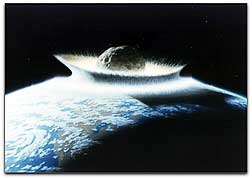
 One hundred years ago this week, an event in Siberia created quite a stir on Earth. What began as an explosive event over remote Tunguska is viewed by scientists as a large space rock that tore through the atmosphere of Siberia, then detonated to flatten some 2,000 square kilometers of trees. From that situation scientists realize that there could very well be an asteroid in space with Earth’s name on it sometime in the future. The fortunate aspect of this is that with a matching of technology and space governance, experts could negate such events from happening in the future. If the object had struck in New York City or London, it would have killed hundreds of thousands and created hysteria.
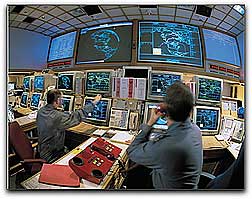 That is what was addressed at the Secure World Foundation luncheon at the University of Colorado in Boulder, where it was determined that we need to be better prepared, to divert such a threat from Earth’s path, if such a threat should threaten. And so, on his to-do list is ‘Thwarting the threat of Earth-colliding asteroids‘ for former Apollo astronaut, Russell L. (Rusty) Schweickart. While the threat of a space object may have a low probability it certainly is not listed as a zero probabililty. Then there are the smaller asteroids, which exist in a far greater number. “The marriage of we human beings and the machines that we’ve created are now at a level of capability which enables us to fire the crazy cosmic gardener. We can stop this process from occurring again,” said Schweickart referring to the huge asteroid impact 65 million years ago that is thought to have destroyed the dinosaurs.
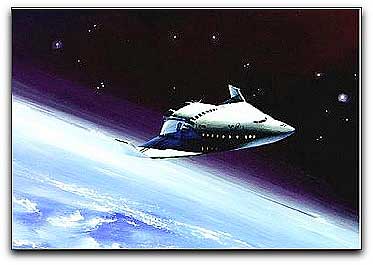 Working with the Association of Space Explorers and the talents of the B612 Foundation, and supported in part by the Secure World Foundation, the former astronaut has organized a series of workshops on the NEO threat, geared to creating a protocol for submission to the United Nations for its deliberation. These are to be spelled out in a mission rules document for protecting the Earth from asteroid impacts.
