

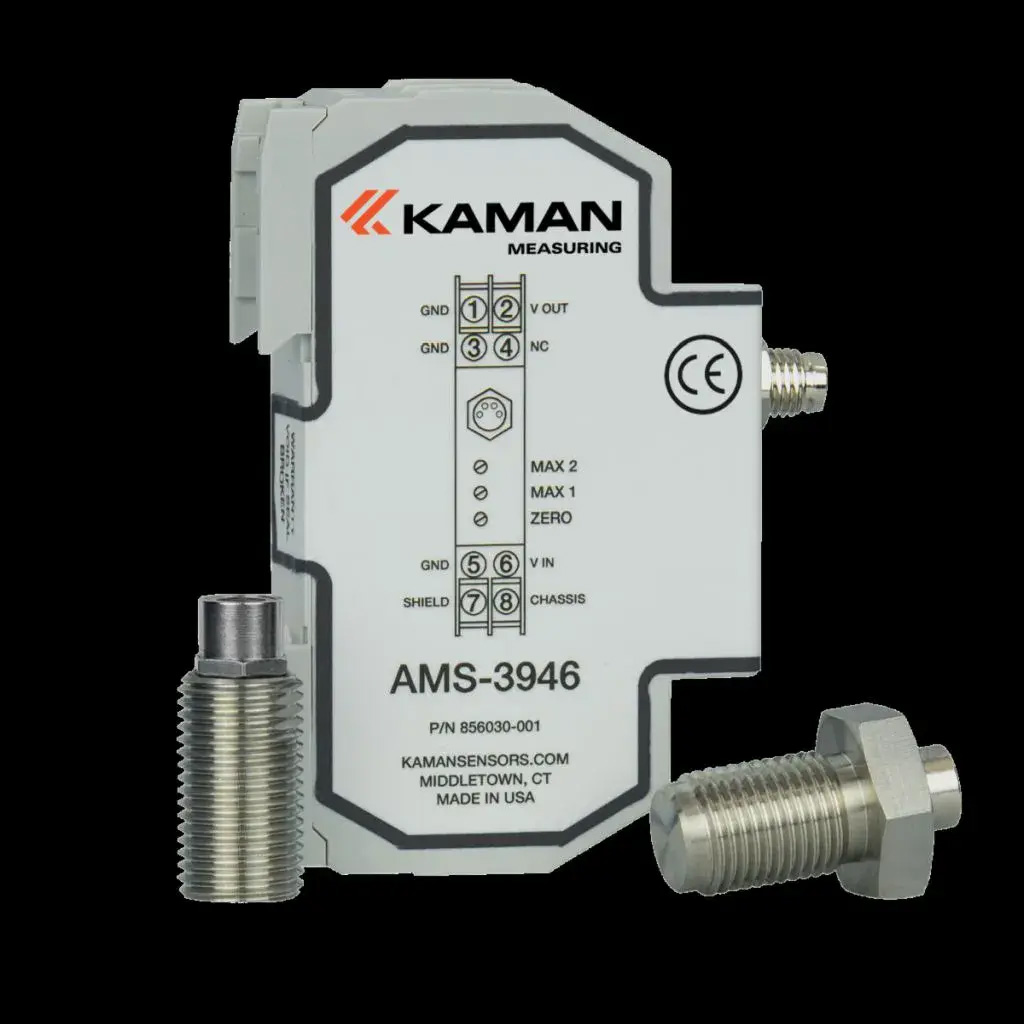
The Measuring Division of Kaman Precision Products has officially highlighted its Advanced Magnetic Sensing family of high-precision non-contact measuring systems. While broadly applicable across defense and industrial sectors, these high-performance sensors are engineered specifically to address the punishing demands of aerospace propulsion.
Securing the Infrastructure of Orbital Delivery
As the commercial space economy accelerates and launch cadences increase, ensuring the absolute reliability of rocket engines and launch vehicle infrastructure has become a critical operational priority. Kaman provides highly reliable displacement measurement systems that possess an unmatched pedigree of performance across challenging space applications, ranging from ground testing facilities and rocket engines to operational satellites. The new advanced sensor line provides an essential layer of diagnostic capability to ensure these complex launch vehicles operate safely under extreme duress.
Surviving the Extremes of Rocket Propulsion
Launch vehicles represent some of the most violently extreme operating environments ever engineered by humans. Components must rapidly transition from the deep freeze of cryogenic propellants to the massive heat and kinetic energy of engine ignition. The Advanced Magnetic Sensing systems are uniquely designed to handle this exact volatility.
The sensors are fully rated to operate reliably in high-pressure environments ranging from 500 psi up to a staggering 40,000 psi. Furthermore, the hardware boasts an extreme operating temperature range that drops down to -320°F—the exact temperature needed to accommodate super-chilled propellants like liquid oxygen—and scales up to +1000°F, with short-term tolerances reaching +1200°F. This thermal and pressure resilience makes the sensor family ideal for direct integration into rocket propulsion systems and critical orbital launch infrastructure.
Advanced Diagnostics and Condition Monitoring
At the core of the Advanced Magnetic Sensing technology is the ability to drastically enhance the capabilities of condition monitoring systems without introducing new points of failure into the vehicle. The sensors accurately measure and monitor mechanical runout, rotational speed, and minute changes in machine vibration profiles. This diagnostic capability is absolutely crucial for reducing flight risk, minimizing structural damage, and preventing unplanned downtime or catastrophic failure during a rocket engine’s operational cycle.
By tracking non-contact speed sensing, shaft runout, and gear tooth conditions in real time, operators can detect microscopic defects before they compromise a multi-million dollar mission. The system provides an incredibly precise root mean square resolution down to a single micron, coupled with a standard measuring range of up to seven millimeters.
Penetrator-Free Integration and Customization
A key technological advantage of Kaman’s approach is the ability of the sensors to operate completely without the need for special magnets. The non-contact measuring systems work seamlessly with any ferromagnetic target and are capable of detecting positions through non-magnetic, conductive, and non-conductive barriers. This unique feature allows aerospace engineers to design leak-proof, penetrator-free equipment installations, which are highly practical and economical for pressurized fuel lines and engine casings.
Designed to withstand harsh environmental exposure, the IP-67 rated sensors are available with a variety of hermetic sealing options. Manufacturers can select from standard configurations including threaded, flanged, bolt head styles, and AS4320 pressure port-compatible designs, all of which can be customized to meet the strict integration requirements of modern launch vehicle manufacturers.
