

On August 20, 2026, an environmental analysis of commercial orbital computing filings highlighted the long-term e-waste and upper-atmosphere pollution risks posed by proposed mega-constellations dedicated to space-based artificial intelligence processing.
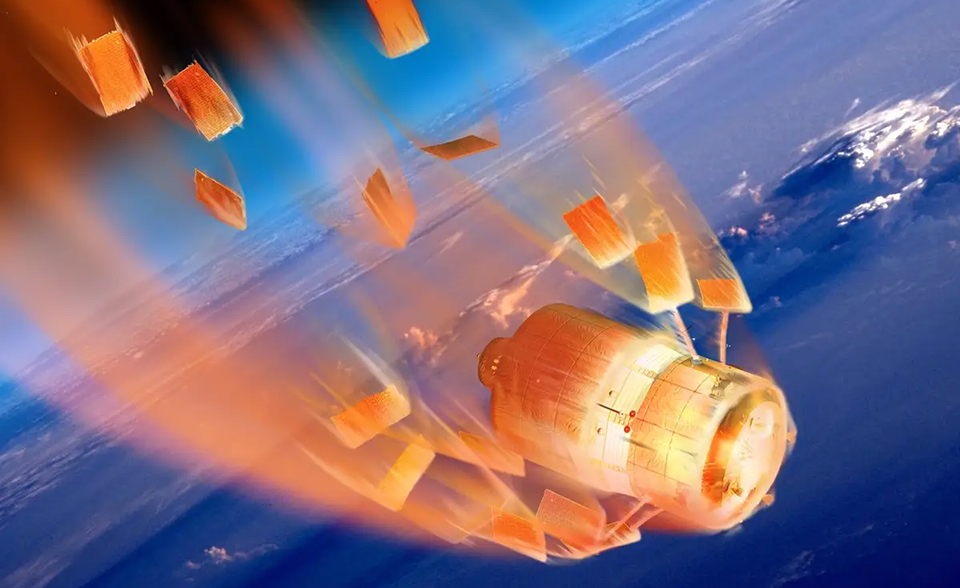
As commercial operators seek regulatory approval to deploy thousands of orbital data center satellites, researchers and space sustainability experts warn that rapid hardware replenishment cycles will generate unprecedented volumes of orbital debris and atmospheric metallic vapor.
Decommissioning Metrics and Hardware Replenishment Cycles
Unlike traditional telecommunications satellites designed for five-to-fifteen-year operational lifespans, space-based compute hardware is subject to rapid semiconductor obsolescence. To keep pace with advancing graphics processing units (GPUs) and integrated AI accelerators, orbital compute nodes require replacement every three to five years.
The operational parameters driving orbital data center disposal volumes include:
- Annual Decommissioning Cadence: Constellations scaling to tens of thousands or hundreds of thousands of active satellites would require deorbiting thousands of spacecraft annually to replace obsolete processing nodes.
- Massive Atmospheric Vaporization: Deorbiting high-mass compute platforms—weighing between one and two metric tons each—releases significant quantities of aluminum oxide, silicon, and copper vapor into the mesosphere and stratosphere during thermal burn-up.
- Disposal Orbit Risks: Spacecraft operating at higher orbital shells above 600 kilometers must rely on active propulsion maneuvers to lower perigee, increasing collision risks during multi-year passive decay phases if propulsion systems fail.
Regulatory Context of Megaconstellation Compute Filings
The environmental scrutiny follows a series of unprecedented filings submitted to the Federal Communications Commission (FCC) by commercial space companies. On January 30, 2026, SpaceX submitted an application to deploy up to one million solar-powered satellites for an Orbital Data Center System operating in low Earth orbit shells between 500 and 2,000 kilometers.
The compute proposal operates alongside SpaceX’s communication infrastructure plans, which include a July 2026 application for 100,000 third-generation Starlink spacecraft. Additional commercial proposals, including Blue Origin’s Project Sunrise and Google’s Project Suncatcher, have collectively placed hundreds of thousands of proposed compute satellites into regulatory review pipelines.
Atmospheric Chemistry and Orbital Carrying Capacity
The primary environmental concern centers on the chemical impact of mass satellite re-entry on Earth’s upper atmosphere. When aluminum-rich spacecraft structures vaporize upon atmospheric re-entry, they generate aluminum oxide particles that catalyze ozone layer depletion and alter atmospheric radiative forcing.
Simulations indicate that continuous re-entry of thousands of compute satellites annually could inject more aluminum into the mesosphere than natural meteoroid deposition, creating a persistent layer of conductive metallic dust. In addition, high-density orbital shells increase the probability of orbital fragmentation events, creating collision cascades that threaten surrounding low Earth orbit infrastructure.
Regulatory Pathways and Environmental Impact Standards
The FCC and international spectrum regulators are evaluating whether existing orbital debris mitigation rules—which mandate satellite deorbiting within five years of mission completion—are sufficient for high-turnover compute fleets. Space safety organizations are calling for updated environmental impact reviews under the National Environmental Policy Act (NEPA), proposing strict limits on total annual re-entry mass and mandating design-for-recycling architectures before granting full operational licenses for space-based data center fleets.
