

On Monday, July 6, 2026, Space Exploration Technologies Corp. filed a comprehensive application with the U.S. Federal Communications Commission seeking regulatory authorization to deploy up to 100,000 third-generation satellites.
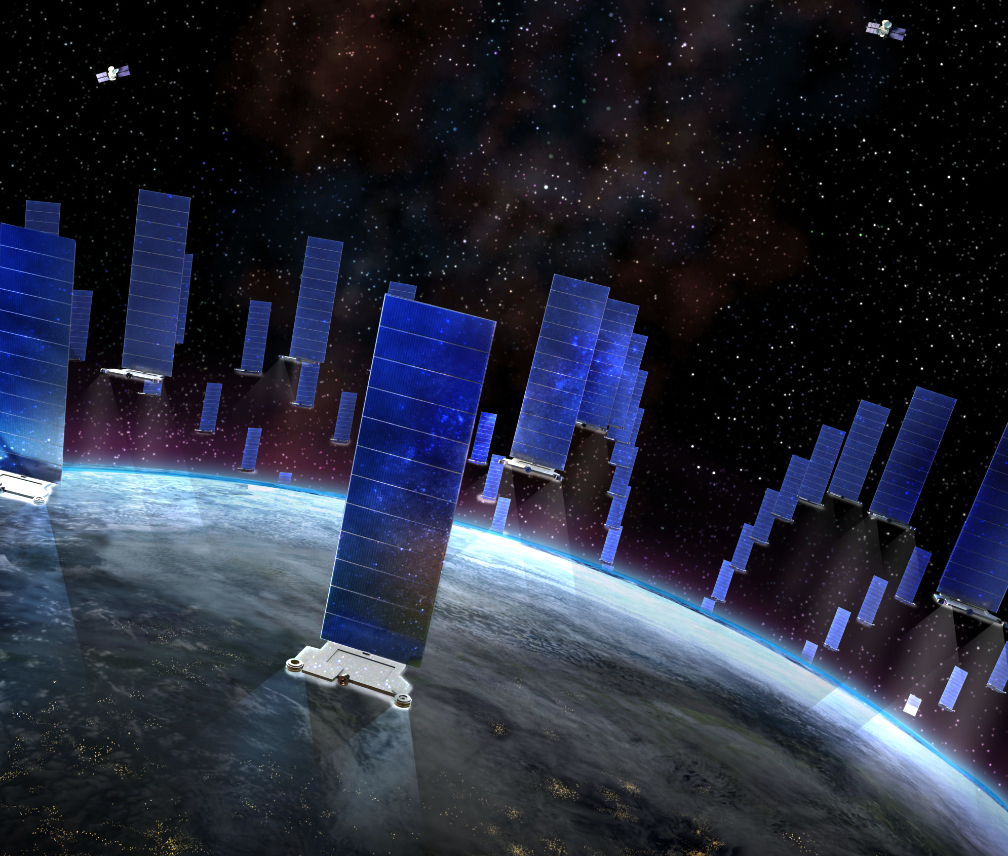
Operating under the Gen3 constellation framework, the massive orbital expansion is designed to build a low-latency, high-capacity global communications infrastructure optimized to route internet backhaul traffic for billions of consumers, enterprise clients, and artificial intelligence devices.
Technical Specifications and Multi-Band Throughput
The proposed Gen3 spacecraft will feature a dry mass of approximately 2,000 kilograms per unit, a weight profile that can only be accommodated at scale by the company’s heavy-lift launch system. The constellation will be distributed across two distinct sets of very low Earth orbit shells, with altitudes managed between 323 to 327.5 kilometers and 473 to 477.5 kilometers.
According to the filing data, the hardware upgrades yield a tenfold increase in satellite capabilities, pushing the maximum downlink throughput of a single satellite to 1 terabit per second. Symmetrical uplink capacity is projected to jump 22-fold, expanding to between 160 and 200 gigabits per second. To support these data volumes, the spacecraft will deploy an integrated network of phased-array beamforming systems, electronic beam-steering antennas, and high-speed optical inter-satellite laser links. In addition to its active Ku-, Ka-, V-, and E-band licenses, the company has requested permission to utilize the untapped W-band and D-band frequencies between 92 GHz and 275 GHz to secure the backhaul margins required for autonomous data transit.
Regulatory Pathways and Scale Adjustments
The scale of the 100,000-satellite Gen3 application represents an escalation beyond the Federal Communications Commission’s prior constellation approvals, which approved a second batch of 7,500 second-generation spacecraft to cap the active Gen2 fleet at 15,000. The expansion will run completely separate from the distinct “Starmind” orbital data-center project, which encompasses plans for up to 1 million dedicated compute satellites mass-produced at the company’s Texas manufacturing facility.
To streamline the automated software engineering and orchestration tools needed to manage a fleet of this scale, the operator is moving toward closing its pending $60 billion all-stock acquisition of coding-assistant developer Anysphere, which was initially highlighted in its pre-IPO regulatory disclosures. The regulatory review path will require the operator to satisfy rigorous orbital safety conditions, demonstrate active debris-mitigation capabilities, and coordinate with the National Science Foundation to prevent radio and optical interference from clouding ground-based astronomical observations.
