

WASHINGTON, D.C. — In a semi-annual regulatory compliance filing submitted to the Federal Communications Commission (FCC), SpaceX confirmed it successfully executed controlled atmospheric deorbit maneuvers for 260 Starlink satellites between December 1, 2025, and May 31, 2026.
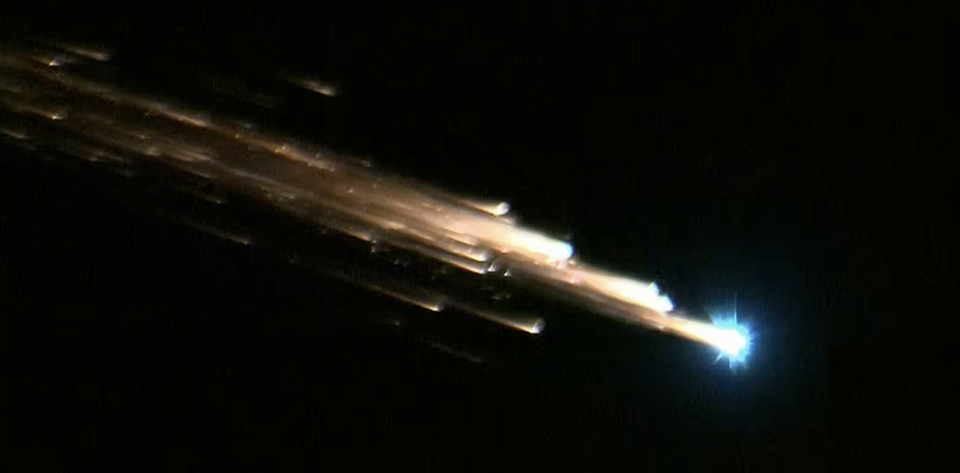
The high-volume disposal sequence underscores the operational lifecycle parameters and active traffic-management protocols governing the world’s largest commercial low Earth orbit (LEO) megaconstellation.
According to the engineering log, all 260 spacecraft performed nominal, automated propulsive descents utilizing their onboard krypton or argon-fed Hall-effect thrusters. The controlled maneuvers lowered the satellites’ perigee into dense atmospheric bands, ensuring total thermal destructive burn-up and preventing the accumulation of non-operational kinetic debris within high-density orbital shells.
Constellation Attrition and Proactive Risk Mitigation
The atmospheric disposal of 260 satellites does not represent a systemic hardware failure, but rather a predictable cadence within SpaceX’s rolling generational replacement cycle. The decommissioned batch primarily comprised early-generation Starlink v1.0 and v1.5 spacecraft launched between 2019 and 2021 that have either reached their designated five-year operational lifespans or exhibited early battery and telemetry degradation anomalies.
SpaceX’s proactive deorbit strategy is designed to mitigate orbital collision risks before a satellite loses control authority. The FCC requires megaconstellation operators to maintain a “post-mission disposal reliability” rate of at least 95%, meaning non-functioning satellites must be actively brought down rather than left to decay passively over decades. SpaceX’s filing indicates a disposal reliability rate exceeding 99%, with the vast majority of its retired fleet descending safely within six months of taking its deorbit commands.
Heightened Regulatory and Environmental Scrutiny
The sheer volume of atmospheric burn-ups has pushed the commercial space sector into an intense regulatory debate involving the FCC, the Federal Aviation Administration (FAA), and the Government Accountability Office (GAO). Academic and federal research bodies have raised concerns regarding the chemical composition of the particulates left behind in the upper stratosphere:
- Alumina Particulate Accumulation: When a multi-hundred-kilogram satellite vaporizes, its aluminum chassis converts into microscopic particles of aluminum oxide (alumina). Scientists warn that a continuous influx of alumina from thousands of deorbiting satellites could alter the stratosphere’s albedo, potentially affecting global solar radiation absorption and inducing localized ozone layer depletion.
- NEPA Environmental Assessment Demands: Environmental advocacy groups have cited these deorbit metrics to pressure the FCC to eliminate the “categorical exclusion” historical rule under the National Environmental Policy Act (NEPA). If removed, SpaceX and rival constellation operators would be legally required to execute comprehensive environmental impact statements (EIS) detailing the upper-atmospheric chemical footprint of their entire fleet lifecycles before receiving launch license approvals.
Next-Generation Upgrades and Orbital Edge Storage
As SpaceX purges older hardware blocks, it is rapidly backfilling the lower orbital planes with larger, high-capacity Starlink v2 Mini and full-scale Block 3 satellites launched via its recurring Falcon 9 and Starship flight manifests. This generational shift expands the company’s network capabilities far beyond basic consumer broadband access.
The newer satellite architectures feature expanded structural buses engineered to host advanced, cloud-decoupled secondary payloads. The company is actively integrating localized orbital edge-computing data centers directly into its active routing plane, allowing spaceborne data storage platforms to process complex geospatial and artificial intelligence algorithms natively in orbit.
Additionally, these upgraded platforms host specialized, secure military communications frameworks—such as the A1 satellite payload variant—granting sovereign defense departments dedicated, encrypted transmission windows isolated from standard commercial internet traffic.
