

Targeting the prolonged global deficit in commercial launch capacity and heavy-lift pricing pressures, three leading launch providers completed major technical milestones for their upcoming medium- and heavy-lift launch architectures.
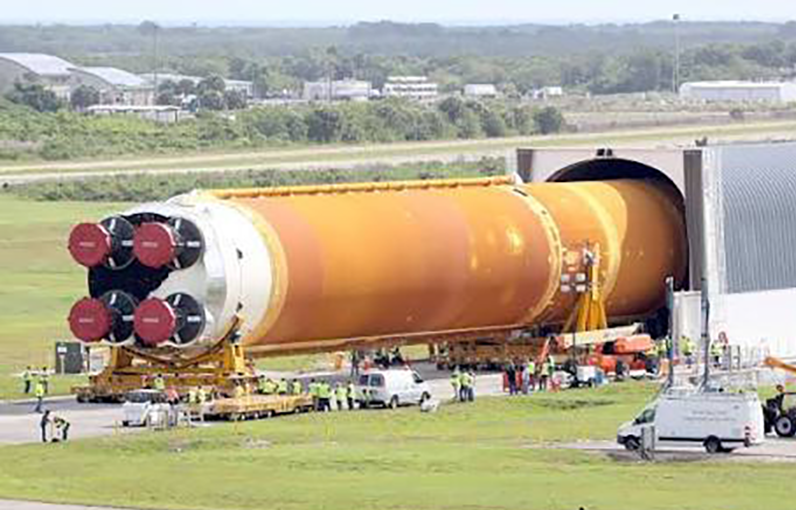
On Monday, July 20, 2026, operational reports confirmed critical advancements including structural qualification testing, engine hotfires, and infrastructure builds for Relativity Space’s Terran R, Rocket Lab’s Neutron, and PLD Space’s Miura 5.
Technical Profiles and Flight Specifications
The upcoming launch systems feature diverse performance metrics designed to stabilize the small-to-heavy deployment pipeline:
- Relativity Space Terran R: A heavy-lift, two-stage launch vehicle featuring extensive metallic additive manufacturing structures, engineered to serve deep-space cargo and large constellation deployments.
- Rocket Lab Neutron: A medium-lift vehicle utilizing a proprietary lightweight carbon composite structure, powered by seven in-house liquid oxygen and methane Archimedes engines on the first stage.
- PLD Space Miura 5: A two-stage European small-to-medium satellite launcher designed to deliver up to 1,000 kilograms of payload capacity direct to low-Earth orbit (LEO).
Mitigating the Launch Infrastructure Deficit
The synchronized industrial push comes as global commercial operators face restrictive multi-year manifests. The delivery of alternative hardware platforms directly addresses the reliance on singular dominant launch providers, introducing competitive capacity to safeguard commercial and civil flight cadences.
Relativity Space continues to leverage its foundational backlog following its launch agreement with Intelsat for Terran R, while Rocket Lab advances its maritime logistics fleet, having recently finalized design and recovery specifications for its specialized down-range ocean landing platform. Concurrently, PLD Space has stabilized its technical engineering operations following a recent funding injection from the European Investment Bank to secure European sovereign space access.
Initial Orbital Testing Frameworks
All three launch architectures remain positioned to enter active qualification campaigns over the final quarters of the year. Initial integrated system test flights, full-scale hotfire verifications, and launch pad activations at Cape Canaveral Space Force Station, Wallops Flight Facility, and the Guiana Space Centre are slated to continue ahead of projected commercial service openings.
