

KWAJALEIN ATOLL — NASA and aerospace startup Katalyst Space Technologies are scheduled to launch an orbital servicing mission on Tuesday, June 30, 2026, aimed at arresting the atmospheric decay of the Neil Gehrels Swift Observatory. The rescue operation will deploy a specialized remediation vehicle to rendezvous with, capture, and elevate the 22-year-old space telescope, preventing a destructive atmospheric re-entry projected to occur within the next few months.
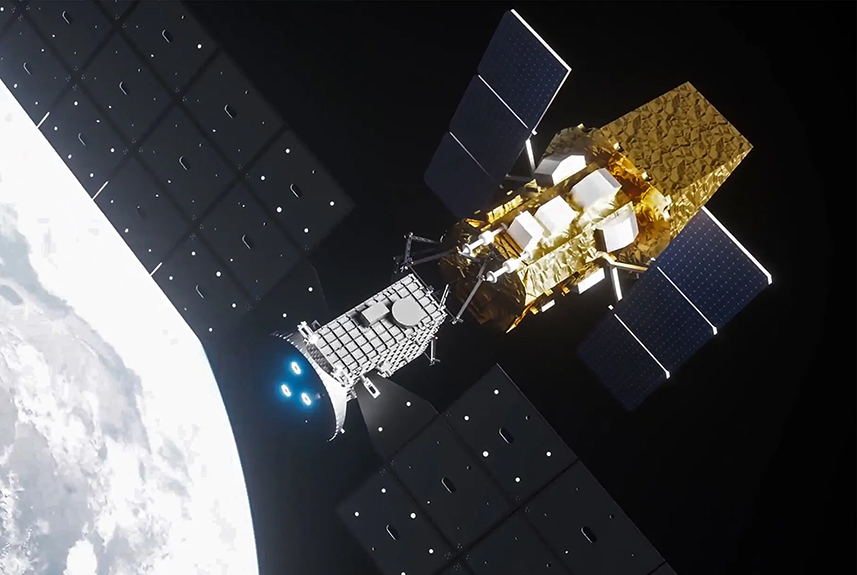
The launch window is set to open no earlier than 6:23 a.m. Eastern Time from Kwajalein Atoll in the Marshall Islands. Katalyst Space Technologies developed and manufactured the servicing payload under an expedited $30 million firm-fixed-price contract awarded by NASA’s Astrophysics Division in September 2025.
Orbital Decay Parameters and Solar Activity Context
Launched in 2004 to monitor cosmic gamma-ray bursts, the Neil Gehrels Swift Observatory was originally placed into a circular low Earth orbit (LEO) at an altitude of approximately 370 miles (595 km). Lacking an onboard propulsion system for orbital maintenance, the telescope has experienced continuous orbital decay due to atmospheric drag over its two decades of operations. Swift’s altitude has degraded to approximately 210 miles (338 km), where the increased density of the upper thermosphere exerts severe friction on the spacecraft’s hull.
According to Shawn Domagal-Goldman, director of NASA’s astrophysics division, the rate of orbital degradation accelerated rapidly throughout late 2024 and 2025. This acceleration was driven by a stronger-than-predicted peak in the Sun’s 11-year solar cycle, which expanded the Earth’s upper atmosphere outward and significantly increased the satellite’s drag coefficient. In early 2026, mission principal investigator Brad Cenko directed Swift to halt scientific imaging and execute strategic passive orientation maneuvers to minimize its surface area profile, successfully slowing its descent by an estimated 25 miles.
The Link Servicing Vehicle and Pegasus Launch Profile
The robotic rescue vehicle, designated Link, is a refrigerator-sized spacecraft designed to perform autonomous proximity operations and mechanical docking without relying on standardized grapple fixtures. Because Swift was engineered in the early 2000s without contingency considerations for on-orbit servicing or refueling, NASA’s directive to Katalyst restricted mission parameters to two foundational criteria: successfully execute the orbital boost while avoiding any structural impact or sensor contamination.
To meet the strict $30 million mission budget, Katalyst procured a surplus, long-term storage Pegasus rocket from Northrop Grumman. The air-launched, three-stage solid-fuel booster will be released from a modified Stargazer L-1011 carrier aircraft at an altitude of 40,000 feet before igniting its first-stage motor. Utilizing an airborne launch platform enables the mission to directly access Swift’s specialized orbital inclination, which is mathematically inefficient to reach via traditional fixed launch pads located at Cape Canaveral, Florida.
Operational Rendezvous and Re-boosting Timeline
Following a successful insertion into LEO, mission controllers at Katalyst’s operations facility will spend approximately 7 to 14 days conducting systems architecture checkouts, instrument calibrations, and thruster verifications. The Link spacecraft will then execute a series of orbital phasing burns over a six-week period to match Swift’s exact orbital velocity and vector.
Once docked, Link will activate its primary propulsion subsystem to conduct a series of gradual, low-thrust orbital maintenance burns over a span of two months. The collective thrust profile is calculated to elevate the Neil Gehrels Swift Observatory by 100 miles (160 km). This orbital restoration is projected to extend Swift’s operational lifespan by an additional decade, allowing astrophysicists to resume the continuous monitoring of short and long-duration gamma-ray burst profiles.
