

CAPE CANAVERAL, FL — Accelerating the global race to eliminate cellular dead zones, AST SpaceMobile, Inc. (NASDAQ: ASTS) announced the successful orbital deployment of its BlueBirds 8, 9, and 10 satellites. The three massive, next-generation spacecraft lifted off from Cape Canaveral Space Force Station aboard a SpaceX Falcon 9 rocket, marking the company’s first-ever “stacked” launch milestone.
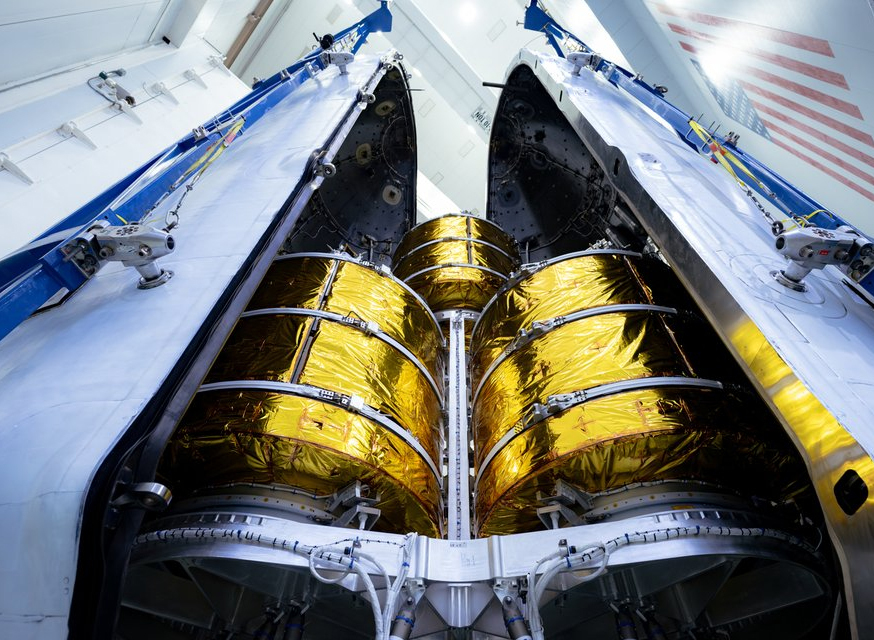
The successful deployment expands AST SpaceMobile’s low-Earth orbit (LEO) constellation. The company is building the world’s first space-based cellular broadband network designed to interact directly with ordinary, unmodified smartphones, bypassing the need for specialized satellite phones or bulky ground antennas.
Unfurling the Largest Arrays in Low Earth Orbit
The newly launched next-generation BlueBird satellites are highly advanced technological structures. When fully unfurled in orbit, each satellite features an expansive commercial communications array measuring approximately 2,400 square feet (223 square meters)—making them the largest commercial communication arrays ever deployed in low-Earth orbit.
These colossal antenna apertures are engineered to solve the immense physics challenges of connecting with low-power mobile devices from hundreds of miles away in space. The massive surface area enables:
- High-Power Generation: Capturing substantial solar energy to fuel heavy data routing workloads.
- Targeted Beam Coverage: Concentrating cellular frequencies onto precise geographic areas to maximize signal strength.
- Enhanced Capacity: Reducing signal interference to facilitate a fluid, high-capacity user experience.
Crucially, these next-generation arrays are designed to deliver peak data speeds of nearly 200 Mbps directly to standard smartphones—roughly double the peak data throughput of the company’s initial Block 1 BlueBird spacecraft. The high-throughput link is optimized to support seamless voice calls, web browsing, and high-definition streaming video from space.
Paving the Path to Continuous Commercial Service
The successful deployment provides a strong boost to AST SpaceMobile’s commercial prospects. By quadrupling the number of its larger, next-generation satellites in orbit, the company is systematically expanding its ability to transition from intermittent testing to continuous, reliable data coverage.
“BlueBirds 8, 9, and 10 represent the continued execution of a vision once considered impossible: space-based cellular broadband to everyone, everywhere,” said Abel Avellan, Founder, Chairman, and CEO of AST SpaceMobile. “Our team has built a new class of space-based cellular broadband technology that connects seamlessly to everyday smartphones. This is a fundamental transformation of how the world connects.”
Avellan confirmed that the Texas-headed company is moving rapidly to scale its manufacturing and launch cadences. The next three spacecraft—BlueBirds 11, 12, and 13—are currently undergoing final preparations for shipment to the Florida launch site, while additional units through BlueBird 37 are already in active production and assembly inside the company’s 500,000-square-foot facility in Midland, Texas.
The Geopolitical Direct-to-Cell Race
The launch lands amid a high-stakes competitive environment for Supplemental Coverage from Space (SCS). As mobile network operators (MNOs) seek universal coverage for their subscribers, satellite connectivity has transformed from a premium niche product into a mainstream infrastructure target.
AST SpaceMobile’s flexible spectrum strategy relies on deep commercial partnerships with global telecom operators, allowing the satellite network to interoperate natively with existing terrestrial 4G and 5G mobile infrastructure. Backed by a vast intellectual property portfolio of over 3,900 patents and patent-pending claims, AST SpaceMobile holds a powerful position as it races against alternative direct-to-device approaches, such as SpaceX’s own Starlink Direct-to-Cell constellation.
With major regulatory milestones already cleared—including the U.S. Federal Communications Commission (FCC) granting commercial authority to deploy its space-based broadband nationwide in the United States—this successful SpaceX flight cements AST SpaceMobile’s position as a primary architect of the direct-to-cell era.
