

WARSAW, POLAND — Marking a critical step forward for Poland’s autonomous space capabilities, the CAMILA Earth Observation program has officially entered its next industrial phase. Madrid-headquartered multinational technology group GMV announced it has been selected to design, develop, and implement the Flight Operations Segment (FOS)—the vital ground software system that will enable operators to control and manage Poland’s largest-ever satellite initiative.
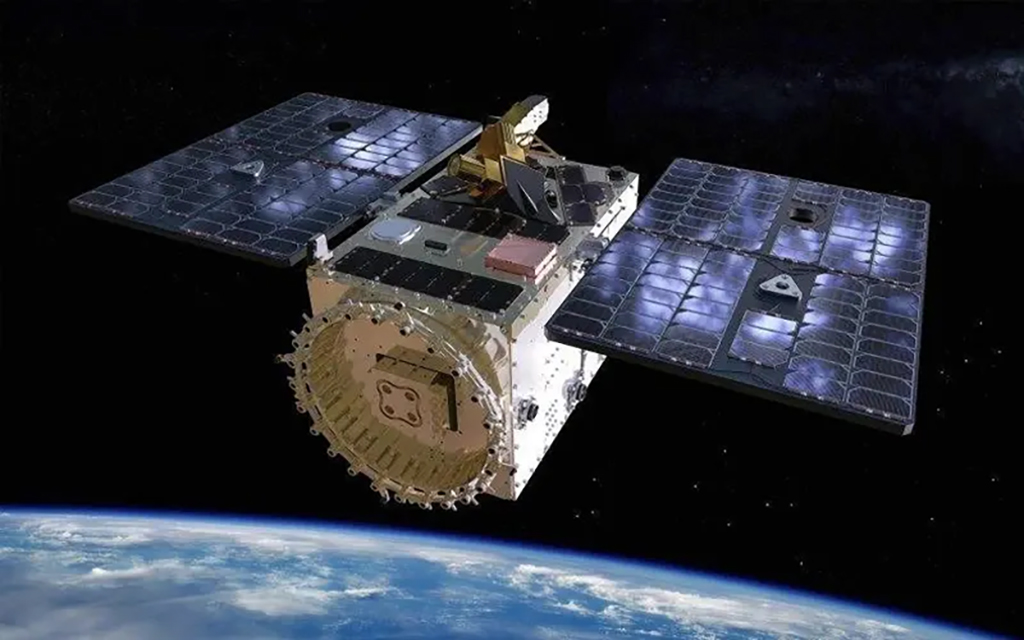
Developed in close collaboration with the European Space Agency (ESA), the CAMILA program is established under an agreement with Poland’s Ministry of Development and Technology. The initiative aims to deploy a constellation of four dedicated Earth observation satellites to systematically strengthen Poland’s national security, defense, and civilian remote-sensing infrastructure, drastically reducing its reliance on third-party commercial geospatial data.
Securing the Ground Architecture
The CAMILA constellation (which stands for Country Awareness Mission in Land Analysis) is bifurcated into two foundational layers: the space segment consisting of the four optical Earth observation satellites, and the ground segment tasked with mission monitoring, raw data downlink, and satellite health management.
By taking charge of the Flight Operations Segment, GMV’s engineering team in Poland will build the central software nervous system that bridges these two layers. The FOS will integrate directly with local Polish ground infrastructure, including tracking antennas and cloud-based data processing pipelines.
The software architecture will incorporate several of GMV’s core proprietary, aerospace-validated software suites:
- hifly®: The foundational Mission Control Software used to monitor satellite telemetry and command the spacecraft in real-time.
- FocusSuite®: An advanced Flight Dynamics System engineered to track orbital trajectories, plan maneuvers, and ensure precise pointing vectors for the imaging payloads.
- flexplan®: A highly automated Mission Planning system designed to schedule image acquisition tasks, manage onboard power constraints, and optimize ground station communication passes.
Through the deployment of these automated tools, the platform will enable partial automation of fleet operations, significantly driving down operational overhead while maximizing overall mission safety.
Shifting from Requirements to Software Development
The announcement follows a crucial engineering milestone achieved in mid-May, when the CAMILA program successfully cleared its FOS Requirements Review (FOS RR). This technical gate marks the formal conclusion of the system’s definition phase, ensuring that all architectural frameworks are finalized before programmers begin writing code.
“This is a crucial milestone in the project’s development, as it marks the transition to a phase in which the main objectives and detailed requirements can be translated into specific tasks for system engineers and software developers,” explained Jarosław Wysocki, Project Manager at GMV. “In the near future, we will focus on designing the system and adapting our software to the requirements of the satellite platforms used in the CAMILA program.”
Once fully operational, the CAMILA constellation will provide continuous, high-resolution geospatial intelligence to Polish public administrations, domestic environmental protection agencies, spatial planning authorities, and emergency management services—establishing a resilient, sovereign eye in the sky to protect national borders and critical infrastructure.
