

As the commercial space sector experiences unprecedented financial momentum fueled by upcoming public offerings and massive capital injections, market analysts are increasingly looking beyond the hype of new broadband mega-constellations.
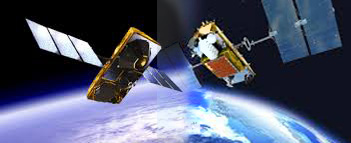
Two legacy satellite telecommunications firms, Iridium Communications and Globalstar, have been identified as unique and highly resilient investment plays. According to recent financial analyses, these companies are uniquely positioned to capitalize on two rapidly accelerating market vectors: the explosive growth of the global Internet of Things (IoT) and the surging levels of defense spending directed toward resilient space architectures.
The Value of Scarce Spectrum and Defense Contracts
The strategic value of Iridium and Globalstar lies not in the sheer volume of their orbital assets, but in their possession of scarce, licensed radio frequency spectrum, dedicated defense contracts, and deeply entrenched customer relationships. As the low Earth orbit environment becomes increasingly congested with new broadband providers, the specialized L-band and S-band spectrum rights held by these legacy operators are acting as critical “toll roads” for mobile connectivity from space. This invisible real estate is vital for emerging direct-to-device cellular services and highly secure, machine-to-machine data transmissions, creating an infrastructure foundation that cannot be easily replicated by newer entrants.
Iridium: Defense Infrastructure and Global IoT Expansion
Iridium Communications has successfully leveraged its global L-band network to power critical defense radios, maritime IoT networks, and aviation safety systems. The company’s recent strategic moves, notably the 2024 acquisition of Satelles, have allowed it to expand rapidly into highly secure satellite-based positioning, navigation, and timing (PNT) services. This expansion directly addresses the security vulnerabilities of traditional GPS systems, acting as a major technological improvement.
Furthermore, the company has demonstrated solid financial growth driven by the convergence of the government sector and commercial IoT. In the first quarter of 2026, Iridium’s engineering and support revenue for government operations rose by ten percent to reach nearly $39.5 million, significantly bolstered by ongoing work with the Space Development Agency. Concurrently, commercial IoT data services climbed by five percent, pushing the company’s total subscriber base beyond 2.5 million active users.
Globalstar: Direct-to-Device Innovations and Strategic Mergers
Globalstar represents another compelling facet of this investment thesis, driven heavily by its pioneering role in the direct-to-device market. Known fundamentally as the satellite layer powering Apple’s iPhone emergency SOS functionality, Globalstar has proven the viability of seamless integration between terrestrial consumer hardware and orbital networks. The company has seen massive market momentum, underscored by reports in April 2026 of Amazon announcing a definitive merger agreement to fold Globalstar into its own direct-to-device connectivity ambitions. Globalstar’s first-quarter 2026 revenue highlighted this deep operational strength, rising seventeen percent to $70 million, with wholesale capacity services and operating income experiencing massive, triple-digit growth.
Aligning with Proliferated Military Architectures
The upward trajectory of both Iridium and Globalstar perfectly aligns with the broader aerospace industry trend toward proliferated military space architectures. The United States Space Force has heavily prioritized decentralized satellite communications, allocating $9.8 billion specifically for space communication infrastructure within its massive $59.7 billion budget for fiscal year 2027. Defense agencies are actively seeking to integrate commercial mass-production and established satellite data networks into the military supply chain to create redundant command and control architectures. For the broader financial market, companies that own licensed defense spectrum and established machine-to-machine connectivity networks offer a highly tangible and investible gateway into the future of global space security and the industrial Internet of Things.
