

On August 10, 2026, counter-drone technology developer DroneShield announced the launch of RfRecon, a portable radio frequency (RF) intelligence platform engineered to sense, identify, locate, and assess electromagnetic activity across tactical operational environments.
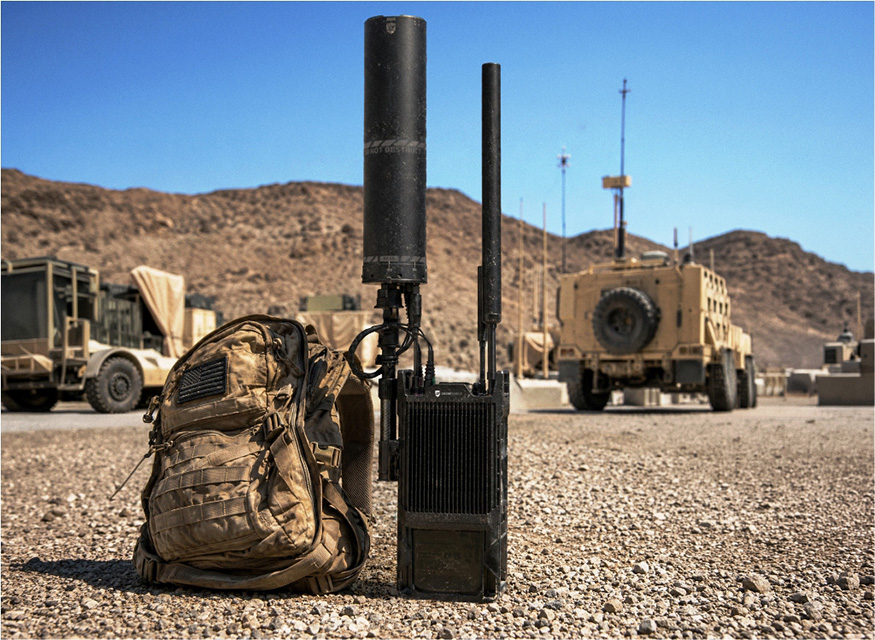
Developed to address the growing volume and complexity of uncrewed aerial systems, electronic warfare signals, and wireless communications, the device consolidates wideband spectrum monitoring and signal intelligence into a single portable unit designed for dismounted, vehicle-mounted, expeditionary, and fixed-site operations.
Hardware Architecture and Computing Compute Enhancements
Built upon DroneShield’s proprietary RfAI-3 signal processing architecture, RfRecon combines ultra-wideband spectrum awareness with precision direction-finding capabilities to convert raw spectrum data into real-time operational context. Compared to previous industry-adopted sensing platforms, the hardware delivers approximately six times greater radio frequency spectrum coverage, four times the processing and artificial intelligence compute power, 31 times more storage, and eight times greater memory capacity. The sensor suite incorporates Bluetooth and Wi-Fi Remote ID decoding, automatic identification system (AIS) maritime tracking, automatic dependent surveillance-broadcast (ADS-B) flight tracking, integrated GNSS positioning, and hardware-based security safeguards.
“The electromagnetic spectrum has become one of the most important sources of operational intelligence on the modern battlefield, but collecting data is no longer enough,” stated Angus Bean, Chief Executive Officer of DroneShield. “The teams that gain the greatest advantage will be those that can rapidly understand what they’re seeing and confidently act on it. RfRecon reflects that shift by bringing RF intelligence directly to the tactical edge.”
Tactical Command Integration and Ecosystem Interoperability
RfRecon is engineered to function within layered defense architectures, operating either as a standalone sensor or connected to enterprise command-and-control networks. The platform features an open architecture and supports industry-standard data transfer protocols, enabling direct interoperability with Android Tactical Assault Kit (ATAK), third-party defense management systems, and complementary cyber takeover or kinetic defeat systems. DroneShield plans to deploy continuous software enhancements through its technology roadmap to expand signal detection libraries and operational capabilities over time.
