

Aitech, a global provider of rugged, embedded computing solutions, has announced the integration of the NVIDIA IGX Thor platform into its S-A2300 commercial-off-the-shelf artificial intelligence supercomputer and future hardware designs.
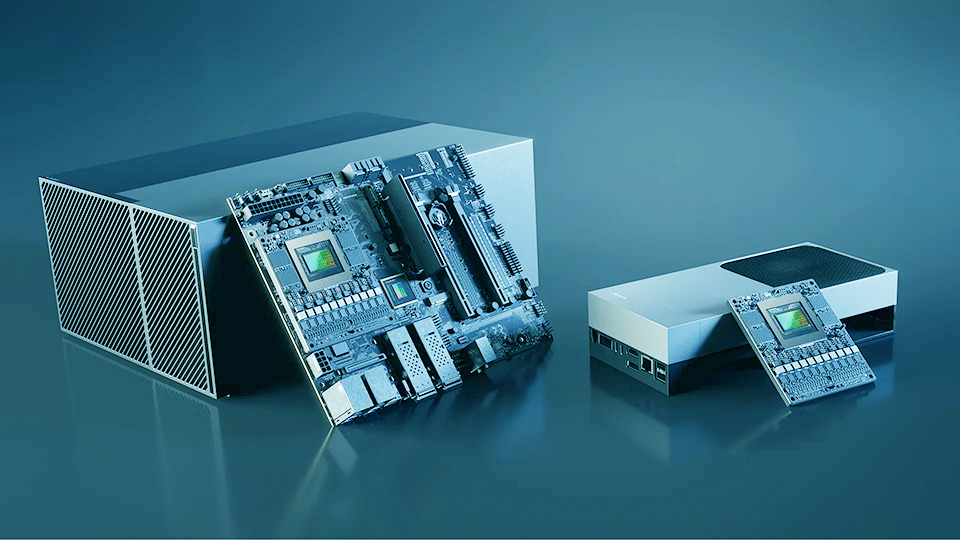
Advancing AI for Orbital Environments
This integration is designed to expand artificial intelligence computing capabilities, ushering in a new era of accelerated edge computing for space and demanding missions.
By utilizing the new platform, the company aims to provide deployable, mission-ready space computing systems engineered to withstand the harshest operational environments. This milestone reinforces the company’s four decades of experience delivering high-performance solutions for mission-critical applications, which includes offering one of the first general-purpose graphics processing units to fly in space.
The company now has access to evaluation boards and modules for the new platform, enabling rapid design, system integration, and hardware-in-the-loop testing. Dan Mor, the director of customer solutions at Aitech, noted that integrating the new technology into their space-proven systems uniquely positions the company to help transition advanced artificial intelligence from terrestrial industrial spaces directly to the harsh environment of orbit.
Expanding Low Earth Orbit Capabilities
The company was an early adopter of the previous generation NVIDIA Jetson AGX Orin platform, creating space-based compute solutions that currently power missions for NASA, Sidus Space, and other aerospace trailblazers.
The existing S-A2300 supercomputer, which leverages the Jetson AGX Orin Industrial system-on-module, is designed specifically for low Earth orbit missions. It combines exceptional compute density with vital resilience against radiation and extreme environmental conditions.
The system features up to 2,048 compute unified device architecture cores and 64 tensor cores, delivering as much as 248 tera operations per second for advanced workloads. It also utilizes two scalable, highly configurable deep learning accelerator engines that simplify integration and improve portability through standardized inference acceleration.
This architecture is heavily optimized for space-based applications, enabling real-time image processing, autonomous navigation, climate monitoring, and space debris tracking.
Unprecedented Compute Power in Space
While the current supercomputer already delivers robust performance for spaceborne processing, the integration of the new platform will expand these capabilities even further.
The updated system will offer up to 5,581 tera floating-point operations per second of compute for real-time inference, alongside high-speed connectivity through an advanced smart network interface card.
Additionally, a functional safety island located inside the system-on-chip enables dedicated safety functions through the software stack, ensuring highly reliable operation in mission-critical environments. These upgrades will unlock entirely new levels of operational efficiency and on-orbit intelligence.
Accelerating Time-to-Mission
With the new evaluation hardware in hand, the company can accelerate its development cycles from initial concept through validation. This streamlined process dramatically reduces the time-to-market for critical space and autonomous missions.
Together, the advanced computing platform and the company’s ruggedized hardware provide a powerful foundation for the next generation of space-based intelligence and autonomy.
The company is currently inviting customers, integrators, and mission partners to share their application requirements to begin discussions regarding configuration options, performance needs, and development timelines.
