

Following a series of high-value defense contracts and a $146 million Series B funding round earlier this year, Silicon Valley-based Muon Space is accelerating its recruitment efforts to support a shift from bespoke satellite missions to mass-scale constellation production.
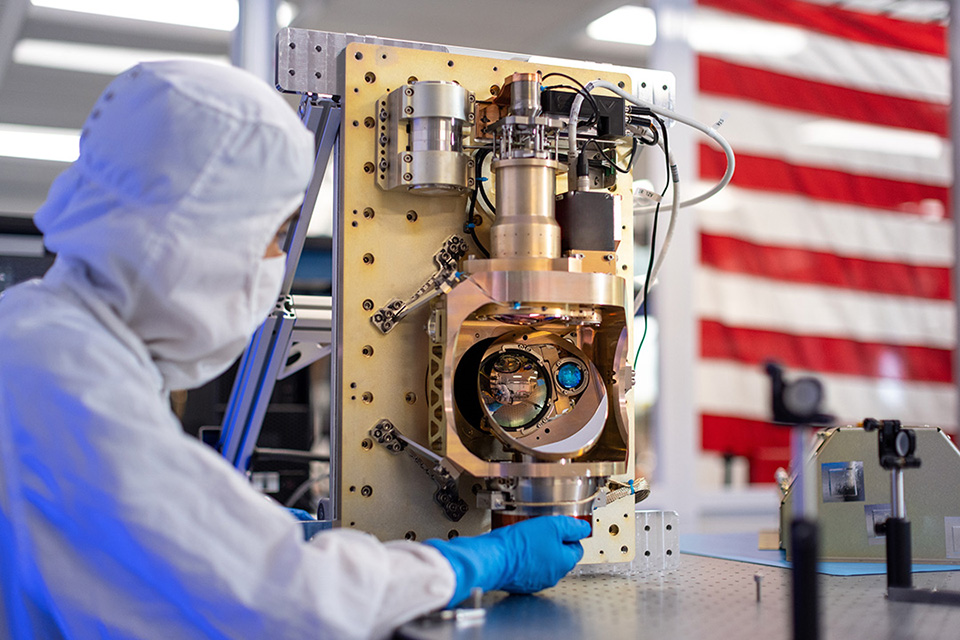
The hiring surge coincides with the company’s transition to its “Mission Foundry” model, supported by a new 130,000-square-foot facility in San Jose capable of producing up to 500 satellites annually.
Transitioning from Bespoke Units to the Mission Foundry
The expansion follows a pivotal first quarter for the company, marked by its February 2026 announcement regarding a move toward sustained deployment of multi-mission constellations. Central to this strategy is the Muon Halo technology stack, a vertically integrated platform that combines spacecraft buses, payload management, and software orchestration.
By automating the “Mission Foundry” workflow, Muon Space aims to deliver operational outcomes rather than just hardware. This model has proven successful in attracting government customers seeking “Data-as-a-Service” (DaaS) arrangements, where the satellite operator maintains the assets while the client pays for high-cadence environmental or intelligence data.
Defense Backlog and Proliferated Architectures
Muon’s growth is heavily underpinned by its integration into the U.S. military’s proliferated satellite architectures. In January 2026, the company was selected for the Missile Defense Agency’s (MDA) SHIELD IDIQ program, a $151 billion contract vehicle aimed at rapid delivery of innovative space capabilities.
Furthermore, the company is executing a $44.6 million SBIR Phase III contract from the U.S. Space Force to develop Space-Based Environmental Monitoring (SBEM) prototypes. These satellites, utilizing the Quickbeam-S multispectral sensor, will provide theater-specific weather imagery and cloud characterization to support tactical planning in contested environments.
MuSat-XL Platform and Laser Connectivity
To meet the rigorous requirements of its 20-satellite launch manifest over the next 20 months, Muon is scaling its engineering and production teams specifically for its new XL spacecraft platform.
- Payload Capacity: Designed for high-performance sensors and larger apertures.
- Propulsion: Utilizes zinc-based thruster technology acquired through the purchase of Starlight Engines.
- Connectivity: Integration of SpaceX Starlink mini-laser terminals is scheduled to begin in Q3 2026.
- Vertical Integration: Approximately 90% of components are manufactured in-house to reduce lead times and costs.
Outlook for 2026-2027 Operations
The company’s near-term manifest includes the deployment of the SNC Vindlér 2.0 constellation for radio-frequency analytics and three additional FireSats for the Earth Fire Alliance. The accelerated hiring is expected to continue through late 2026 as Muon Space prepares for its first orbital tests of persistent optical connectivity via the Starlink network in 2027.
“Customers are no longer asking for satellites – they’re asking for operational outcomes,” said Jonny Dyer, CEO of Muon Space. “They want high-performance missions delivered in months, not years, with tight integration across spacecraft, sensors and operations.”
