

On April 1, 2026, multiple reports from Bloomberg, The Wall Street Journal, and Reuters confirmed that SpaceX has officially submitted a confidential draft registration for an initial public offering (IPO) to the U.S. Securities and Exchange Commission (SEC). This move marks the beginning of what is expected to be the largest stock market debut in history, with a target valuation of approximately 1.75 trillion dollars.
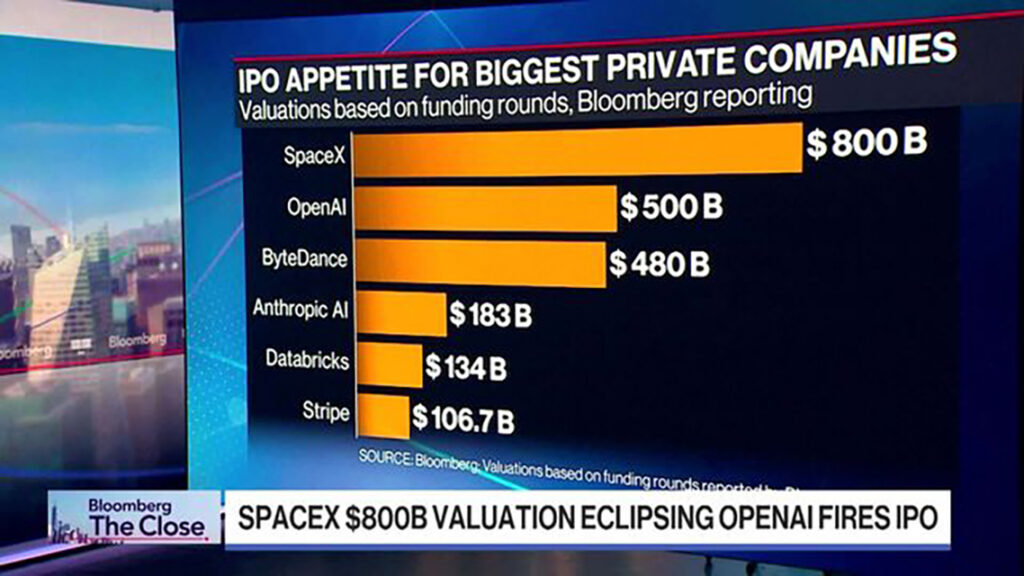
The filing follows a massive corporate restructuring earlier this year, in which Elon Musk merged SpaceX with his artificial intelligence venture, xAI. This merger transitioned the company from a hardware-focused aerospace firm into a vertically integrated AI and space powerhouse, now valued at more than 1.25 trillion dollars in the private market prior to the public offering.
Financial Targets and Market Impact
SpaceX is reportedly aiming to raise as much as 75 billion dollars through the IPO, which would dwarf the previous record of 29 billion dollars held by Saudi Aramco. The company is currently on track for a public listing as early as June 2026 on the Nasdaq.
The primary drivers behind this historic valuation include:
Following the successful propellant transfer demonstration in March 2026, the financial and operational outlook for the Starship program has reached a critical turning point. As SpaceX moves toward its confidential IPO in June 2026, the company is leveraging Starship’s progress to justify a target valuation of 1.75 trillion dollars.
The following details the program’s recent performance and the financial roadmap for the coming years.
Successful March 2026 Propellant Transfer Test
In a major milestone for the Artemis program, SpaceX successfully completed its ship-to-ship propellant transfer demonstration in mid-March 2026. This test involved two Starship vehicles—a “tanker” variant and a “depot” variant—successfully docking in low Earth orbit and transferring several tons of cryogenic liquid oxygen.
This achievement was the final major technical hurdle required by NASA before the Artemis III lunar landing mission could be finalized. NASA Administrator Bill Nelson congratulated the team, noting that the successful “orbital gas station” proof-of-concept is the key to enabling the 100-ton cargo capacity required for permanent lunar habitats.
Starship Launch Pricing and Market Disruption
With the transition from the experimental phase to operational missions, SpaceX has officially established its initial commercial pricing for Starship. According to March 2026 regulatory filings from Voyager Technologies, the first customer for a dedicated Starship mission:
- Dedicated Launch Price: 90 million dollars.
- Payload Capacity: Up to 100 metric tons to low Earth orbit (fully reusable configuration).
- Comparison: For 90 million dollars, Starship can deploy a space station with 400 cubic meters of volume in a single launch—a task that previously cost NASA over 54 billion dollars (inflation-adjusted) across 36 Space Shuttle launches.
To further buttress the IPO initiative:
- Starlink Growth: The satellite internet service reached over 10 million subscribers in February 2026 and is projected to generate 24 billion dollars in revenue by the end of the year.
- AI Infrastructure: Following the xAI merger, Musk announced plans to launch a network of one million satellites to serve as orbital AI data centers, potentially solving the energy and cooling challenges faced by ground-based facilities.
- Dominant Launch Market Share: SpaceX remains the sole provider for American astronaut transport to the International Space Station and the primary launch partner for the majority of global commercial and defense satellites.
Retail Investor Participation and Musk’s Clarifications
In a characteristic hands-on approach, Elon Musk has been active on social media to manage expectations surrounding the IPO. On March 31, 2026, Musk debunked rumors suggesting that retail brokerages like Robinhood and SoFi would be excluded from the offering, stating simply that “these reports are false.”
Current reports indicate that SpaceX may allocate up to 30 percent of the IPO shares specifically for individual investors. This is significantly higher than the standard 5 to 10 percent typically reserved for the public, reflecting Musk’s intent to allow his dedicated supporter base to participate in the company’s growth.
Strategic Allocation of Capital
The massive influx of capital from the IPO is expected to be funneled into SpaceX’s most ambitious long-term projects. This includes the continued development and rapid scaling of the Starship program, the construction of the Terafab chip factory for AI hardware, and the establishment of permanent infrastructure for the NASA Artemis lunar missions.
Financial Performance and Program Funding
The Starship program remains the most capital-intensive project in SpaceX’s history, with Elon Musk confirming that the company is currently self-funding over 90% of development costs. However, the financial burden is increasingly offset by Starlink’s profitability.
- 2025 Revenue Estimate: 15.5 billion dollars, with roughly 7.5 billion dollars in EBITDA.
- 2026 Revenue Target: 22 billion to 25 billion dollars, driven by the expansion of Starlink to 10 million global subscribers.
- NASA HLS Contract: SpaceX continues to work under a 2.89 billion dollar firm-fixed-price contract for the Human Landing System. Because the contract is milestone-based, the successful March refueling test triggered a significant scheduled payment, further stabilizing the program’s cash flow ahead of the IPO.
Analysts from Wedbush Securities suggest that the move to go public will also streamline SpaceX’s ability to compete for expanded defense contracts, particularly for upcoming large-scale missile defense and orbital surveillance projects. As of April 1, while the filing remains confidential, the market anticipation has already begun to shift the valuation of the entire aerospace and AI sectors.
