

In a strategic move signaling a potential end to years of industrial fragmentation, Hanwha Systems has acquired a 0.58% stake in Korea Aerospace Industries (KAI), marking the Hanwha Group’s first equity investment in the national aerospace champion since 2018.
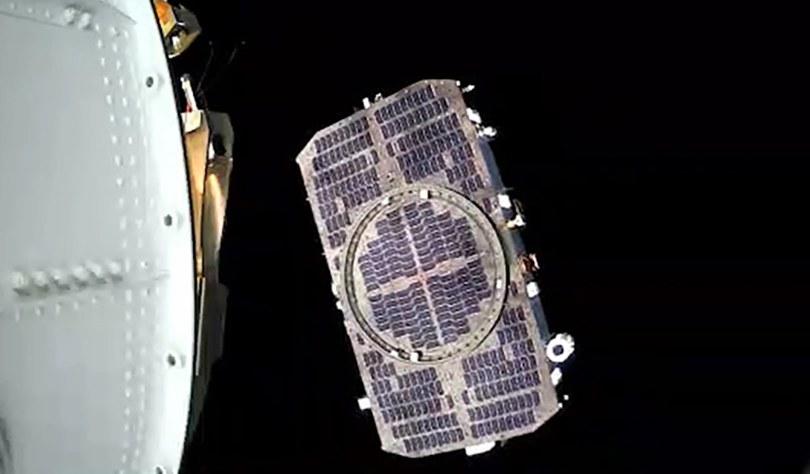
The acquisition, disclosed in a business report on March 13 and confirmed by industry filings on Sunday, March 15, 2026, is widely viewed as the initial phase of a broader consolidation effort to create a vertically integrated space value chain capable of competing with global entities like SpaceX.
Rebuilding the Aerospace Value Chain
The purchase of 566,635 common shares for 59.9 billion KRW ($41.5 million) ends a seven-year hiatus that began when Hanwha Aerospace divested its 5.99% stake in KAI. While the current stake remains below the 5% mandatory disclosure threshold, analysts interpret the timing as critical. The South Korean government, which controls over 30% of KAI through the Korea Export-Import Bank (26.41%) and the National Pension Service (8.20%), has faced mounting pressure to privatize the entity to resolve a debt ratio exceeding 450% and a prolonged leadership vacuum.
The acquisition aligns with Hanwha’s “Space Hub” initiative launched in 2021. By bridging Hanwha Aerospace’s launch vehicle capabilities with KAI’s heritage in medium-to-large satellite systems, the Group aims to secure a domestic monopoly on the “launch-satellite-data” lifecycle.
A Competitive Partnership
Despite the equity tie, Hanwha and KAI remain locked in high-stakes competition for immediate government contracts. On January 18, 2026, both firms submitted bids for the Republic of Korea (ROK) military’s 1.2 trillion KRW ($850 million) 40-satellite Synthetic Aperture Radar (SAR) constellation.
“The strategic weight of this investment reflects the changing nature of modern warfare,” stated an industry official. “A ‘Korean SpaceX’ must be established to integrate design and operations before an industrial ecosystem can sustain significant overseas expansion.”
Technical Integration and Export Synergies
The potential synergy centers on complementary hardware portfolios:
- Hanwha Systems: Specializes in SAR payloads, electronic warfare, and small satellite “panel-type” buses.
- Hanwha Aerospace: Acts as the system integrator for the Nuri (KSLV-II) and next-generation KSLV-III launch vehicles.
- KAI: Maintains dominance in medium-to-large satellite buses (CAS500 series) and indigenous aircraft platforms like the KF-21 Boramae.
The two companies recently signed a Memorandum of Understanding (MOU) in February 2026 focused on advanced engine localization and joint development of export-grade drones, providing a roadmap for technical cooperation even as privatization talks loom.
Leadership Transition and Outlook
The stake acquisition coincides with a pivotal leadership change at KAI. Former Defense Acquisition Program Administration (DAPA) official Kim Jong-chul was nominated as KAI’s new CEO in late February, with a confirmation vote scheduled for March 18, 2026. Kim is expected to oversee the delivery of the Light Armed Helicopter (LAH) and the KF-21, while navigating the increasing gravitational pull of Hanwha’s “all-domain” defense portfolio.
As South Korea pivots toward the K-LEO defense constellation and 6G sovereign networks by 2030, industry observers expect Hanwha Systems or Hanwha Aerospace to increase their holdings in KAI, potentially positioning the conglomerate as the primary private-sector partner for the newly established Korea AeroSpace Administration (KASA).
