

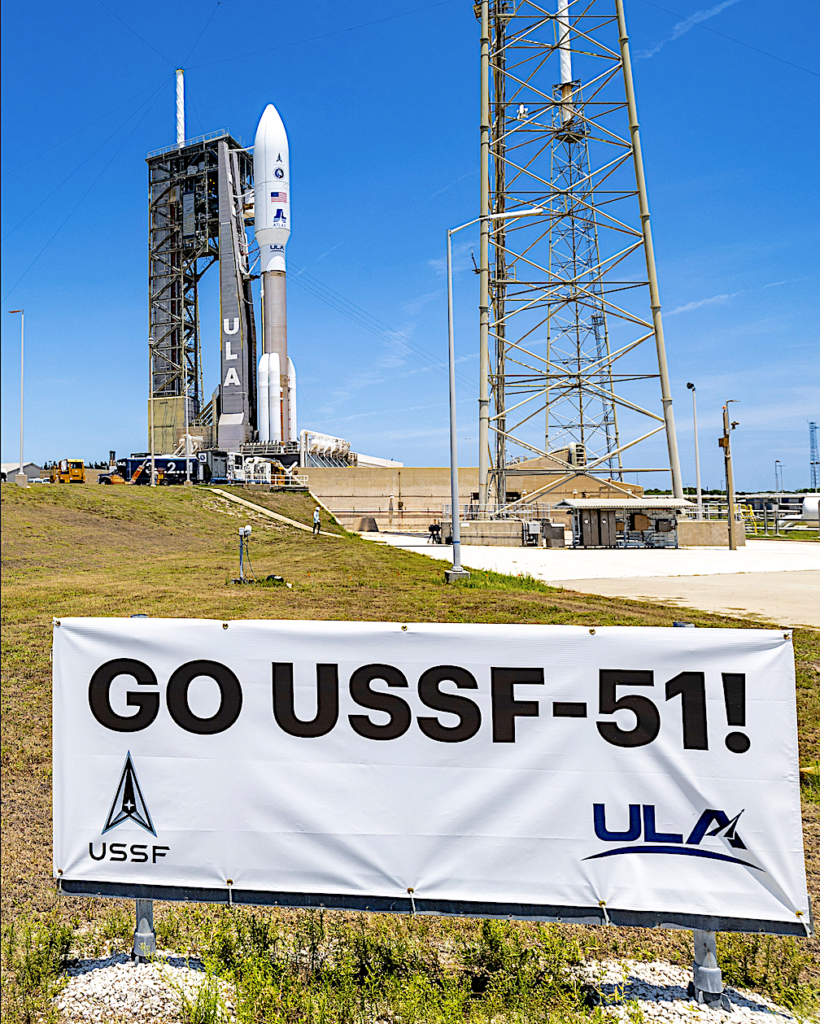
Everything continues to progress towards the ULA Atlas V launch carrying the USSF-51 mission for the United States Spaces Force’s Space Systems Command (SSC). The mission is planned to lift off on Tuesday, July 30 from Space Launch Complex-41 at Cape Canaveral Space Force Station in Florida. The launch is planned for 6:45 a.m. EDT. Today’s forecast shows an 80 percent chance of favorable weather conditions for launch.
Launch Forecast Summary:
- Overall probability of violating weather constraints: 20%
- Primary concerns: Cumulus Cloud Rule, Anvil Cloud Rules
- Overall probability of violating weather constraints for 24-hour delay: 15%
- Primary concern: Cumulus Cloud Rule
ULA is proud to play its part in launching critical satellites to protect and serve U.S. warfighters and allies around the world. The Atlas V USSF-51 mission on Tuesday is the 100th ULA launch dedicated to national security. The payload for this mission is classified and is for the United States Space Force’s Space Systems Command (SSC). No other information is publicly available.
“The Atlas V USSF-51 mission on Tuesday is the 100th ULA launch dedicated to national security.” They also note that this is the last national security mission for Atlas V, and that future missions will be aboard the company’s new rocket, Vulcan.
ULA Update: Go! Atlas V USSF-51 mission on Tuesday
Everything continues to progress towards the ULA Atlas V launch carrying the USSF-51 mission for the United States Spaces Force’s Space Systems Command (SSC). The mission is planned to lift off on Tuesday, July 30 from Space Launch Complex-41 at Cape Canaveral Space Force Station in Florida. The launch is planned for 6:45 a.m. EDT. Today’s forecast shows an 80 percent chance of favorable weather conditions for launch.
The Launch Readiness Review (LRR) has given approval to continue preparations for Tuesday’s liftoff of the United Launch Alliance Atlas V rocket on the USSF-51 mission for U.S. Space Force.
Liftoff is scheduled for 6:45 a.m. EDT (1045 UTC) from Space Launch Complex-41 at Cape Canaveral Space Force Station in Florida.

The LRR, led by ULA Launch Director Steve Huff, was completed this morning at the Advanced Spaceflight Operations Center (ASOC). Leadership from ULA and the Space Force assessed the readiness of the rocket, payload and mission assets, discussed the status of pre-flight processing work, heard technical overviews of the countdown and flight, and previewed the weather forecast that projects an 80 percent chance of meeting the launch rules.
At the conclusion of the meeting, senior leaders were polled and gave a ready status for launch, then signed the Launch Readiness Certificate.
The Atlas V 551 rocket, designated AV-101, stands 196 feet (59.7 meters) tall and will weigh 1.29 million pounds (587,000 kg) when fully fueled at liftoff.
The Atlas V 551 is the highest performance configuration of the rocket family with a full complement of five solid rocket boosters. It first flew in 2006 and has launched the New Horizons spacecraft to Pluto, the Juno orbiter to Jupiter and multiple national security payloads.
ULA will offer live reports from launch control in our automatically-refreshing blog beginning Tuesday at 3:30 a.m. EDT (0730 UTC). The launch webcast starts at 6:25 a.m. EDT (1025 UTC).
The Launch Readiness Review (LRR) has given approval to continue preparations for Tuesday’s liftoff of the United Launch Alliance Atlas V rocket on the USSF-51 mission for U.S. Space Force.
Liftoff is scheduled for 6:45 a.m. EDT (1045 UTC) from Space Launch Complex-41 at Cape Canaveral Space Force Station in Florida.
Launch Forecast Summary
Overall probability of violating weather constraints: 20%
Primary concerns: Cumulus Cloud Rule, Anvil Cloud Rules
Overall probability of violating weather constraints for 24-hour delay: 20%
Primary concern: Cumulus Cloud Rule, Anvil Cloud Rules
UPDATE: USSF-51 is ULA’s 100th national security milestone launch
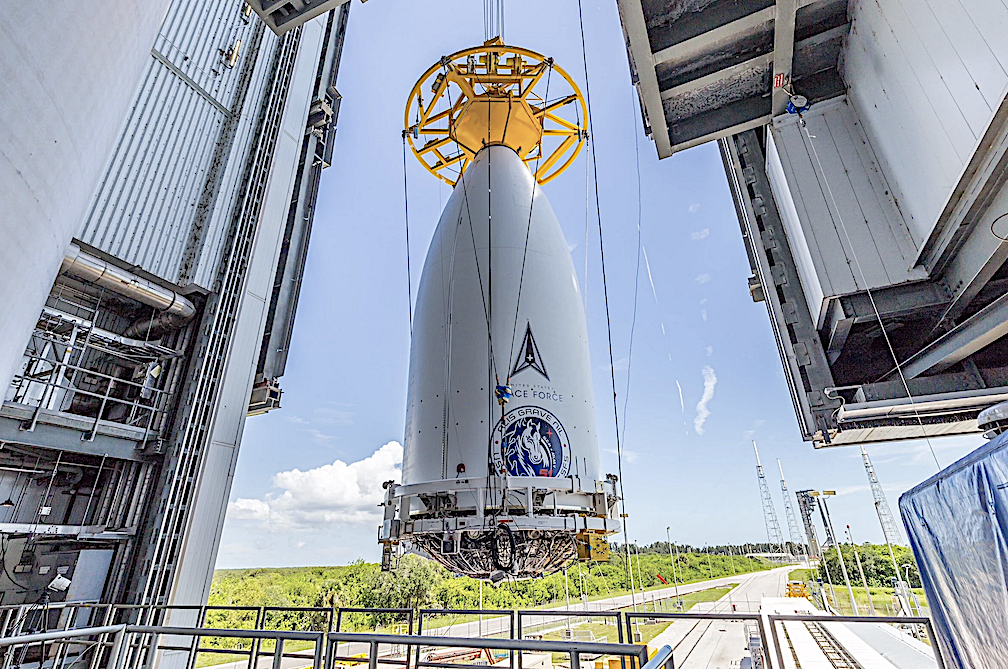
The USSF-51 payload is raised into position atop the Atlas V. Photo by United Launch Alliance
The milestone 100th launch in service to U.S. national security by United Launch Alliance (ULA) is in the final stages of preparations for ascent into space on July 30 from Cape Canaveral Space Force Station (CCSFS) in Florida.
ULA will use an Atlas V 551 rocket to launch the classified USSF-51 mission for the United States Space Force’s Space Systems Command (SSC).
Stacking of the 196-foot-tall (60-meter) rocket began June 25 when the first stage was trucked from ULA’s Horizontal Integration Facility (HIF) to the Vertical Integration Facility-G (VIF-G) adjacent to Space Launch Complex (SLC)-41 for hoisting aboard the Mobile Launch Platform.
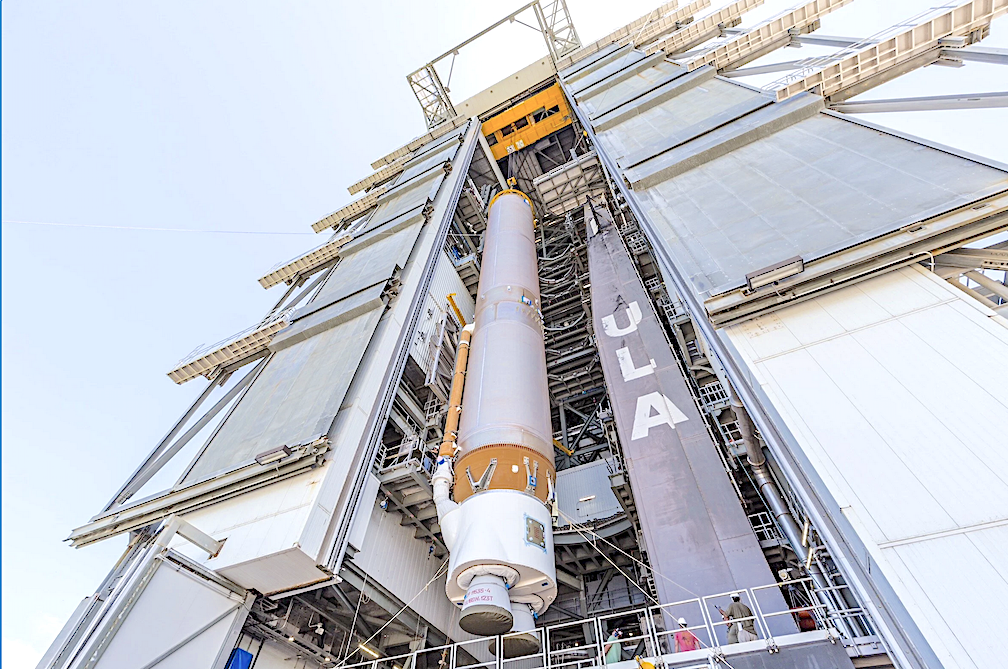
The Atlas V first stage is lifted into the VIF. Photo by United Launch Alliance
Powered by refined kerosene propellant, the stage’s main engine will generate 860,200 pounds (3.83 mega-Newtons) of thrust to propel the Atlas V out of the atmosphere during the initial minutes of flight.
The following days were spent installing five GEM 63 solid rocket boosters (SRBs) on the sides of Atlas V. The 66-foot-long (20-m) boosters will be ignited at liftoff to augment the first stage and provide two-thirds of the power at launch, each delivering 371,550 pounds (1.6 mega-Newtons) of thrust for approximately 90 seconds.
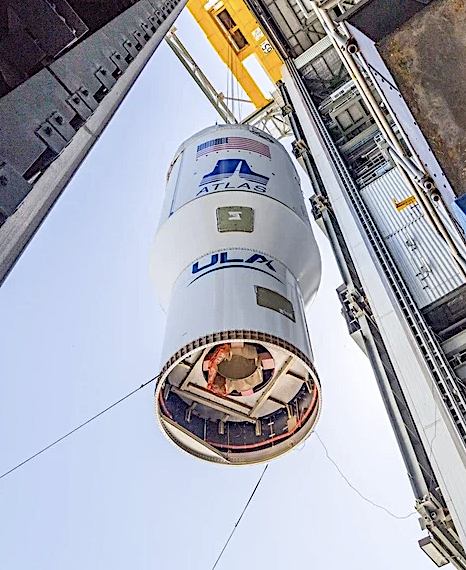
Centaur is hoisted into position atop Atlas V. Photo by United Launch Alliance
The Centaur upper stage was lifted into the VIF and connected to the first stage on July 2. The cryogenic stage’s single RL10C-1-1 engine—a new and higher performing variant of the venerable engine family—burns liquid hydrogen and liquid oxygen to produce 23,825 pounds (106 kilo-Newtons) of thrust.
The USSF-51 payload arrived at the VIF on July 17 and was lifted atop the rocket to complete assembly of the launch vehicle. It is encapsulated in a 17.7-foot-diameter (5.4 m) composite payload fairing measuring 68 feet (20.7 m) in height.
This Atlas V rocket, designated AV-101, will weigh 1.29 million pounds (587,000 kg) once fully fueled for liftoff. It leaves the pad on 2.7 million pounds (12 megaNewtons) of thrust.
The Atlas V 551 is the highest performance configuration of the rocket family with a full complement of five solid rocket boosters. It first flew in 2006 and has launched the New Horizons spacecraft to Pluto, the Juno orbiter to Jupiter and multiple national security payloads.
The USSF-51 mission marks the conclusion of national security launches using the Atlas V fleet as ULA transitions to the next generation, highly flexible Vulcan rocket for continued access to space.
Atlas V served the Air Force, Space Force and National Reconnaissance Office for 17 years with 100 percent launch success, accomplishing missions to low-, medium-, transfer and geosynchronous orbits across the entire performance range of the Atlas V configurations.

Atlas V stands ready to launch USSF-51. Photo by United Launch Alliance
ULA continues as a steadfast partner to the Space Force, fulfilling the rigorous, unique requirements needed to launch tremendous capabilities safely and successfully into space for our national defense and the protection of the country’s allies around the world. We have delivered 99 national security missions to orbit successfully since the company was created in 2006, representing 62 percent of our flight history, using Atlas V, Delta II and Delta IV rockets.
Our launch record played a key part in the successful recapitalization effort to modernize and upgrade the full breadth of U.S. capabilities in space, advancing communications, overhead surveillance and navigation systems that serve the warfighter in harm’s way.
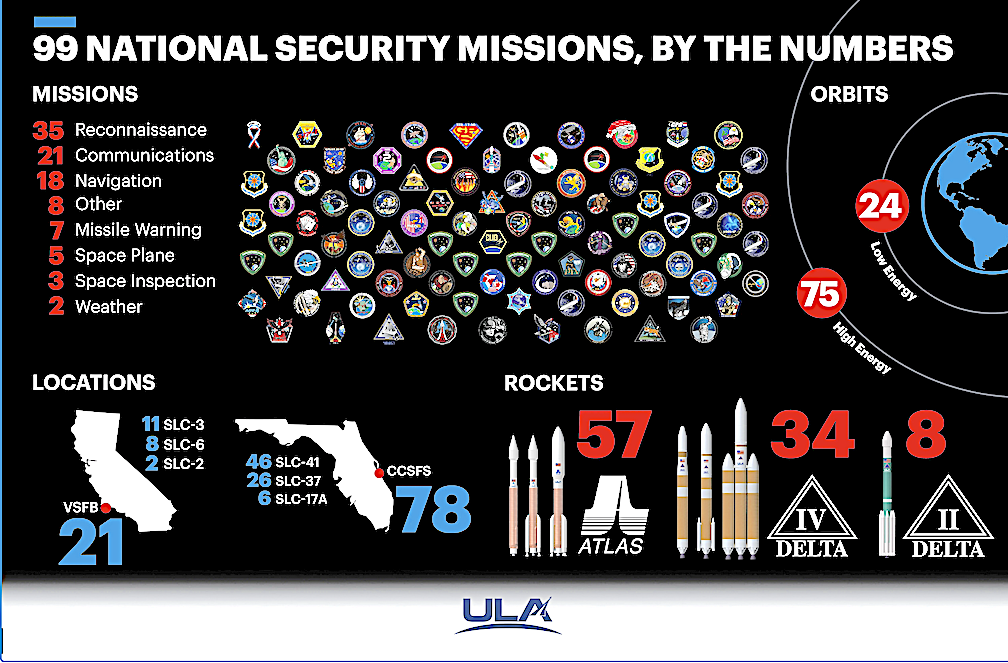
ULA’s national security launch history. Illustration by United Launch Alliance
Space is the new battlefield high ground; a strategic warfighting domain and space launch is a strategic national capability. ULA is unleashing the energy of American ingenuity by developing Vulcan to meet our nation’s need for expanding space missions.
Vulcan incorporates the best of the legacy Atlas and Delta rockets to create one launch solution that is adaptable, affordable and meets the full spectrum of needs demanded by complex national security satellite deployment missions.
ULA’s Atlas V rocket to launch USSF-51 for the United States Space Force’s Space Systems Command
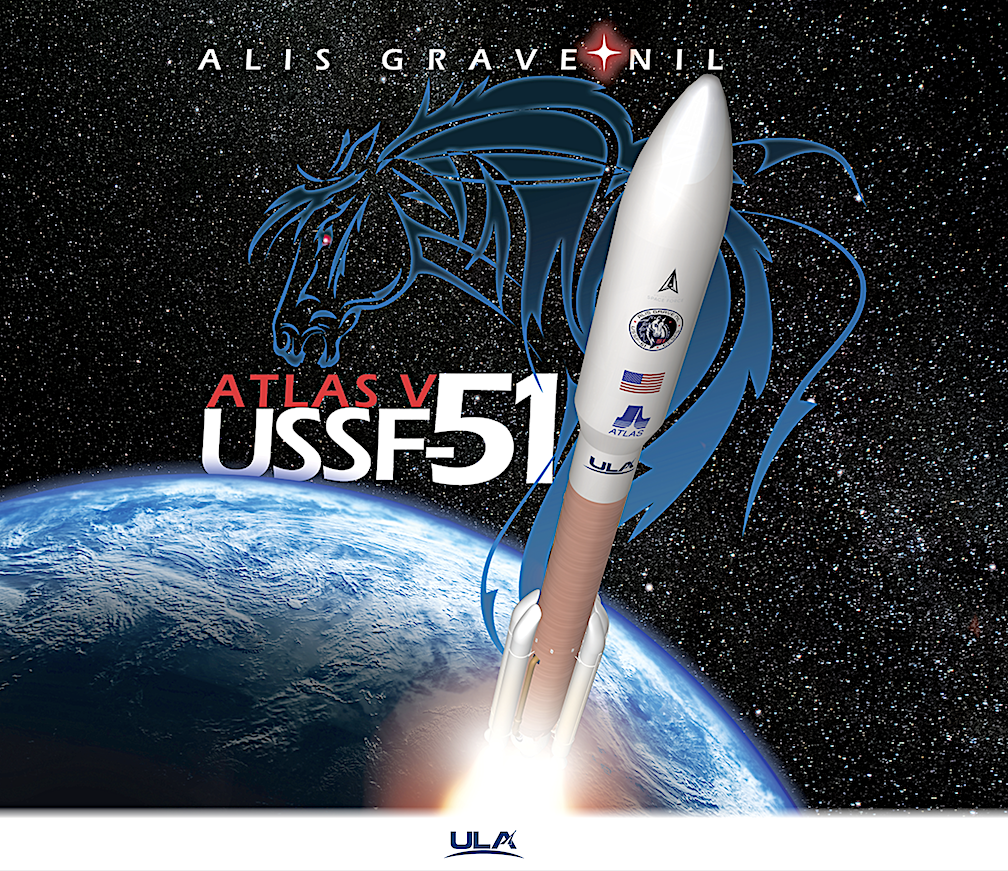

The launch of a United Launch Alliance Atlas V rocket carrying the USSF-51 mission for the United States Space Force’s Space Systems Command (SSC) is scheduled for July 30, 2024 from Space Launch Complex-41 at Cape Canaveral Space Force Station. The cost is $153.0 million.
A United Launch Alliance (ULA) Atlas V rocket will launch the USSF-51 mission for the United States Space Force’s Space Systems Command (SSC). Liftoff will occur from Space Launch Complex-41 at Cape Canaveral Space Force Station, Florida. This is the 100th ULA launch dedicated to national security.
The USSF-51 mission marks the 58th and final national security launch on Atlas V as ULA transitions to the next generation Vulcan rocket for continued access to space. Vulcan incorporates the best of the legacy Atlas and Delta rockets to create one launch solution that is flexible, affordable and meets the full spectrum of needs demanded by complex national security satellite deployment missions.
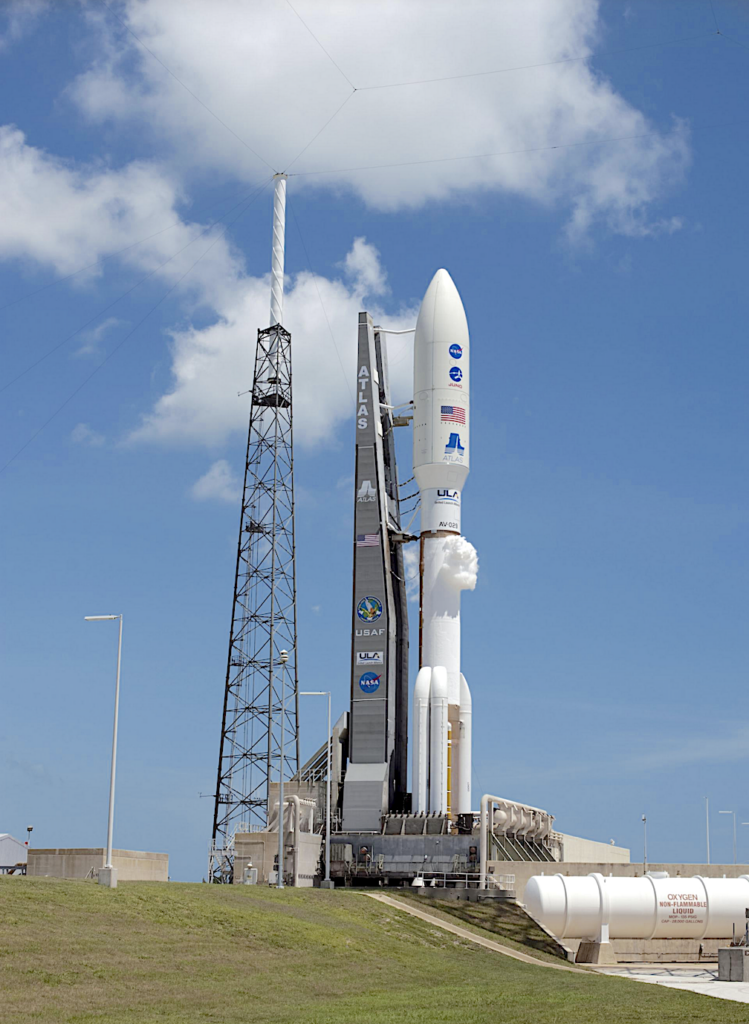
Atlas V is an expendable launch system in the Atlas rocket family. It was formerly operated by Lockheed Martin and is now operated by United Launch Alliance (ULA), a joint venture with Boeing. Each Atlas V rocket uses a Russian-built RD-180 engine burning kerosene and liquid oxygen to power its first stage and an American-built RL10 engine burning liquid hydrogen and liquid oxygen to power its Centaur upper stage.
The RD-180 engines are provided by RD Amross, while Aerojet Rocketdyne provides both the RL10 engines and the strap-on boosters used in some configurations. The standard payload fairing sizes are 4 or 5 meters in diameter and of various lengths. Fairings sizes as large as 7.2 m in diameter and up to 32.3 m in length have been considered. The rocket is assembled in Decatur, Alabama and Harlingen, Texas.
