

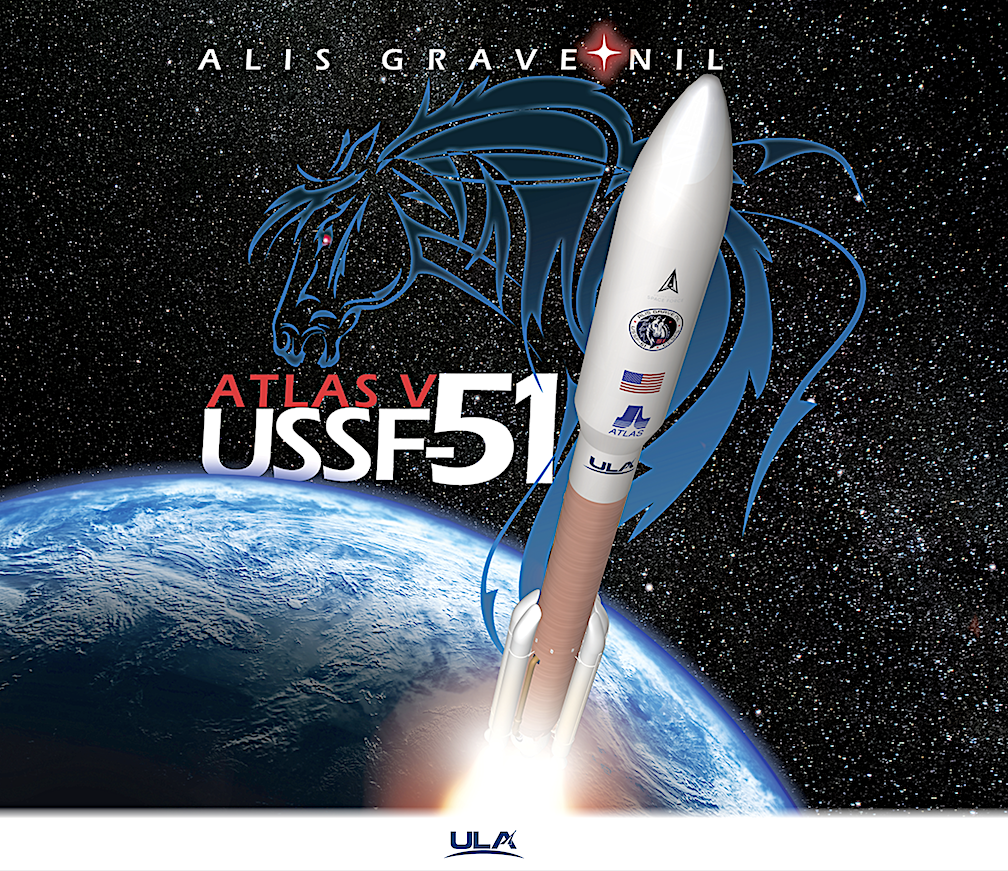

The launch of a United Launch Alliance Atlas V rocket carrying the USSF-51 mission for the United States Space Force’s Space Systems Command (SSC) is scheduled for July 30, 2024 from Space Launch Complex-41 at Cape Canaveral Space Force Station. The cost is $153.0 million.
A United Launch Alliance (ULA) Atlas V rocket will launch the USSF-51 mission for the United States Space Force’s Space Systems Command (SSC). Liftoff will occur from Space Launch Complex-41 at Cape Canaveral Space Force Station, Florida. This is the 100th ULA launch dedicated to national security.
The USSF-51 mission marks the 58th and final national security launch on Atlas V as ULA transitions to the next generation Vulcan rocket for continued access to space. Vulcan incorporates the best of the legacy Atlas and Delta rockets to create one launch solution that is flexible, affordable and meets the full spectrum of needs demanded by complex national security satellite deployment missions.
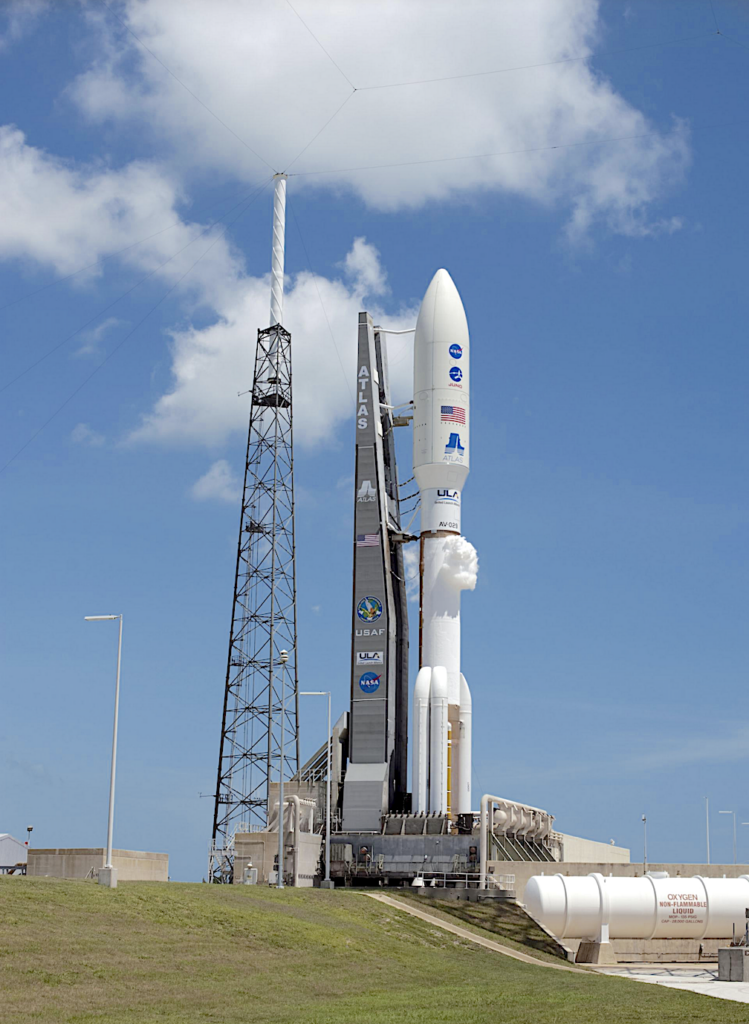
Atlas V is an expendable launch system in the Atlas rocket family. It was formerly operated by Lockheed Martin and is now operated by United Launch Alliance (ULA), a joint venture with Boeing. Each Atlas V rocket uses a Russian-built RD-180 engine burning kerosene and liquid oxygen to power its first stage and an American-built RL10 engine burning liquid hydrogen and liquid oxygen to power its Centaur upper stage.
The RD-180 engines are provided by RD Amross, while Aerojet Rocketdyne provides both the RL10 engines and the strap-on boosters used in some configurations. The standard payload fairing sizes are 4 or 5 meters in diameter and of various lengths. Fairings sizes as large as 7.2 m in diameter and up to 32.3 m in length have been considered. The rocket is assembled in Decatur, Alabama and Harlingen, Texas.
