

• Skip to primary navigation
  • Skip to main content
  • Skip to primary sidebar
  • Skip to secondary sidebar
  • Skip to footer
  • NEWS:
  • SatNews
  • SatMagazine
  • MilSatMagazine
  • SmallSat News
  • |     EVENTS:
  • SmallSat Symposium
  • Satellite Innovation
  • MilSat Symposium
  • SmallSat Europe

SatNews

Satellite Industry Intelligence Since 1983

Subscribe
  • LATEST
  • Missions & Constellations
    • Exploration & Science Missions
    • In-Orbit Servicing & Orbital Operations
    • LEO Constellations
    • Mission Autonomy & Onboard Systems
    • Mission Deployments & Manifests
    • Navigation & PNT
    • SmallSat
    • Spacecraft & Payload Technology
    View All in Missions & Constellations →
    SmallSat Europe Speaker Focus: Chiara Manfletti, NeuraspaceSmallSat Europe Speaker Focus: Chiara Manfletti, Neuraspace
    SmallSat Europe Speaker Focus: Daniel Bock, Morpheus SpaceSmallSat Europe Speaker Focus: Daniel Bock, Morpheus Space
    Firefly Aerospace Prepares for Blue Ghost Mission 2 Following Historic Lunar SuccessFirefly Aerospace Prepares for Blue Ghost Mission 2 Following Historic Lunar Success
    New Boeing Satellite Spacecraft Delivered.New Boeing Satellite Spacecraft Delivered.
  • Business
    • Contracts & Commercial Deals
    • Earnings & Financial Reporting
    • Events & Conferences
    • Funding & Venture Capital
    • Market Forecasts
    • Mergers & Acquisitions
    • Personnel Moves & Appointments
    View All in Business & Finance →
    Lockheed Martin Outlines Strategic Space Technology Roadmap for 2026Lockheed Martin Outlines Strategic Space Technology Roadmap for 2026
    Industry Sentiment Shifts as Quilty Space Reveals Top 5 Takeaways from Satellite 2026Industry Sentiment Shifts as Quilty Space Reveals Top 5 Takeaways from Satellite 2026
    e-GEOS and VENG Strengthen Global Partnership for SAOCOM Satellite Data Distributione-GEOS and VENG Strengthen Global Partnership for SAOCOM Satellite Data Distribution
    What the SpaceX IPO Changes for Every Satellite OperatorWhat the SpaceX IPO Changes for Every Satellite Operator
  • Defense
    • Counterspace & ASAT
    • Defense Budgets & Procurement
    • ISR & Reconnaissance
    • MILSATCOM
    • Missile Warning & Defense
    • National Security Programs
    • Space Domain Awareness
    View All in Military & Defense →
    The End of the VSAT Parts BinThe End of the VSAT Parts Bin
    Procurement Lag vs. Conflict Speed: Can Defense Buying Cycles Keep Up with Space Innovation?Procurement Lag vs. Conflict Speed: Can Defense Buying Cycles Keep Up with Space Innovation?
    ParaZero Technologies Expands Israeli Defense Contract with New Order for Anti-Drone SystemsParaZero Technologies Expands Israeli Defense Contract with New Order for Anti-Drone Systems
    Russia Replaces Starlink With European-Built SatellitesRussia Replaces Starlink With European-Built Satellites
  • Gov
    • Export Controls & Compliance
    • International Space Agreements
    • National Space Policy
    • Space Law & Treaties
    • Space Sustainability & Debris Policy
    • Space Traffic Management / Debris Removal
    View All in Government & Regulation →
    FCC Modernizes Satellite Spectrum Rules to Unleash Next-Generation BroadbandFCC Modernizes Satellite Spectrum Rules to Unleash Next-Generation Broadband
    SmallSat Europe Speaker Focus: Dr. Ane Aanesland, ThrustMeSmallSat Europe Speaker Focus: Dr. Ane Aanesland, ThrustMe
    Isaacman’s Budget Math: How NASA Plans to Reach the Moon With a Quarter Less MoneyIsaacman’s Budget Math: How NASA Plans to Reach the Moon With a Quarter Less Money
    FCC Seeks Comment on Expanding Spectrum Access for “Weird Space Stuff”FCC Seeks Comment on Expanding Spectrum Access for “Weird Space Stuff”
  • Launch
    • Launch Providers
    • Launch Schedule & Calendars
    • Launch Sites & Infrastructure
    • Rocket Technology & Vehicles
    View All in Launch →
    €30 million Financing for PLD Space’s Small Satellite Launcher€30 million Financing for PLD Space’s Small Satellite Launcher
    Satellite Deployers to be Used on JAXA Small Satellite Mission by ExolaunchSatellite Deployers to be Used on JAXA Small Satellite Mission by Exolaunch
    CAS Space Successfully Launches Kinetica-2, Aiming for Global Cost LeadershipCAS Space Successfully Launches Kinetica-2, Aiming for Global Cost Leadership
    Liftoff: NASA Successfully Launches Artemis II to the MoonLiftoff: NASA Successfully Launches Artemis II to the Moon
  • Software
    • Autonomous Ground Operations
    • Data Processing & AI/ML
    • Digital Twins & Modeling
    • Ground Segment & Teleports
    • Mission Planning & Simulation
    • Space Systems Software Engineering
    • Spectrum & Licensing
    View All in Software Automation & Ground Systems →
    Keysight and Sateliot Win ESA and GSMA Foundry Challenge for 6G InnovationKeysight and Sateliot Win ESA and GSMA Foundry Challenge for 6G Innovation
    Automation and Agility: How SSC Space Go is Designed for the New Age of GroundAutomation and Agility: How SSC Space Go is Designed for the New Age of Ground
    Intellian Unveils Future Military and Aerospace Antenna Technologies at Satellite 2026Intellian Unveils Future Military and Aerospace Antenna Technologies at Satellite 2026
    The Downlink Deficit: The Pentagon’s Optical Mesh Network and the Terrestrial BottleneckThe Downlink Deficit: The Pentagon’s Optical Mesh Network and the Terrestrial Bottleneck
  • Services & Apps
    • Climate & Environmental Monitoring
    • Disaster Response & Security Mapping
    • Earth Observation & Imaging
    • Maritime & Aviation Satcom
    • Satellite Communications
    View All in Services & Applications →
    Kraken Robotics Integrates KATFISH Sonar on SEFINE RD-22 USV Following Multi-Naval DemonstrationsKraken Robotics Integrates KATFISH Sonar on SEFINE RD-22 USV Following Multi-Naval Demonstrations
    Astroscale Plans World-First Multi-Orbit Satellite Inspection MissionAstroscale Plans World-First Multi-Orbit Satellite Inspection Mission
    Cinemo Reimagines the Vehicle as a Software-Defined Entertainment HubCinemo Reimagines the Vehicle as a Software-Defined Entertainment Hub
    IEC Telecom Wins CSR Initiative of the Year at the Oil & Gas Middle East Awards 2026IEC Telecom Wins CSR Initiative of the Year at the Oil & Gas Middle East Awards 2026
  • SatNews Events
  • Magazines
  • Calendar

UPDATE 3: SpaceX launches NASA’s PACE satellite with new capabilities to study climate, ocean and atmosphere

February 8, 2024

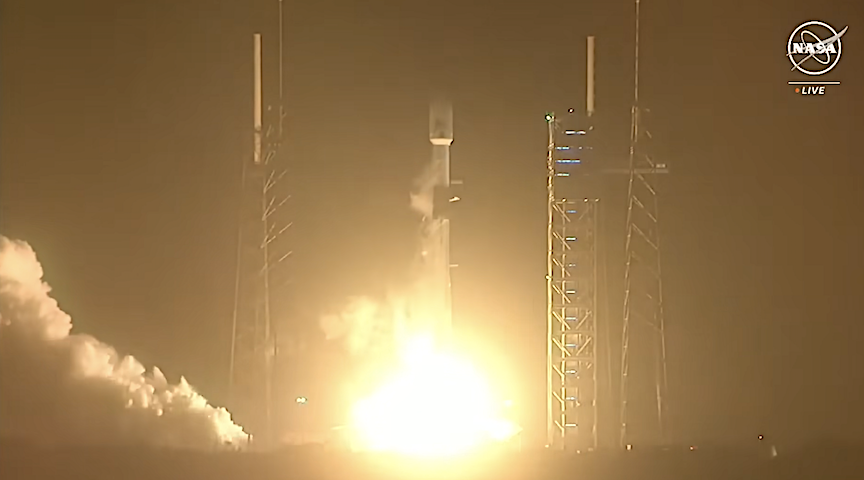
NASA’s Plankton, Aerosol, Climate, ocean Ecosystem (PACE) satellite launched aboard a SpaceX Falcon 9 rocket at 1:33 a.m. EST, Feb. 8, 2024, from Space Launch Complex 40 at Cape Canaveral Space Force Station in Florida. From its orbit hundreds of miles above Earth, PACE will study microscopic life in the oceans and microscopic particles in the atmosphere to investigate key mysteries of our planet’s interconnected systems.

UPDATE 3: Thursday, February 8 at 1:33 a.m. ET, Falcon 9 launched NASA’s PACE (Plankton, Aerosol, Cloud, ocean Ecosystem) mission to a sun-synchronous orbit from Space Launch Complex 40 (SLC-40) at Cape Canaveral Space Force Station in Florida.
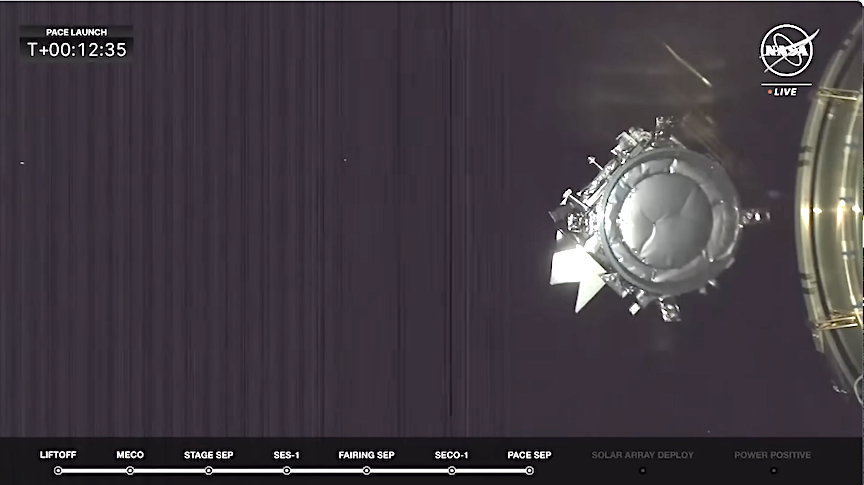
Success as PACE separation confirmed.

This was the fourth flight of the first stage booster supporting this mission, which previously launched Crew-7, CRS-29, and one Starlink mission.

NASA’s satellite mission to study ocean health, air quality, and the effects of a changing climate for the benefit of humanity launched successfully into orbit at 1:33 a.m. EST Thursday.
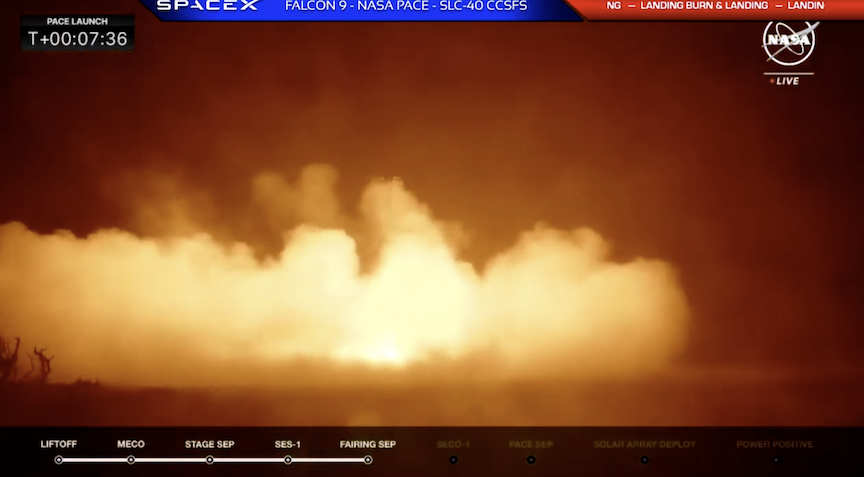
Successful booster landing.

Known as PACE, the Plankton, Aerosol, Climate, ocean Ecosystem satellite, launched aboard a SpaceX Falcon 9 rocket from Space Launch Complex 40 at Cape Canaveral Space Force Station in Florida. NASA confirmed signal acquisition from the satellite about five minutes after launch, and the spacecraft is performing as expected.
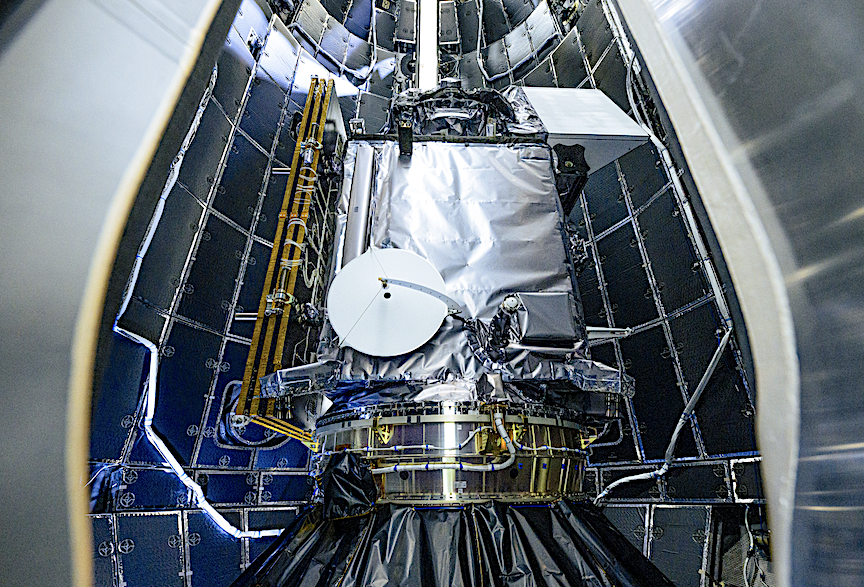
NASA and SpaceX technicians safely encapsulate NASA’s PACE (Plankton, Aerosol, Cloud, ocean Ecosystem) spacecraft in SpaceX’s Falcon 9 payload fairings on Tuesday, Jan. 30, 2024, at the Astrotech Space Operations Facility near the agency’s Kennedy Space Center in Florida.
Photo Credit: NASA Goddard/Denny Henry

“Congratulations to the PACE team on a successful launch. With this new addition to NASA’s fleet of Earth-observing satellites, PACE will help us learn, like never before, how particles in our atmosphere and our oceans can identify key factors impacting global warming,” said NASA Administrator Bill Nelson. “Missions like this are supporting the Biden-Harris Administration’s climate agenda and helping us answer urgent questions about our changing climate.”

From hundreds of miles above Earth, the PACE mission will study the impact of tiny, often invisible things: microscopic life in water and microscopic particles in the air.

The satellite’s hyperspectral ocean color instrument will allow researchers to measure oceans and other waterbodies across a spectrum of ultraviolet, visible, and near-infrared light. This will enable scientists to track the distribution of phytoplankton and — for the first time from space — identify which communities of these organisms are present on daily, global scales. Scientists and coastal resource managers can use the data to help forecast the health of fisheries, track harmful algal blooms, and identify changes in the marine environment.

The spacecraft also carries two polarimeter instruments, Hyper-Angular Rainbow Polarimeter #2 and Spectro-polarimeter for Planetary Exploration. These will detect how sunlight interacts with particles in the atmosphere, giving researchers new information on atmospheric aerosols and cloud properties, as well as air quality at local, regional, and global scales.

With the combination of the instrument and the polarimeters, PACE will provide insights into the interactions of the ocean and atmosphere, and how a changing climate affects these interactions.

“Observations and scientific research from PACE will profoundly advance our knowledge of the ocean’s role in the climate cycle,” said Karen St. Germain, director, Earth Science Division, Science Mission Directorate, at NASA Headquarters in Washington. “The value of PACE data skyrockets when we combine it with data and science from our Surface Water and Ocean Topography mission – ushering in a new era of ocean science. As an open-source science mission with early adopters ready to use its research and data, PACE will accelerate our understanding of the Earth system and help NASA deliver actionable science, data, and practical applications to help our coastal communities and industries address rapidly evolving challenges.” 

“It’s been an honor to work with the PACE team and witness firsthand their dedication and tenacity in overcoming challenges, including the global pandemic, to make this observatory a reality,” said Marjorie Haskell, PACE program executive at NASA Headquarters. “The passion and teamwork are matched only by the excitement of the science community for the data this new satellite will provide.”

Earth’s oceans are responding in many ways to climate change — from sea level rise to marine heat waves to a loss of biodiversity. With PACE, researchers will be able to study climate change’s effects on phytoplankton, which play a key role in the global carbon cycle by absorbing carbon dioxide from the atmosphere and converting it into their cellular material. These tiny organisms drive larger aquatic and global ecosystems that provide critical resources for food security, recreation, and the economy.

“After 20 years of thinking about this mission, it’s exhilarating to watch it finally realized and to witness its launch. I couldn’t be prouder or more appreciative of our PACE team,” said Jeremy Werdell, PACE project scientist at NASA’s Goddard Space Flight Center in Greenbelt, Maryland. “The opportunities PACE will offer are so exciting, and we’re going to be able to use these incredible technologies in ways we haven’t yet anticipated. It’s truly a mission of discovery.”

NASA’s Launch Services Program, based at the agency’s Kennedy Space Center in Florida, managed the launch services for the mission. The PACE mission is managed by NASA Goddard, which also built and tested the spacecraft and the ocean color instrument. The Hyper-Angular Rainbow Polarimeter #2 was designed and built by the University of Maryland, Baltimore County, and the Spectro-polarimeter for Planetary Exploration was developed and built by a Dutch consortium led by Netherlands Institute for Space Research, Airbus Defense, and Space Netherlands.

UPDATE 2: PACE launch delay again as weather creates stand down
This image has an empty alt attribute; its file name is Screen-Shot-2024-02-07-at-6.52.56-PM-678x1024.png
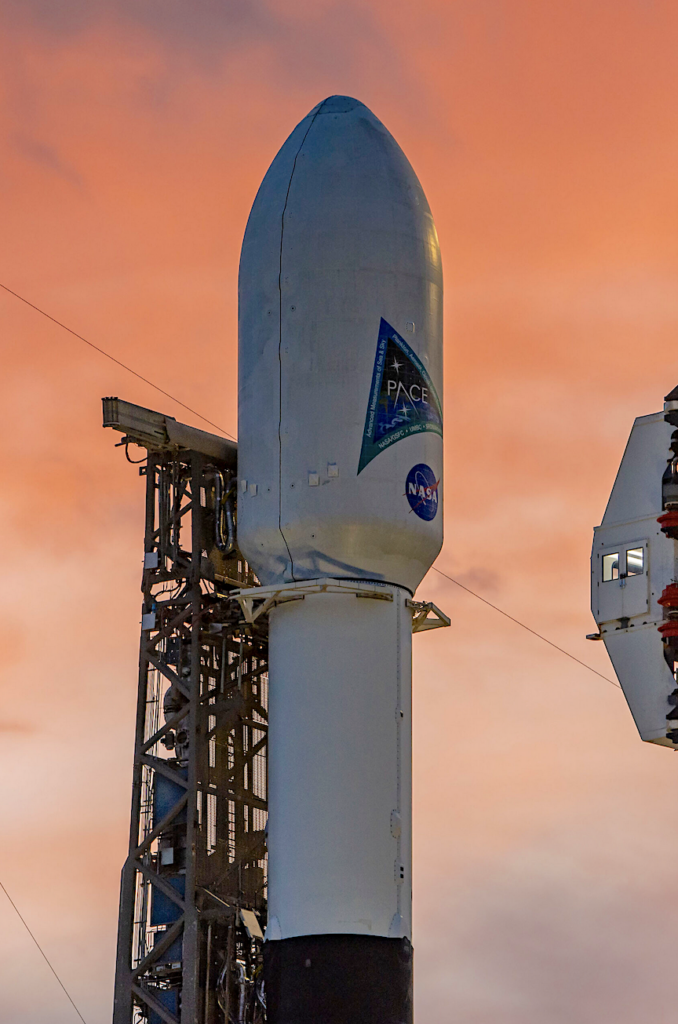
A SpaceX Falcon 9 rocket with NASA’s PACE (Plankton, Aerosol, Cloud, ocean Ecosystem) spacecraft stands vertical at Space Launch Complex 40 at Cape Canaveral Space Force Station in Florida on Monday, Feb. 5, 2024. PACE is NASA’s newest earth-observing satellite that will help increase our understanding of Earth’s oceans, atmosphere, and climate by delivering hyperspectral observations of microscopic marine organisms called phytoplankton as well new data on clouds and aerosols. Photo credit: SpaceX

UPDATE 2: NASA and SpaceX are standing down from the Wednesday, February 7, launch of the agency’s Plankton, Aerosol, Cloud, ocean Ecosystem (PACE) mission due to ground winds preventing prelaunch checkouts. The team is targeting liftoff at 1:33 a.m. EST Thursday, February 8, on a SpaceX Falcon 9 rocket from Space Launch Complex 40 at Cape Canaveral Space Force Station in Florida.

The satellite and rocket remain healthy and ready for launch.

If needed, a backup opportunity is available Friday, February 9 at the same time.

A live webcast of this mission will begin on NASA+ and NASA Television about 45 minutes prior to liftoff.

This is the fourth flight of the first stage booster supporting this mission, which previously launched Crew-7, CRS-29, and one Starlink mission. Following stage separation, the first stage will land on Landing Zone 1 (LZ-1) at Cape Canaveral Space Force Station in Florida.
This image has an empty alt attribute; its file name is Screen-Shot-2024-02-06-at-11.25.00-AM.png

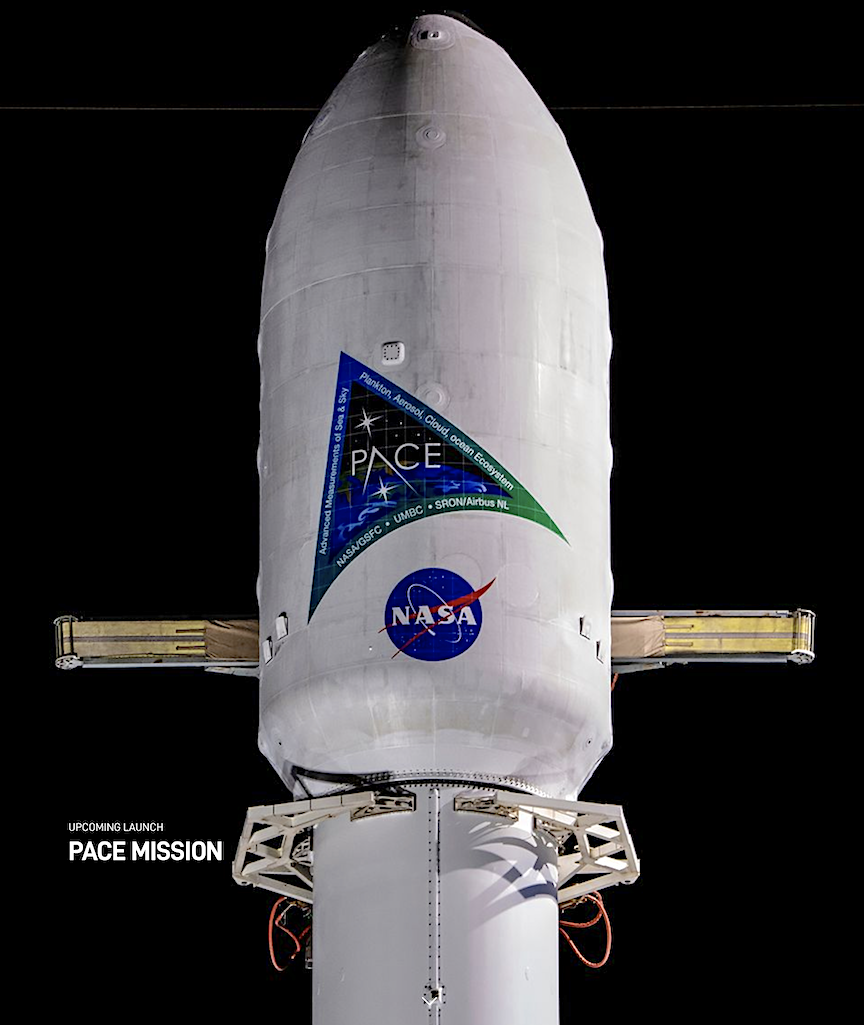
SpaceX is ready to keep pace despite weather and launch NASA’s PACE mission

SpaceX is targeting Wednesday, February 7 at 1:33 a.m. ET for a Falcon 9 launch of NASA’s PACE (Plankton, Aerosol, Cloud, ocean Ecosystem) mission to a sun-synchronous orbit from Space Launch Complex 40 (SLC-40) at Cape Canaveral Space Force Station in Florida. If needed, a backup opportunity is available Thursday, February 8 at the same time.
This image has an empty alt attribute; its file name is Screen-Shot-2024-02-06-at-11.29.22-AM.png

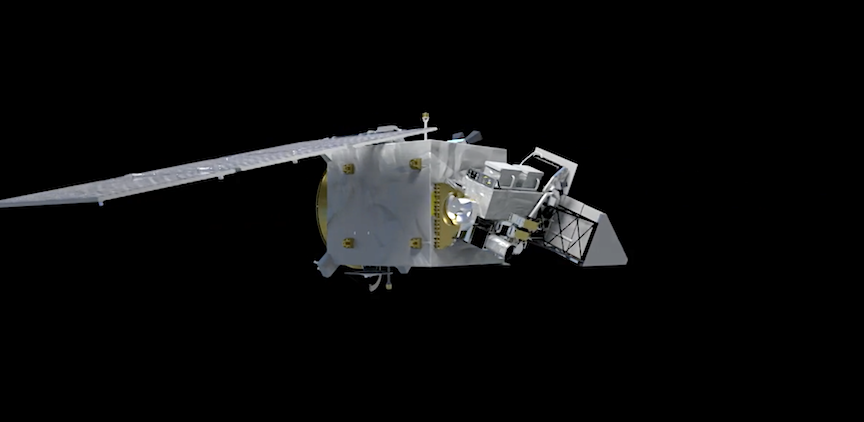
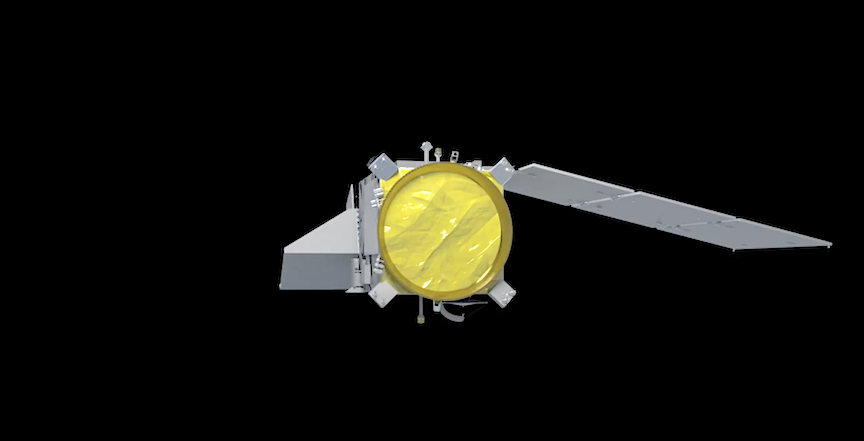
PACE is scheduled to fly from Space Launch Complex 40 at the Cape Canaveral Space Force Station on Wednesday, February 7, at 1:33 AM EST (06:33 UTC), during an instantaneous launch window. The flight was previously scheduled for February 6 but was delayed due to unfavorable weather conditions. Falcon 9 will take a southbound trajectory to a Sun-synchronous polar orbit that allows for the satellite to see a given spot on Earth at the same time every day.
This image has an empty alt attribute; its file name is Screen-Shot-2024-02-06-at-11.29.02-AM.png

A live webcast of this mission will begin on NASA+ and NASA Television about 45 minutes prior to liftoff.

This is the fourth flight of the first stage booster supporting this mission, which previously launched Crew-7, CRS-29, and one Starlink mission. Following stage separation, the first stage will land on Landing Zone 1 (LZ-1) at Cape Canaveral Space Force Station in Florida. January was a record-setting month featuring 10 launches for SpaceX and this will be a busy February as well.



Filed Under: Climate & Environmental Monitoring, Government & Regulation Tagged With: Featured

Primary Sidebar

Coverage

  • Missions & Constellations
  • Business & Finance
  • Military & Defense
  • Launch
  • Software Automation & Ground Systems
  • Government & Regulation
  • Services & Applications

Most Read Stories

  • L3Harris Unveils XL-300P: The First P25 Handheld with 5G and Satellite Direct-to-Device Connectivity
  • Rheinmetall Walked Away. Germany Should Take the Hint.
  • Rocket Lab Emerging as Potential Bus Provider for 2,800-Satellite Equatys Constellation
  • SpaceX Loses Contact With Starlink Satellite
  • FAA Rescinds Proposed Orbital Debris Rule Amid Industry Pressure and Regulatory Reassessment

Secondary Sidebar

Footer


Satnews is a leading provider of satellite news, events, publications, research and other satellite industry information in both commercial and military enterprises worldwide.

Stories By Category

  • Business & Finance
  • Government & Regulation
  • Launch
  • Military & Defense
  • Missions & Constellations
  • Services & Applications
  • Software Automation & Ground Systems
  • Spectrum & Licensing
  • Startups & NewSpace Business

About Us

  • Leadership & Editorial Team
  • SatNews History
  • Free Satnews Subscription
  • SatNews Events
  • Magazines

Navigation

  • Latest Stories
  • Magazines
  • Events
  • Contact
  • Cookie & Privacy Policy for Satnews

We use cookies to ensure that we give you the best experience on our website. If you continue to use this site we will assume that you are happy with it.
x
Sign up Now (For Free)
Access daily or weekly satellite news updates covering all aspects of the commercial and military satellite industry.
Invalid email address
Notify Me Regarding ( At least one ):
We value your privacy and will not sell or share your email or other information with any other company. You may also unsubscribe at anytime.

Click Here to see our full privacy policy.
Thanks for subscribing!