

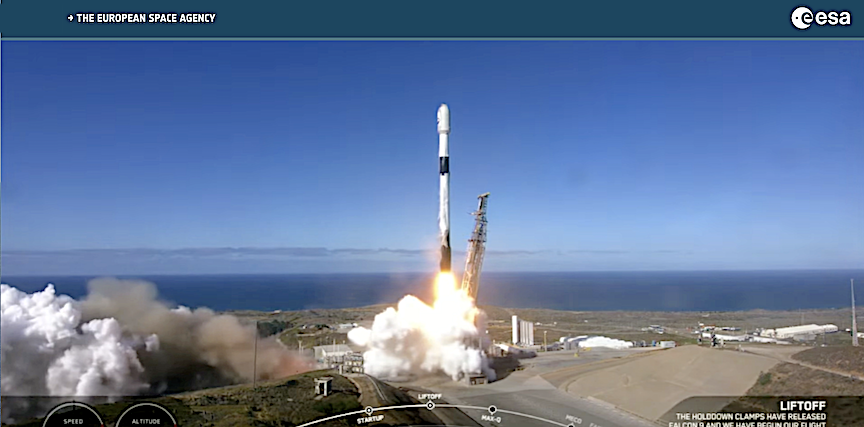
UPDATE: Six years of hard work and dedication paid off in spectacular fashion today, as the Educational Irish Research Satellite, EIRSAT-1, successfully blasted off from Vandenberg Space Force Base, California. Hitching a ride on a Space-X Falcon-9 launcher, the tiny satellite – measuring just 10.7cm x 10.7cm x 22.7cm – has now made history as Ireland’s first satellite!
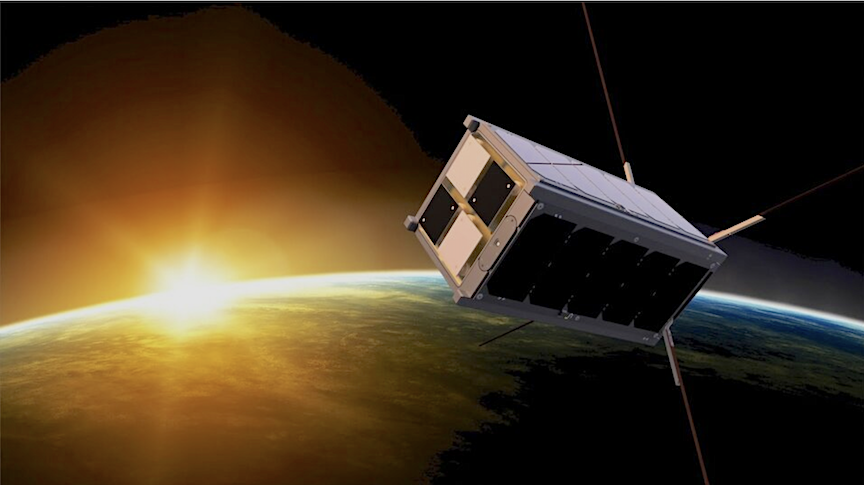
EIRSAT-1 was designed, built, and tested by students from University College Dublin (UCD) participating in ESA Academy’s Fly Your Satellite! program, a hands-on initiative supporting university student teams to develop their own satellites according to professional standards. The launch opportunity itself was provided by ESA.
ESA experts have been on-hand throughout the satellite’s development to offer training and guidance to dozens of UCD students. Their learning journey also included test campaigns at ESA Education’s CubeSat Support Facility in Belgium, and dedicated spacecraft communications sessions both at ESA Academy’s Training and Learning Centre and at the European Space Operations Centre in Darmstadt Germany, to learn Ireland’s first spacecraft operations procedures.
“I would like to wholeheartedly congratulate the EIRSAT-1 team for this successful launch and the start of Ireland’s first exciting adventure in orbit,” said Josef Aschbacher, ESA Director General. I’d also like to thank UCD for joining forces with ESA towards a common educational objective: boosting the skills of the young generation,” he continued. “It’s only by building capacity that we can make our space ambitions become a reality, for Ireland and for Europe. With our Education program we are nurturing generations of citizens who are learning to use space technology and space solutions in order to make a difference for our society, our planet and our future.”
From low Earth orbit EIRSAT-1 will carry out three main experiments, which were built from scratch by the students:
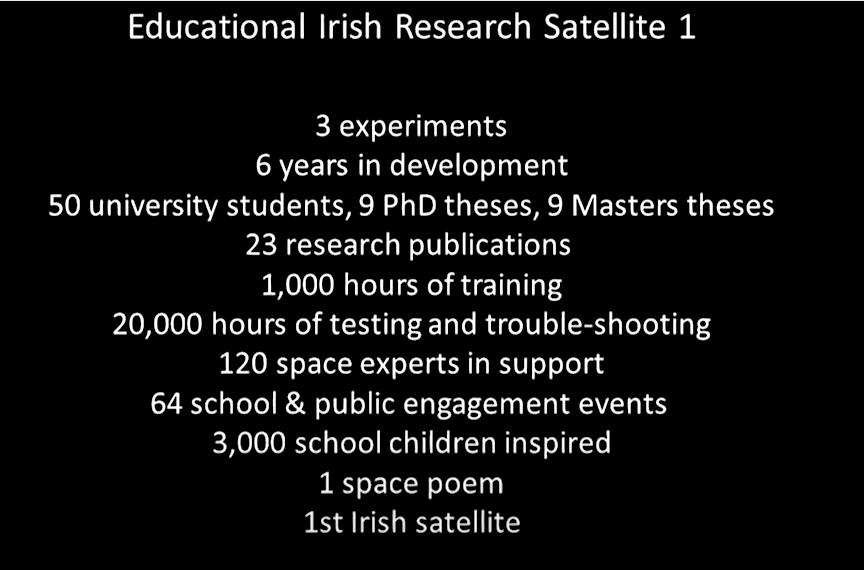
- GMOD, a detector to study gamma ray bursts, which are the most luminous explosions in the universe and occur when a massive star dies or two stars collide.
- EMOD, an experiment to see how a thermal treatment protects the surface of a satellite when in space.
- WBC, an experiment to test a new method of using Earth’s magnetic field to change a satellite’s orientation in space.
Following EIRSAT-1’s deployment to orbit, the student team is now working to establish contact with the satellite and start operations from their dedicated ground control facility, also entirely operated by students and located at UCD in Dublin.
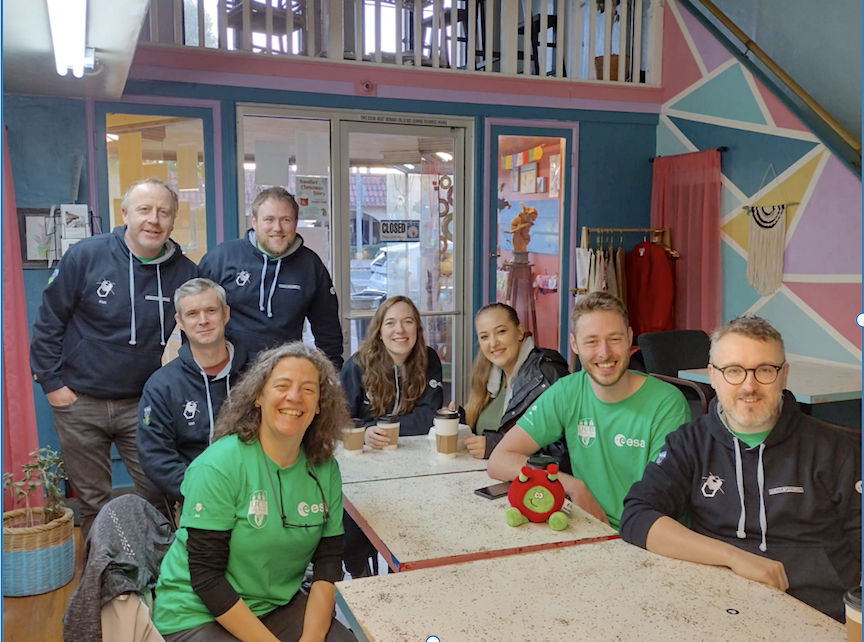
“The team at ESA Education would like to join ESA DG in expressing their heartfelt congratulations to the EIRSAT-1 students for achieving their incredible goals,” said Hugo Marée, Head of the ESA Education Office.
“Not only has EIRSAT-1 made history by being Ireland’s first satellite, but it has also inspired a generation of Irish school students to grow their ambitions higher. This has been achieved thanks to the inspiration activities organized by ESERO Ireland (a collaboration between ESA and Science Foundation Ireland) around this mission,” he continued. “I am proud of our Education program which is able to inspire and engage different age groups towards a future career in STEM.”
Launch of Ireland’s 1st satellite is upcoming…
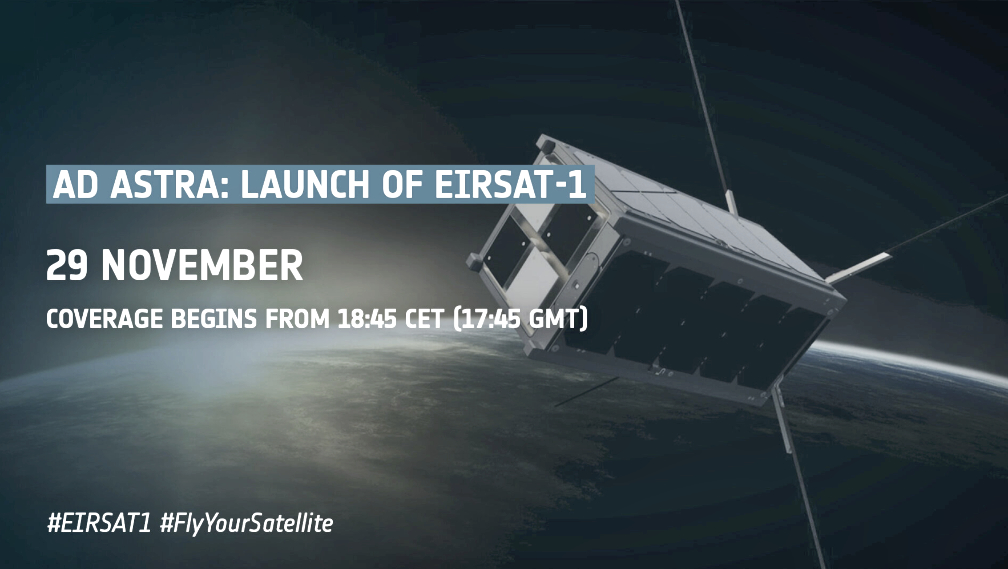
Watch the live launch broadcast of Ireland’s first satellite — EIRSAT-1 — on ESA Web TV Channel 2 and ESA YouTube, currently scheduled for November 29th.
Coverage of this historic moment is set to begin shortly before 18:00 UTC (19:00 CET) (times to be confirmed).
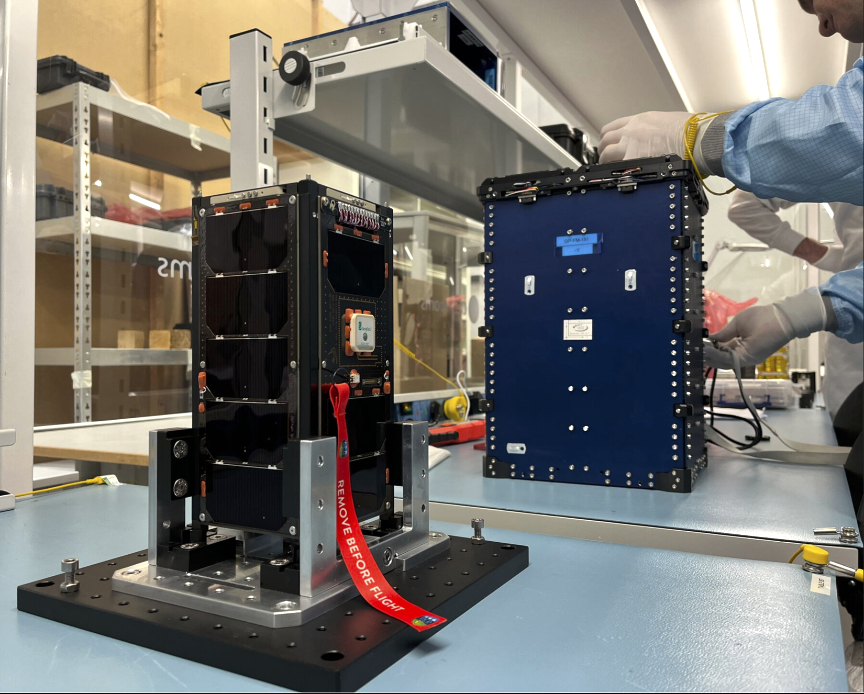
Built by students at University College Dublin under guidance of ESA’s Education Office, EIRSAT-1 is a 2U CubeSat carrying three experiments, including a novel gamma ray detector that will study some of the most luminous explosions in the universe.
The mission has been in development since the team was accepted to the ESA Academy Fly Your Satellite! program in 2017. Over the past six years, the students have worked with ESA experts and acquired the professional competences needed to design and build their satellite. They were accompanied through test campaigns at ESA Education’s CubeSat Support Facility in Belgium and other ESA sites, and were also offered by ESA the opportunity to launch their satellite.
While the satellite makes its way to the launch pad, the student team is preparing to operate the satellite from Mission Control at University College Dublin.
Find out more about this unique mission during our live launch coverage. Irish broadcaster Rick O’Shea, with guests from ESA and the EIRSAT-1 team, will take viewers through the mission’s history and major launch milestones including liftoff, separation and acquisition of signal, from outside the EIRSAT-1 Mission Control Room. Níl aon satailít mar do shatailít féin! [There’s no satellite like your own satellite!]
Learn more about how students have built Ireland’s first satellite.
