

Update 4 posting…
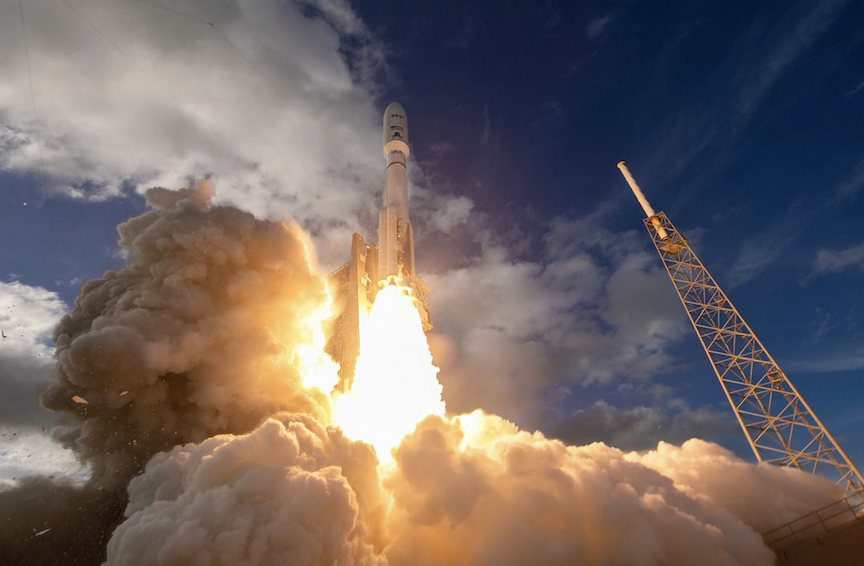
The weather in Florida finally cooperated after United Launch Alliance’s previous delays from hurricane Ian. As a result Atlas V launched on schedule at 5:36 pm EDT (2136 UTC) from Space Launch Complex-41 at Cape Canaveral Space Force Station in Florida. The million-pound (489,763 kg.) Atlas V 531 lifted off on two million pounds (9 mega-Newtons) of thrust.
The rocket traveled through space on its six-hour mission to deliver the SES-20 and SES-21 satellites into near-geosynchronous (NGSO) orbits.
“We’re excited to support our commercial partner SES in their C-band transition efforts to meet the FCC’s objective to deploy 5G service across the U.S. Their mission aligns with our mission to connect the world and these capabilities will enable uninterrupted commercial services to many Americans,” said Gary Wentz, ULA vice president of Government and Commercial Programs. “The Atlas V delivered the satellites accurately to a near-geosynchronous orbit 22,300 miles (35,888 km) above the equator. Thank you to the ULA team and our partners for ensuring the successful delivery of this multi-payload mission to orbit.”
The Boeing-built C-band satellites, launched on an Atlas V 531 configuration rocket, will enable SES to continue providing critical data and TV transmission services to nearly 120 million American homes. The launch of SES-20 and SES-21 is part of a broader Federal Communications Commission (FCC) program to clear a portion of C-band spectrum to enable wireless operators to deploy 5G services across the contiguous US (CONUS). This was the 96th launch of the Atlas V rocket, the 80th Atlas V launch from SLC-41 and the 107thlaunch from SLC-41.
Two hours later and the Centaur continued to coast away from the Earth. Stage systems reported nominal as the rocket performed a slow roll to keep the solar heating evenly distributed on all of the vehicle’s surfaces.
In addition to Centaur, ULA uses the RL10 on the Delta Cryogenic Second Stage for the Delta IV and the next-generation Vulcan Centaur rocket will continue the RL10 legacy.
Powering the Centaur upper stage this launch was the 517th production engine from the RL10 family. In addition to Centaur, ULA uses Aerojet Rocketdyne’s RL10 on the Delta V Heavy second stage and their next-generation Vulcan Centaur rocket to continue the engine legacy.
At the three hour post launch, the Centaur telemetry showed nominal tank pressures, bus and battery voltages, good body rates in the thermal roll.
The vehicle continued in this quiescent coast away from Earth, headed to a point nearly 22,000 statute miles in altitude before the third and final engine firing occurred.
Update 3 posting…

A United Launch Alliance (ULA) Atlas V 531 rocket will now launch the SES-20 and SES-21 satellites into NGSO on October 4th at 5:36 p.m., EDT.
The commercial, dual-payload launch is in service to satellite operator SES of Luxembourg.
Liftoff will occur from Space Launch Complex-41 at Cape Canaveral Space Force Station, Florida.
SES-20 will operate in the 103 degrees West orbital slot and SES-21 at 131 degrees West and they are expected to start operations by November of this year.
Each satellite is equipped with C-band transponders to relay digital TV signals to millions of homes in the continental U.S.
Update 2 posting…

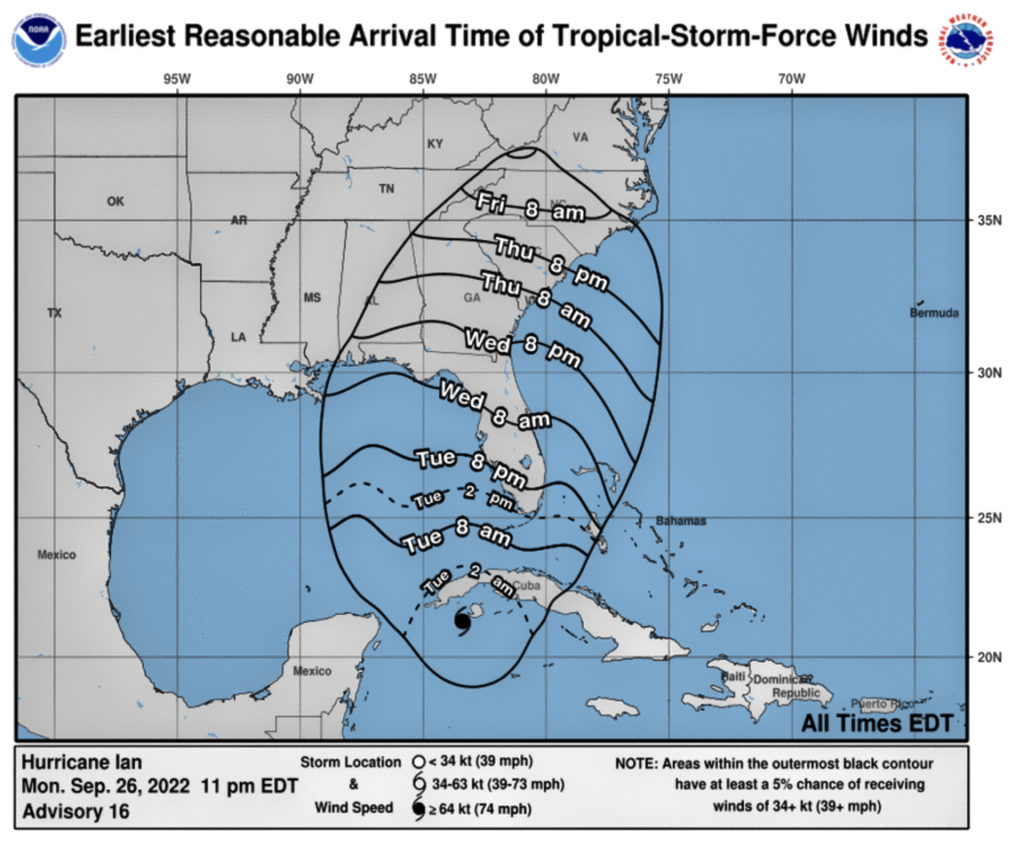
The United Launch Alliance (ULA) Atlas V launch of the SES-20 and SES-21 mission is delayed due to potential impacts from Hurricane Ian.
Both satellites are integrated to the launch vehicle and safely secured within the Vehicle Integration Facility at SLC-41. Pending range approval, the next launch attempt is scheduled for October 4 at 5:36 p.m. EDT.
Update 1 posting…
ULA is currently on track to support the September 30 launch attempt of the SES-20 and SES-21 mission and is working closely with Space Launch Delta 45 to monitor Hurricane Ian. As of this writing, there are no planned closures of or impacts to ULA facilities at Cape Canaveral; however, we will provide updates as conditions change.
The mission is planned to lift off on Friday, September 30 from Space Launch Complex-41 at Cape Canaveral Space Force Station in Florida. Launch is planned for 5:36 p.m. EDT. The forecast shows a 20 percent chance of favorable weather conditions for launch.
Launch Forecast Summary:
- Overall probability of violating weather constraints: 80%
- Primary concerns: Ground Winds, Cumulus Cloud Rule, Surface Electric Fields Rule
- Overall probability of violating weather constraints for 24-hour delay: 30%
- Primary concern: Cumulus Cloud Rule, Ground Winds
Original posting…
A United Launch Alliance (ULA) Atlas V 531 rocket will launch the Boeing built SES-20 and SES-21 satellites into near-geosynchronous orbit to provide television broadcasting services across the United States.

The commercial dual-payload launch is in service to satellite operator SES of Luxembourg. Liftoff will occur from Space Launch Complex-41 at Cape Canaveral Space Force Station, Florida. The launch is scheduled for September 30, 2022, at 5:16 p.m. EDT (2116 UTC)
