

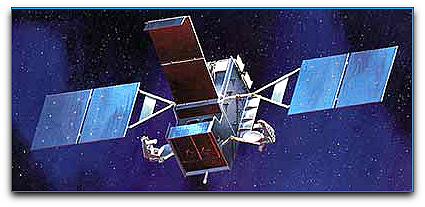
 This addition to the SBIRS inventory brings increased capability as Air Force Space Command‘s (AFSPC) second taskable infrared sensor. HEO-1 was accepted operationally November 7, 2008, and has continued to perform beyond expectation. With both HEO sensors now fully integrated into the constellation, SBIRS provides an improved sensor and ground system supporting missile warning, missile defense, battlespace awareness, and technical intelligence. SBIRS is comprised of legacy Defense Support Program satellites in geosynchronous orbits and the new HEO sensors in their unique orbit. SBIRS 1G geosynchronous (GEO) satellite is slated to launch in 2010.
The SBIRS system successfully completed a two-flight operational utility evaluation and trial period, in which live HEO data from both HEO payloads were fused with DSP data and injected into the warfighters operational networks providing critical missile warning and intelligence information. Later this summer, U.S. Strategic Command is expected to provide certification of the second HEO payload and associated ground processing system. “The SBIRS Program has reached, yet again, another key milestone to enhance warfighter operations,” said Space and Missile Systems Center’s SBIRS Wing Commander Col. Roger Teague. “The SBIRS Wing is very proud to add the second HEO payload system to our growing constellation, improving our national overhead persistent infrared capabilities. HEO continues to deliver outstanding on-orbit performance and superior capabilities to warfighting forces.” The Space and Missile Systems Center, located at Los Angeles Air Force Base, California, is the U.S. Air Force’s center of acquisition excellence for acquiring and developing military space systems including GPS, military satellite communications, defense meteorological satellites, space launch and range systems, satellite control network, space based infrared systems, intercontinental ballistic missile systems and space situational awareness capabilities.
