

 EUMETSAT, the European Organisation for the Exploitation of Meteorological Satellites, held its 64th Council meeting in Darmstadt, Germany, on July 1st and 2nd. This Council meeting was the first ever to include Chinese and Canadian observers and subjects such as Global Monitoring for Environment and Security (GMES) and the Jason follow-on mission were discussed. During the Council meeting, EUMETSAT and NOAA amended their Joint Transition Activities Agreement to take into account the fact that the Space Environment Monitor instrument will embark on EUMETSAT’s future Metop-C polar-orbiting satellite. They also extended their agreement on data access. EUMETSAT also signed a cooperation agreement with the CMA focusing on data exchange and dissemination.
 The Council agreed that, during the three-year period of GMES pre-operational services from 2008-2010, all EUMETSAT data and products, including real-time data, will be available free of charge to the five GMES Core Services (three fast-track and two pilot services). The Council also adopted an approach towards implementing the GMES Sentinel-4 instrument on Meteosat Third Generation (MTG) and Sentinel-5 on the next generation EUMETSAT Polar System (Post-EPS).
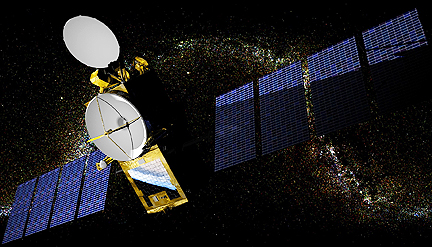 Council was presented with a Preliminary Program Proposal and initiating resolution for an optional Jason follow-on mission, proposing a Jason-3 satellite as the first element of a “hybrid” option. Such would be complemented in the 2011 timeframe by a follow-on mission based on Cryosat assets to be approved at the ESA Ministerial Conference of 2011. The implementation of this hybrid option will provide reference altimetry data continuity up until 2022. The Jason-3 mission is based on a recurrent mission with regard to Jason-2 and is built around cooperation between CNES, EUMETSAT, NOAA and the European Commission. The total amount of the mission is estimated to be €238 million.
