In December of 2014, the first launch of the Geostationary Operational Environmental Satellites (GOES-R) Series is expected to occur. One of the critical components aboard will be the Solar Ultraviolet Imager (SUVI) and Lockheed Martin [NYSE: LMT] has been awarded a US$178 million contract by NASA to design and build this component. This is a series of instruments that will provide important solar activity information as well as how the sun affects the Earth and near-Earth space environs.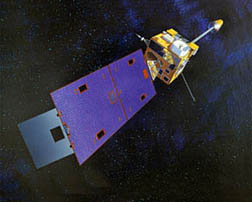
Lockheed Martin assembled a highly capable team with a substantial record of success in providing similar instruments for other missions. The Lockheed Martin Solar and Astrophysics Laboratory (LMSAL) within the ATC is well known for solar instrument development and solar physics research. LMSAL recently completed work on the GOES-N Solar X-ray Imager (SXI) and oversaw its successful calibration on-orbit following a May 2006 launch. The team has produced other successful scientific instruments, such as the NASA TRACE small explorer mission and the Extreme UltraViolet Imager on the NASA STEREO mission. Data from these missions have contributed to our current understanding of solar activity and the resulting space weather.
Data from the National Oceanic and Atmospheric Administration’s (NOAA) GOES spacecraft provide short-term advance weather warning to the commercial, educational and public sectors to protect lives, property and the environment. GOES data also fosters economic growth and promotes educational research. The future GOES-R missions will improve the quality and timeliness of forecasts, expanding the safety and economic security of the public. NASA’s Goddard Space Flight Center, Greenbelt, Md., manages the SUVI instrument acquisition as a part of its support to NOAA’s development of the GOES-R satellite series. The instrument is designed and built at Lockheed Martin’s Advanced Technology Center (ATC) in Palo Alto, California. The ATC is the research and development organization of Lockheed Martin Space Systems Company (LMSSC)—Bethesda, Maryland
- Skip to primary navigation
- Skip to main content
- Skip to primary sidebar
- Skip to secondary sidebar
- Skip to footer


Satellite Industry Intelligence Since 1983
Footer

Satnews is a leading provider of satellite news, events, publications, research and other satellite industry information in both commercial and military enterprises worldwide.