

By Nick David, Editorial Lead, SatNews
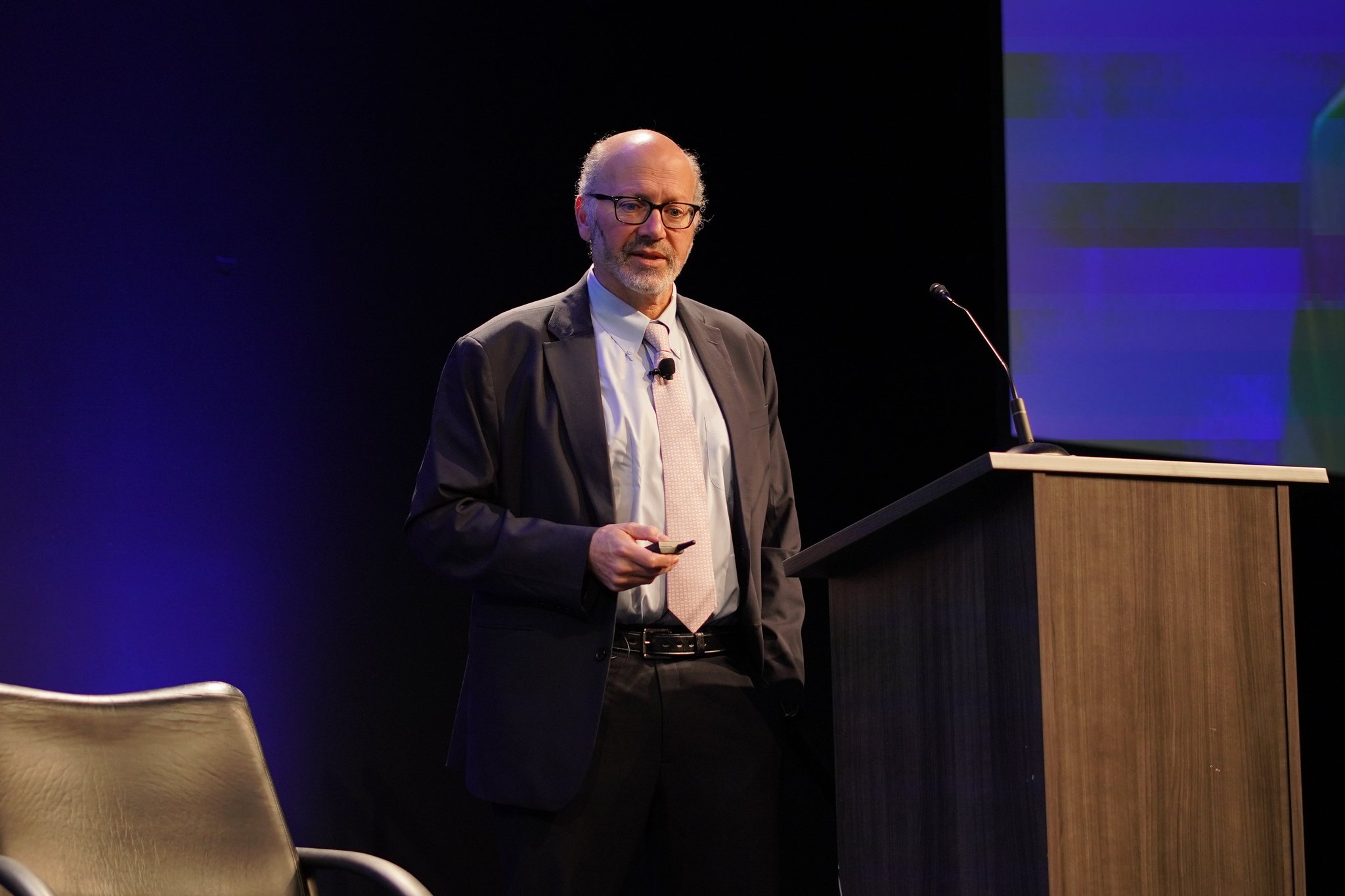
Five years ago, some space companies told Ron Epstein they didn’t want national security work. Today, he says, they all do it.
“Guess what? Everybody’s doing national security work today,” Epstein, a managing director at Bank of America Securities who covers aerospace and defense, said Tuesday in the opening keynote of Silicon Valley Space Week’s Satellite Innovation conference.
He described one company, which he did not name, that once wanted to stay purely commercial. Today, he said, “almost 80% of the revenue” is government-related.
Later in the talk, he put the shift more bluntly: “Space is a warfighting domain now.”
Planet and Rocket Lab
Epstein’s slide put 82% of Planet’s work since 2022 in national security, against the 32% it planned when it went public through a SPAC. The defense and intelligence slice is still widening. In the quarter ended July 31, Planet’s defense and intelligence revenue grew more than 90% to about $81 million, roughly 70% of the total.
Rocket Lab is the bigger surprise, Epstein said. By his numbers, only 8% of its work was national-security related in 2021. “Who would have guessed that Rocket Lab would have won a nearly billion-dollar contract from the Space Development Agency for the Tracking Layer?” he said. “I don’t think anybody.”
The award he meant is Rocket Lab’s $816 million prime contract, announced last December, to build 18 satellites for SDA’s Tranche 3 Tracking Layer. The company has said additional subsystem work could bring its total capture on the program to about $1 billion. Add its earlier $515 million award for 18 Tranche 2 Transport Layer satellites, and Rocket Lab holds more than $1.3 billion in SDA contracts.
Flight heritage drives it, Epstein said: once something works in orbit, more doors open.
Who’s paying
The money behind the shift is the federal budget. Epstein said the fiscal 2027 request is up 123% for the Space Force; the Department of the Air Force puts the increase at 124%, to $71.1 billion. He also pointed to Golden Dome spending on missile warning and command and control. Whether Congress passes all of it is “a whole different story,” he said, with midterms ahead and some of the money tied to reconciliation.
He flagged the other side of the ledger, too. NASA’s space funding has gone up, he said, but “basic science funding has gotten killed in the current administration.”
Bank of America was one of the lead underwriters on SpaceX’s initial public offering, and Epstein covers SpaceX alongside other space stocks.
SDA Director GP Sandhoo picks up the defense thread at 1:00 p.m. Wednesday, when he gives the opening keynote of the MilSat Symposium.
About the Author
A storyteller at heart, Nick David covers space policy, satellite markets, defense, and the technologies reshaping how humanity operates beyond Earth. With a background in creative direction, brand strategy, and editorial storytelling, he brings a modern lens to complex subjects and a relentless curiosity about what comes next.
