

LONG BEACH, Calif. – August 4, 2026 – Positioning his company as a primary challenger to capital-intensive aerospace giants, Rocket Lab USA Inc. Founder and Chief Executive Officer Sir Peter Beck declared on August 4, 2026, that the firm will rely on rapid architectural innovation rather than capital expenditure to compete against SpaceX and Blue Origin.
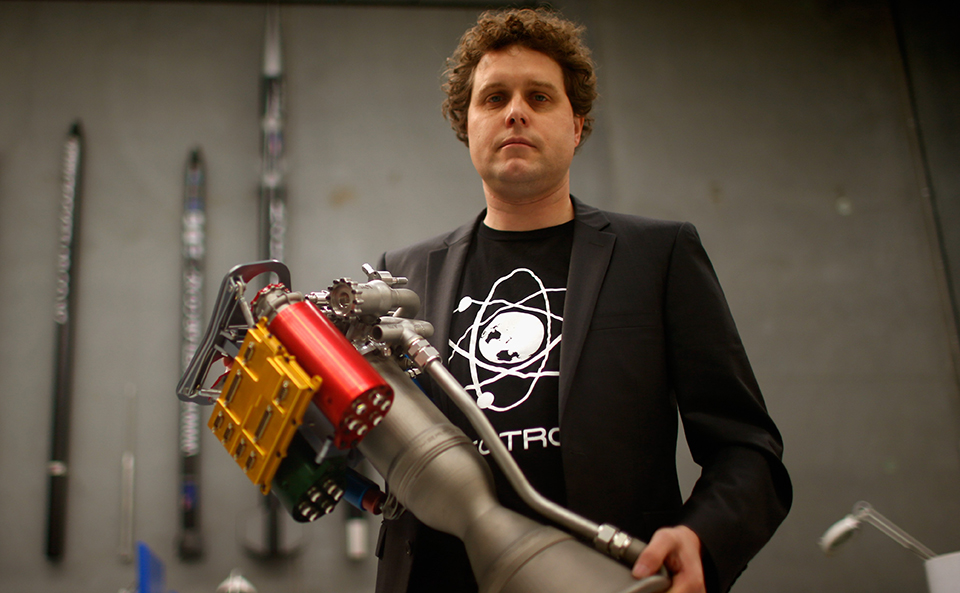
Speaking on the company’s long-term market positioning, Beck outlined a lean development framework designed to maintain speed and capital efficiency across both launch services and satellite bus manufacturing.
Strategic Competitive Rationale and Innovation Economics
The comments reflect Rocket Lab’s operational philosophy as it scales production of its medium-lift Neutron launch vehicle while simultaneously expanding its satellite manufacturing division. Rather than attempting to match the multi-billion-dollar annual burn rates of subsidized mega-constellation operators, Rocket Lab is structuring its engineering cadence around high-density component design and automated manufacturing processes.
Beck compared the current pace of space industry evolution to the semiconductor sector, noting that stagnant technology roadmaps risk immediate obsolescence in the face of continuous cost-per-kilogram reductions across the launch market.
Flatellite Technical Specifications and Integration Architecture
Central to Rocket Lab’s satellite hardware roadmap is the newly unveiled “Flatellite” bus platform, engineered specifically for low Earth orbit (LEO) communications constellations. The Flatellite architecture features a ultra-compact form factor optimized for automated mass assembly and high-density payload fairing stacking.
By removing traditional deployable structures and minimizing vertical thickness, individual Flatellite units can be stacked within a launch fairing with only millimeters of clearance between spacecraft. This high-density packing configuration dramatically increases the total spacecraft count per launch, directly reducing the per-satellite deployment cost for constellation operators.
Vertical Integration Context and Iridium Acquisition Dynamics
The technological push follows Rocket Lab’s strategic agreement to acquire Iridium Communications, an $8 billion transaction that absorbs Iridium’s active network of 80 cross-linked LEO satellites and established L-band spectrum rights.
Combining internal launch capabilities, in-house satellite bus manufacturing, and Iridium’s global subscriber base creates an end-to-end space communications provider capable of directly competing with SpaceX’s Starlink network. Captive manifest availability on the upcoming medium-lift Neutron vehicle allows Rocket Lab to deploy and replenish its communications infrastructure without relying on third-party launch providers.
Executive Directives on Industry Velocity
“I am not going to outspend [Musk or Bezos],” said Sir Peter Beck, Founder and CEO of Rocket Lab. “Innovation is why we have been successful. We cannot stand still. Our industry is like the semiconductor industry. There is so much innovation and the pace of change is so very fast. If we stand still we will be run over. We need to be on the steam-roller, not in front of the steam-roller.”
Financial Projections and Operational Outlook
Following the integration of Iridium’s recurring subscription revenue, Rocket Lab projects achieving sustained profitability by 2027. The combined organization is projected to generate approximately $140 million in earnings next year, using Iridium’s established cash flow to offset ongoing research and development burn associated with the Neutron rocket and Flatellite production lines.
Initial qualification testing for the Flatellite bus and flight hardware integration for the reusable Neutron medium-lift rocket remain on schedule as the company prepares to initiate commercial deployment manifests.
