

On Sunday, July 12, 2026, market evaluations highlighted Rocket Lab USA Inc.’s accelerating transition from a dedicated launch provider into a vertically integrated satellite communications powerhouse.
The strategic expansion positions the long Beach, California-based company to directly challenge established operators in the direct-to-device (D2D) and proliferated military space systems segments.
End-to-End Space Systems Specifications
The company’s manufacturing footprint relies on internalizing the space systems supply chain to scale constellation delivery:
- Bus Architectures: Assembly lines leverage the standardized “Lightning” and “Photon” satellite bus frameworks tailored for high-cadence production.
- Specialized Hardware: Incorporates proprietary “Flatellite” panel form factors designed to deliver high-speed, low-latency connectivity without traditional deployable antennas.
- Payload Integration: Employs third-party multi-beam Active Electronically Scanned Array (AESA) radio frequency communications systems for specialized defense missions.
Strategic Rationale and Constellation Pipelines
The operational shift is anchored by major commercial and civil defense milestones. On June 29, 2026, Rocket Lab finalized an agreement to acquire Iridium Communications in an $8 billion transaction, absorbing an active network of 80 cross-linked low-Earth orbit (LEO) satellites and globally harmonized L-band radio frequency spectrum. This acquisition expands Rocket Lab’s addressable commercial footprint by adding 2.55 million active subscribers.
Simultaneously, the company emerged as a primary candidate to manufacture the satellite bus hardware for the planned 2,800-satellite Equatys constellation, a neutral-host infrastructure platform backed by Space42 and Viasat designed to share LEO assets among multiple mobile network operators. By pairing internal launch capabilities with modular spacecraft manufacturing, Rocket Lab mitigates third-party supply chain bottlenecks while securing captive manifest certainty for future constellation deployments.
Production Timeline and Next Milestones
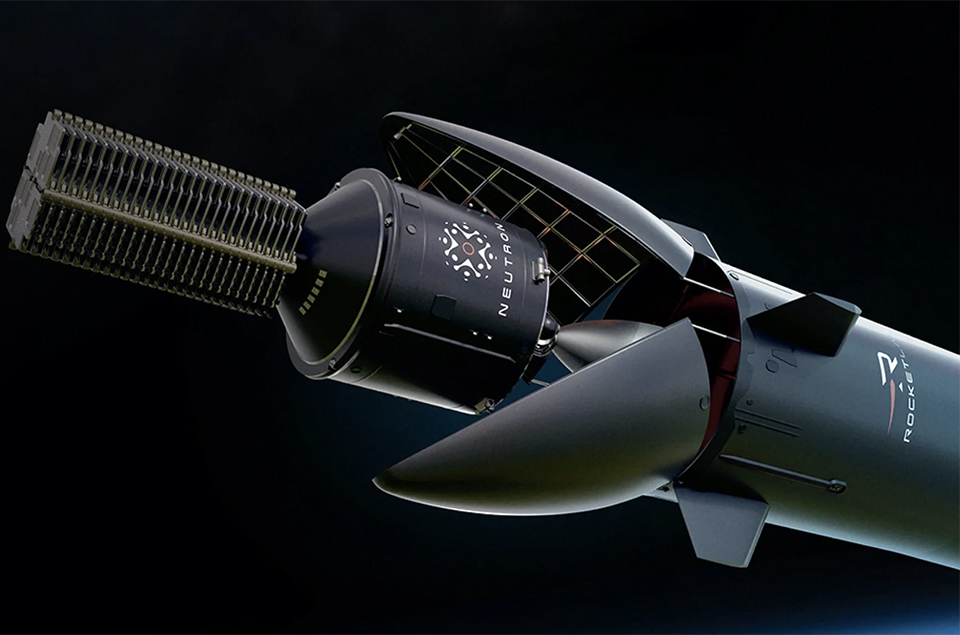
Rocket Lab is currently finalizing component integration for its prime contract to deliver 18 space vehicles for the U.S. Space Development Agency’s (SDA) Tranche 2 Transport Layer Beta program, with deployments scheduled to commence in mid-2027. Qualification schedules for the company’s upcoming medium-lift Neutron launch vehicle remain on track for late 2026, which will serve as the primary heavy-lift mechanism for its expanded commercial telecommunication manifests.
