

Rocket Lab has experienced a major surge in its market valuation, with its stock price pushing past the $135 mark following a record-breaking financial quarter and the announcement of a lucrative national security contract.
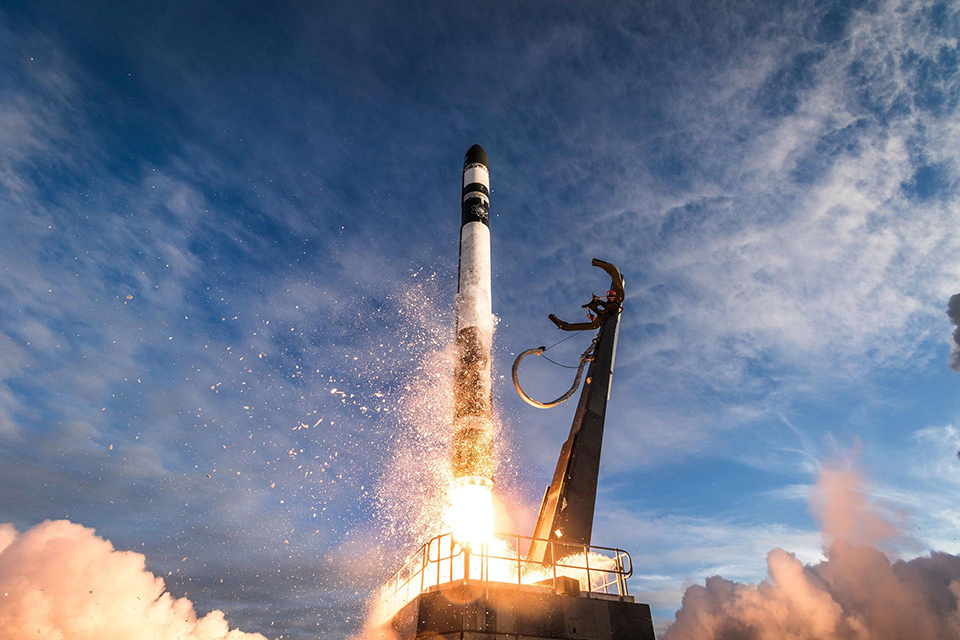
The company reported a significant milestone, achieving $200.3 million in first-quarter revenue, underscoring its rapid growth in both launch operations and spacecraft manufacturing.
Breaking Into Geostationary Orbit
Adding fuel to this financial momentum, the United States Space Force awarded Rocket Lab a $90 million contract to design, manufacture, integrate, and operate two geostationary orbit satellites. This deal marks the first dedicated satellite production program for the company in geostationary orbit, expanding its vertically integrated mission model far beyond its traditional low Earth orbit operations.
Under the agreement with the Space Systems Command, the company will serve as the prime contractor and end-to-end mission provider. The responsibilities encompass spacecraft development, payload integration, launch preparation onto a government-furnished vehicle, and up to five years of on-orbit operations post-commissioning.
The Heimdall Payload and Lightning Bus
The two spacecraft will carry the Heimdall space domain awareness payload, an advanced optical sensor designed to improve the military’s ability to monitor and track objects within the crowded geostationary belt. This orbital zone is highly critical for defense communications, missile warning systems, and intelligence operations.
The Heimdall system was developed in-house by Rocket Lab Optical Systems, a division formed following the company’s acquisition of GEOST in 2025. By transitioning this technology from a prototype phase into operational space delivery, the company is demonstrating its capability to handle end-to-end defense payloads.
These payloads will be integrated into the company’s proprietary Lightning satellite bus, which has been specifically modified to meet the extreme thermal, propulsion, radiation, and station-keeping demands of long-duration geostationary operations.
Record Revenue and Market Impact
The financial markets responded enthusiastically to these combined announcements, propelling the stock past $135 per share. The reported first-quarter revenue of $200.3 million highlights a highly successful period of execution across the company’s launch and space systems divisions.
Investors are recognizing the strategic value of the company’s pivot toward acting as a prime contractor for critical national security programs. By directly providing scalable, mass-produced satellite architectures like the Lightning bus to government clients, the firm is securing a stable and lucrative revenue pipeline.
Strengthening Proliferated Defense Architectures
This contract directly aligns with the growing trend of establishing proliferated military space architectures. The Space Force is increasingly seeking to integrate commercial mass-production capabilities into the defense supply chain to create resilient, attritable systems.
By leveraging its existing production lines, which are already fulfilling orders for the Space Development Agency’s transport and tracking layer constellations, Rocket Lab is positioning itself as a vital partner in maintaining national security in space. This strategic expansion solidifies the company’s role as a major player in the aerospace sector, capable of delivering comprehensive solutions from low Earth orbit out to the geostationary belt.
