

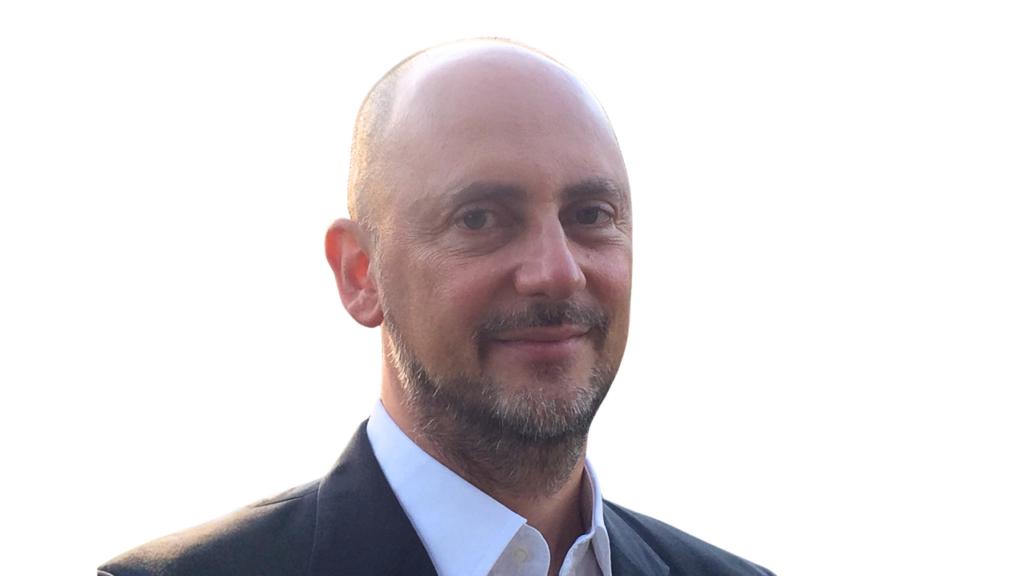
WRC-27 will set the spectrum allocation rules for the next generation of satellite constellations. For European operators planning mega-constellations across multiple orbits, the outcome determines whether their business plans survive contact with the Radio Regulations. Jorge Ciccorossi has spent more than two decades inside the institution that writes those regulations.
Ciccorossi is Head of the Space Strategy and Sustainability Division at the ITU Radiocommunications Bureau in Geneva. He holds an electronics engineering degree from the National University of Technology in Buenos Aires, studied satellite communications and spacecraft design at the University of Surrey, and completed an Executive Certificate in Management and Leadership at MIT. He has represented the ITU Radiocommunications Bureau at every World Radiocommunication Conference since 2003 and served as the Bureau’s spokesperson on satellite issues at WRC-23.
His division monitors whether satellite constellations are deployed in compliance with the Radio Regulations, the international treaty governing spectrum and orbital resources for the ITU’s 194 member states. Ciccorossi built two of the tools the Bureau uses to track compliance at scale. SIRRS is the first intergovernmental online platform for reporting radio frequency interference affecting satellite systems. Argus is a visualization system that tracks the deployment of large non-geostationary constellations in near-real time. Both systems address a problem that did not exist at this scale a decade ago: how to monitor thousands of satellites filed by dozens of operators across overlapping frequency bands.
The spectrum landscape has shifted since WRC-23. In January 2026, a single filing submitted through Rwanda proposed hundreds of thousands of satellites, testing whether the ITU’s filing process can absorb the volume of planned constellations. In the United States, the FCC voted in April 2026 to replace 1990s-era power limits with a performance-based coordination framework for LEO operators, a decision that will shape how WRC-27 addresses spectrum sharing between LEO and GEO systems. SpaceX and incumbent GEO operators traded filings over those sharing rules in a dispute that previews the battle lines for the next conference.
At SmallSat Europe, Ciccorossi delivers a Market Brief titled “The Fight for Frequencies: Preparing European Priorities for WRC-27.” He is the sole presenter.
Every satellite company at SmallSat Europe needs a frequency allocation to operate. Ciccorossi is the person who makes sure the system for granting one still works.
