

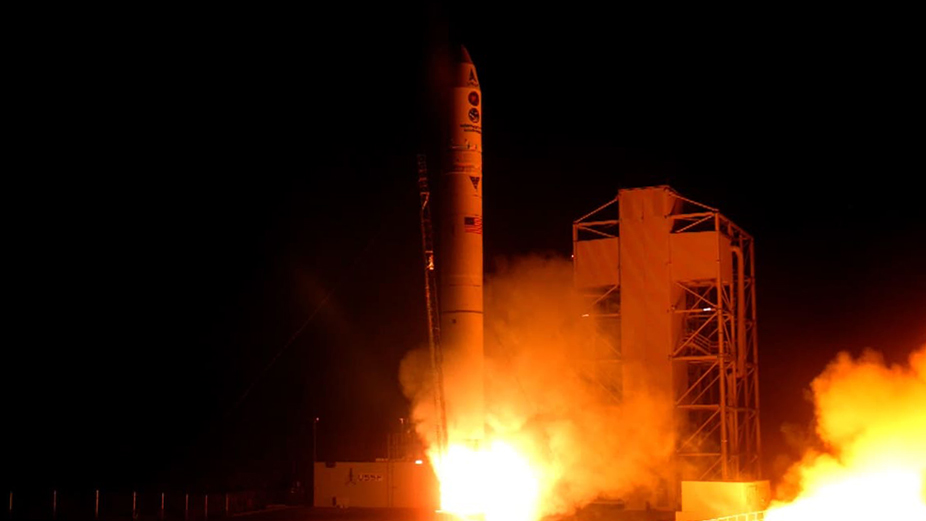
On Tuesday, April 7, 2026, Northrop Grumman successfully launched the Department of Defense’s Space Test Program S29A (STP-S29A) mission from Space Launch Complex 8 at Vandenberg Space Force Base, California. The flight utilized a Minotaur IV launch vehicle to deploy a suite of experimental satellites aimed at advancing the U.S. Space Force’s (USSF) proliferated combat network architecture.
Strategic Infrastructure for Proliferated LEO
The STP-S29A mission is the second Space Test Program mission to launch in four months, reflecting an accelerated pace by Space Systems Command (SSC) to prototype the next generation of military space capabilities. The mission supports the broader Space Development Agency (SDA) objective to field a constellation of at least 1,000 satellites in low Earth orbit (LEO) by the end of 2026. This architecture shift focuses on resilient, small-satellite networks designed for persistent tactical communication and missile tracking.
The launch service was managed by SSC’s Rocket System Launch Program (RSLP), a dedicated organization within System Delta 80 (SYD 80) focused on providing responsive and cost-effective launch solutions for experimental and national security payloads.
Payload and Technical Specifications
The primary payload for this mission was STPSat-7, an Evolved Expendable Launch Vehicle (EELV) Secondary Payload Adapter (ESPA) class satellite. Developed by the Space Test Program, STPSat-7 houses five experiments, including three advanced payloads from the U.S. Naval Research Laboratory (NRL).
The Minotaur IV also deployed several secondary satellites:
- Rawhide: A pair of U.S. Army-sponsored CubeSats.
- Additional Research Satellites: MISR-C, CANVAS, AggieSat6, and ASTRA-HyRAX.
The Minotaur IV vehicle itself leverages three decommissioned Peacekeeper intercontinental ballistic missile (ICBM) solid rocket motors for its first three stages, paired with an Orion 38 commercial solid rocket upper stage. This configuration provides a payload capacity of approximately 1,730 kg to LEO. This mission marked the 31st successful launch of the Minotaur family since its debut in 2000.
Executive Perspectives
“The successful launch of STP-S29A directly answers the call for a stronger, more capable military and underscores the critical role of the Space Force in deterring future conflicts,” said Lt. Col. Brian Shimek, USSF system program manager and director for STP. “The space domain is where we can and must maintain our strategic advantage. The advanced experiments on board will provide invaluable data, enhance our space domain awareness, and ensure we continue to outpace our adversaries.”
Timeline for Orbital Integration
Following the successful insertion into LEO, on-orbit operations for the payloads will be overseen by SSC’s System Delta 89 (SYD 89). The data collected from STPSat-7 and the associated CubeSats will inform the technical requirements for future tranches of the Space Force’s proliferated architecture, specifically targeting improved Link 16 connectivity and tactical waveform development.
