

From Space
It is a profound realization to think that everything we have ever known is contained within that small, fragile glow. On this Sunday, April 5, 2026, the four astronauts of the Artemis II mission are experiencing that shift in relationship first-hand.
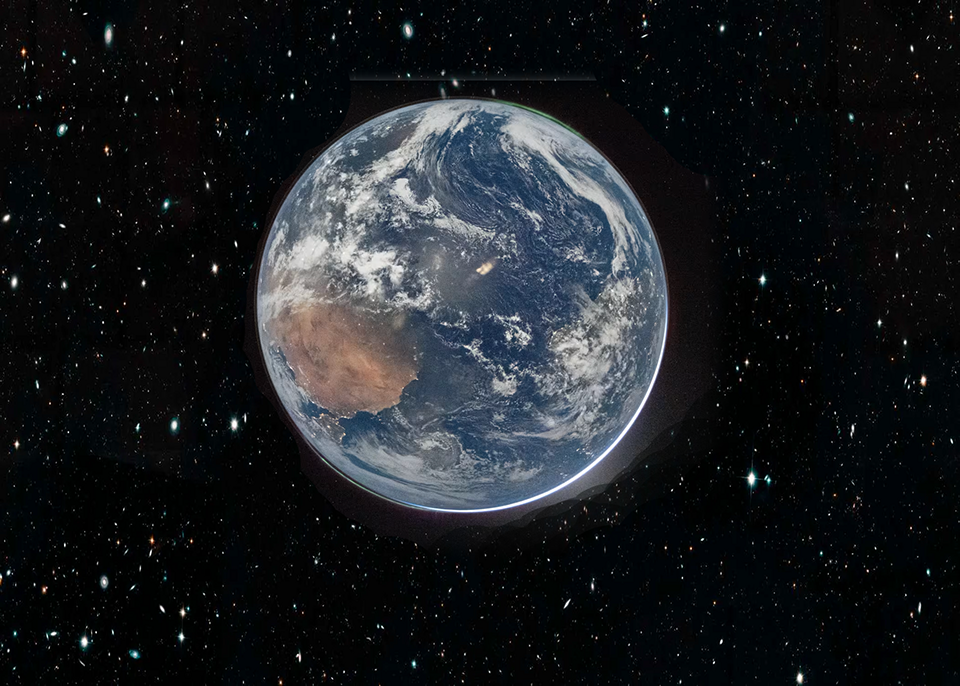
They are currently in the middle of Flight Day 5, having spent the last few days watching the Earth transition from a massive, all-encompassing landscape into a singular, thumb-sized marble against the blackness of deep space.
The crew—Reid Wiseman, Victor Glover, Christina Koch, and Jeremy Hansen—began their day today at 11:50 a.m. EDT. They are currently over 200,000 miles from home and are rapidly approaching the lunar sphere of influence. This is the invisible boundary where the Moon’s gravity finally becomes stronger than the Earth’s, effectively pulling the Orion spacecraft toward its destination. They are expected to cross this threshold just after midnight, in the early hours of Monday, April 6.
While the perspective is spiritual, the day-to-day reality on board remains deeply technical and occasionally quite earthy. The crew has spent much of the last 24 hours dealing with a stubborn malfunction in the spacecraft’s waste management system. Mission Control in Houston has been working with them to troubleshoot a suspected ice blockage in the wastewater vent, which has forced the astronauts to rely on contingency collection bags for a significant portion of their journey. Despite these challenges, the team remains in high spirits, with Victor Glover sharing a message of hope and reflection for the Easter holiday as they continue their push toward the far side of the Moon.
In preparation for the historic flyby tomorrow, the astronauts are conducting final checks on their Orion Crew Survival Suits today. These are the pressurized orange suits designed to keep them safe during the most dynamic phases of the mission. They have also been reviewing their photography targets for the lunar surface. Because they will be flying about 4,000 miles above the Moon—much higher than the 70-mile orbits of the Apollo era—they will have a unique, wide-angle view of the lunar poles and the mysterious terrain of the far side.
Tomorrow, they will set a new record for the farthest distance humans have ever traveled from Earth, surpassing the mark set by the Apollo 13 crew in 1970. During the peak of the flyby, they will also witness a rare solar eclipse from space as the Moon passes between their spacecraft and the Sun. This will allow them to observe the solar corona with the naked eye, a sight that few humans have ever experienced. As they approach that silent, dark side of the Moon tonight, they are the sensing elements for all of us, carrying that new relationship with our home planet into the deep.
