

The strategic elevation of Synthetic Aperture Radar (SAR) satellites stems from their unique ability to maintain persistent surveillance over the world’s oceans under conditions that render traditional optical sensors and aerial patrols ineffective.
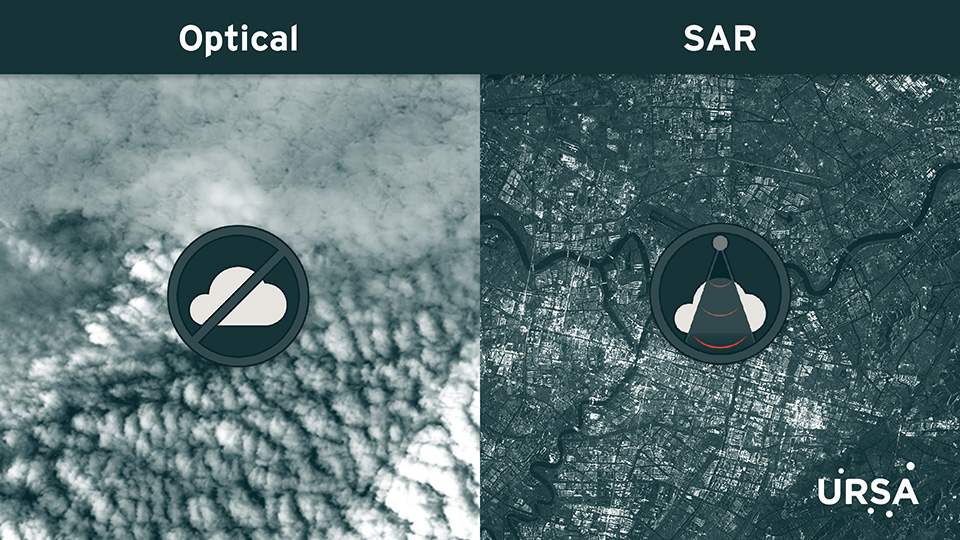
Unlike optical imagery which requires clear skies and daylight, SAR systems emit their own microwave pulses that penetrate heavy tropical cloud cover, smoke, and total darkness to reflect off metallic hulls and agitated water. This technical independence from environmental constraints makes SAR the primary solution for monitoring vast maritime zones where illegal activities often thrive under the cover of weather.
The commercial landscape has fundamentally shifted with the deployment of high-revisit constellations from operators such as ICEYE, Capella Space, Umbra, and Synspective. These firms have moved beyond the era of massive, single-satellite missions toward clusters of small satellites that can pass over a specific maritime coordinate multiple times within a single day. This temporal density allows for the detection of “dark vessels” that have intentionally disabled their Automatic Identification System (AIS) transponders to evade traditional tracking. By layering SAR detections over AIS data, maritime authorities can immediately identify and prioritize targets that are physically present but electronically invisible.
This technological shift provides a critical strategic multiplier for maritime governments that possess limited naval fleets and cannot afford the high cost of continuous aircraft sorties. SAR constellations allow these nations to monitor ship-to-ship transfers, identify suspicious maritime patterns associated with smuggling, and track illegal fishing fleets in real-time.
The ability to observe these activities as they happen—and to provide high-resolution evidence that is resilient to interference—is transforming the South China Sea and other contested waters into transparent environments where gray-zone operations can no longer be hidden from the international community.
